Wednesday, 9 February 2022

british exceptionalism and coronavirus

Many countries believe they are 'special':

Jay Doubleyou: exceptionalism today

During the last two years, many countries have definitely felt they are 'special':

Jay Doubleyou: sweden and coronavirus

Including the UK, with these comments from spring 2020:

Coronavirus has exposed the myth of British exceptionalism | Fintan O’Toole | The Guardian

Cruel Britannia: Coronavirus lays waste to British exceptionalism – POLITICO

This comment is from the New York Times from last month:

Britannia, With Fewer Rules
What England’s push to get back to business as usual says about the national character.

By David Segal
Published Jan. 29, 2022

Then there is England’s sense of exceptionalism. In its more benign version, observers pin this to a civic pride that stems from the country’s role in exalting individual rights and denouncing tyranny. Here is where Magna Carta is invoked, along with the works of writers like John Locke, John Stuart Mill, George Orwell and others.

The less benign version of English exceptionalism is a history rooted in the country’s one-time role as the greatest colonizer ever. At its height, early in the 20th century, the government and executives in London and around the country controlled about one-quarter of the world’s population, more than 400 million people.

In “Empireland,” the author Sathnam Sanghera linked England’s colonial past to its triumphalism as it managed, and mismanaged, the pandemic. He points out that Mr. Johnson promised a “world-beating” testing program and later a “world-beating” test and trace system, neither of which materialized.

Last March, Mr. Johnson crowed about the Oxford-AstraZeneca vaccine — the “Oxford vaccine” as he likes to call it — and praised “the vast dispersal of British ideas, and British values, puffed around the world like the seeds of some giant pollinating tree.”

This is a new articulation of Global Britain, one that isn’t actually garrisoned in countries around the world so much as fertilizing them from a distance.

“Every stage of the crisis has been characterized by the idea that Britain is a special case,” Mr. Sanghera wrote.

It was special, and sometimes for the best of reasons. When the vaccines debuted in the United States, millions of people chased them online. In Britain, the vaccine chased you. One day, a notification showed up on your phone, from the National Health Service, asking which day and vaccination center was convenient. The entire process was easier than buying an iPad online.

But England was often special in the worst way. For stretches of the pandemic it had the highest death rate in Europe. In March 2020, when Mr. Johnson contracted Covid after seeming to defy recommended precautions, The Irish Times described Mr. Johnson’s leadership as “another example of British exceptionalism backfiring in grand style, some might say, and a bad omen for Brexit, the U.K.’s other social distancing project.”

To date, England’s efforts to prevent death from Covid-19 have been more successful than those of the United States, on a per-capita basis, but lag most of Europe. In Germany, there have been 141 deaths per 100,000, in Spain 197. In England, the per capita death rate is 240.

Not the worst, and far from the best. The historian and podcaster Dan Snow argues that this showing flows from the U.K.’s faith in the power of vaccines, which is of a piece with England’s love of — and gift for creating — life-altering technology.

“The vaccine was a kind of tech optimism, it was the moonshot,” he said. “Like the U.S., we’re a country open to transformative technology and that makes sense because this is where the industrial revolution began. We start by fiddling around with looms and textiles and eventually there’s a man on the moon.”

This faith in the power of English minds to dig the country out of any mess is a variation on the theme of exceptionalism. Put another way, the English are different. Expecting them to trod the same path as the rest of Europe is folly.

Or as Mr. Snow put it, “The boring, social democratic solution of ‘Let’s slow down transmission, sit apart from each other, let’s not do whatever we want’ — to English ears, that all sounds a bit Dutch.”

Britannia, With Fewer Rules - The New York Times

.

.

.

Monday, 7 February 2022

"poetry in the classroom: some kids i taught and what they taught me": three years on

Back in 2019, the poet and teacher Kate Clancy put together a book on her experiences working with migrant children in the UK:

Jay Doubleyou: poetry in the classroom: some kids i taught and what they taught me

The book was very well received at the time:

“Hide the fact / You are alienated” commands Priya, a schoolgirl poet taught by Kate Clanchy, who considers her life as a migrant. “Chew on the candy floss. / It melts in your mouth. Such foreign stuff!” The poets Clanchy has nurtured at the comprehensive where she teaches in Oxford are now well known. They’ve won poetry competitions and been included in her anthology England: Poems from a School. In Some Kids I Taught Clanchy has set out to tell the story of how this happened, while analysing the wider educational landscape in Britain over the past 20 years.

Some Kids I Taught and What They Taught Me by Kate Clanchy review – the reality of school life | Kate Clanchy | The Guardian

She was awarded the prestigious Orwell Prize:

"In this book, a brilliantly honest writer tackles a subject that ties so many people up in knots – education and how it is inexorably dominated by class. Yet this is the very opposite of a worthy lecture: Clanchy’s reflections on teaching and the stories of her students are moving, funny, full of love and offer sparkling insights into modern British society.”

Some Kids I Taught and What They Taught Me | The Orwell Foundation

'The prize of all prizes': Teacher Kate Clanchy's memoir wins Orwell award | Kate Clanchy | The Guardian

And she talks about her time with students during the pandemic - on her publisher's website:

‘They have a lot to say about their confinement.’ Kate Clanchy shares her students’ powerful lockdown poetry - Pan Macmillan

However, late last year, some readers started to attack the book and the writer:

Kate Clanchy, who was accused of 'racism' in Orwell prize-winning book 'contemplated suicide' | Daily Mail Online

The hounding of author Kate Clanchy has been a witch-hunt without mercy | Kate Clanchy | The Guardian

Cancelling Kate Clanchy won't root out real racism - New Statesman

Here's a critic

Should the book be rewritten? Not in my view. The damage is done and the harm is caused; you can’t put that bunny back in the box. Worse, allowing Clanchy to re-write it gives legitimacy to the idea that she was in some way subjected to ‘cancel culture’. And finally, rewriting it means the problem is pushed under the rug along with the old editions.

If you’d like to read work by some of the authors mentioned in this piece who don’t utilise racist and ableist tropes, try out Dara McAnulty’s fantastic Diary of a Young Naturalist and the new middle grade Wild Child (the illustrations in this are honestly some of the best I’ve ever seen). Monisha Rajesh’s Around India in 80 Trains is an excellent glimpse inside her family history and the lifeline of the railways — and Chimene Suleyman’s work on The Good Immigrant USA means it’s a must-read.

What’s clear is that publishing has a long road ahead — and after this, I’m not sure it’s ready to face the journey, for all its platitudes about diversity after #PublishingPaidMe.

Lessons to Learn From the Kate Clanchy Memoir Fiasco

And here is a supporter:

Clanchy is not without support. One former student, Shukria Rezai, wrote an impassioned defence of her teacher in The Times, describing Clanchy as someone who had “fought” for and given “platforms” to her students. Rezai, the student who Clanchy had described as having “almond eyes'', stated that she did not find the term offensive. Indeed, she went on to describe how the term was a “beautiful reference” in Hazara culture and reminded her readership of how the Taliban persecuted her people; she expressed gratitude to Clanchy for making the Hazara people “visible”.

It’s concerning that institutions like the Royal Society of Authors and Picador failed to stand up for Clanchy’s right to freedom of expression and, instead, bent a knee to the will of the Twitter mob. Clanchy’s rewriting brings to mind the image of Winston Smith rewriting documents in the Ministry of Truth—truly Orwellian. And most importantly, that Kate Clanchy, an educator who has spent thirty years working in the state system with predominantly disadvantaged students, has had her reputation torpedoed, becoming the latest persona non grata in the culture wars, is troubling.

How on earth could a book released to widespread critical acclaim just over a year ago cause such widespread outrage now? That was the question I sought to answer when I decided to read the book for myself, form my judgement, and put my reflections down on paper.

Let me say from the outset that I think Clanchy’s critics are wrong to accuse her of racist language.I took no offence in Clanchy’s descriptions. It simply is not considered a racial insult by the person who Clanchy was describing. “Chocolate-coloured skin” while clumsy prose is hardly offensive (for the record, I have chocolate-coloured skin). “African Jonathan'' is a strange way to describe someone, but again, not offensive. The other racial descriptors were, to my mind, just that, short sketches of the person being described whether they were Somalian, Afghani, or Pakistani.

...

All in all, Some Kids I Taught and What They Taught Me is a book that professes a sincere love of the profession, of students, and of schools themselves. Kate Clanchy has been treated terribly, particularly on social media, and has been the victim of an attempt to tarnish her work and her reputation. Much of what is circulating on social media has been taken out of context. She is yet another leftwing figure attacked by other, more extreme, leftwingers. I hope she continues to write about teaching and I hope that publishing houses continue to publish her work. Rather than relying on reading excerpts collated online to make the book and its author appear in the worst possible light, I would urge you to read it for yourself and form your own judgement.

A Teacher memoir Cancelled: Reflections on Some Kids I Taught and What They Taught Me — Chalkboard Review

It's just been republished:

Kate Clanchy’s controversial memoir reissued by independent publisher | Kate Clanchy | The Guardian

Some Kids I Taught & What They Taught Me: 9781509840298: Amazon.com: Books

Finally, the publisher that has unpublished her still has articles written by her on their website:

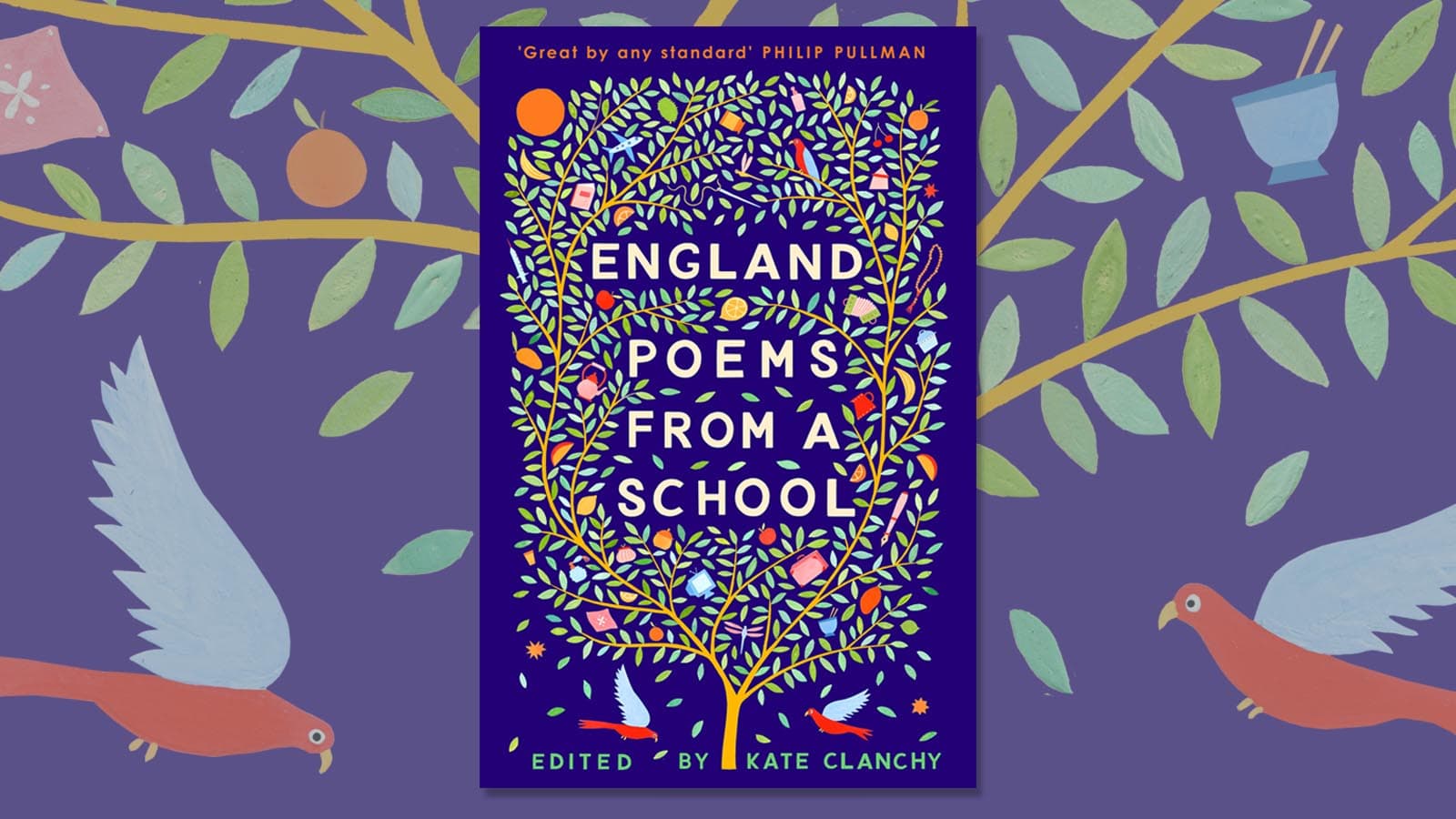
Introducing: England: Poems from a School

Picador poet and English teacher Kate Clanchy introduces some of the poets who feature in new anthology, England: Poems from a School.


Picador Poet Kate Clanchy shares the story behind new poetry anthology, England: Poems from a School, and introduces some of the poets whose work features in the collection. England is published in paperback and ebook on 14th June 2018.

For the past 9 years I've been working as Writer in Residence at my local comprehensive school, Oxford Spires Academy. It's the chosen school of Oxford's many migrants: more than 30 languages are spoken here, our students come from all over the world, and everyone, including the white British students, is a minority. That makes for a very special, open culture, and a very creative one too: our students paint, dance, act, and sing with enthusiasm, all the time. And they write: in fact, in the last five years, we've become the UK's most successful poetry school, winning all the competitions for young people multiple times, creating a Ted Hughes Award nominated radio programme, and, most recently, enchanting Twitter and winning thousands of followers with their direct, moving verse.

England: Poems from a School brings together our very best poems in one anthology to create a rich portrait of England as it is experienced by its youngest migrants. The result is very likely to make you cry - but not just because of the sadness of some of the stories. There is an openness here, a warmth, a reality which speaks directly to the human heart. These are also poems to share and show: to young people and old, migrants and their neighbours. The poems document migration, which a central experience of our contemporary world, but they also remind us of the ancient purpose of poetry; to share, to explain, and to remember.

Home byMohamed Assaf (12)

I miss being in the land
where I was born and grew up.
Our dreams are there
but my destiny is not to be
with Damascus who gave me my soul.
Damascus where the sun rises in my room
and the birds sing at my window.

Damascus, my mother.

Mohamed wrote this very moving poem in Arabic in a workshop with the Iraqi poet Adnan Al- Sayegh just a few months after he arrived in our school from Syria, and it was translated with help from @CreativeMultilingual. Mohamed has written many poems since and is a huge star on twitter. He also likes basketball.

From Origins, byAzfa Awad (18)

I grew up here:
resting under the palm trees
drinking Dafu juice,
snoozing on the Baraza beneath the stars.

I grew up here: in the Gorbals,
with Kwiksave, the Junkies,
and chucking snowballs;

watching fireworks
on the eighth floor of my council flat,
listening to the bangs and cracks;
watching the orange flames
flower out.

This is part of the stunning poem about her Tanzanian origins and Scottish childhood that won Azfa Awad the Tower Poetry Prize in 2013. She's since gone on to university, and to launch her own poetic career. Azfaawad.com

A poem by Amineh Abou Kerech(13)

Can anyone teach me
how to make a homeland?
Heartfelt thanks if you can,
heartiest thanks,
from the house-sparrows,
the apple-trees of Syria,
and yours very sincerely.

Amineh and her sister Ftoun are refugees from Damascus. They write poetry together, helping each other to understand their journey from their beloved home. This poem was part of a long one, translated from the Arabic, which won Amineh the John Betjeman Prize.

A poem by Shukria Rezaei (18)

I want a poem

that sits on a silver plate with
nuts and chocolates, served up to guests who
sit cross legged on the thoshak.

A poem
as vibrant as our saffron tea
served up at Eid.

Let your poetry
texture the blank paper
like a prism splitting light

Don't leave without seeing all the colours.

Shukria arrived in our school when she was just 14: traumatized by the conflict she had witnessed in Afghanistan but very determined. She wrote poetry almost before she had the English words to do so. This poem, like so much of her work, reflects her love for her Hazara culture.

From War Memoir by Azfa Awad (17)

I may have been small
but when trapped
between the claws of war
my voice could soar:
sound like the bangs and cracks
spat by the tongues of fireworks;

And when I ran
away from their biting guns,
my feet could dance,
skim above rose petals
dripping from my toes.

Azfa Awad remembers the trauma that forced to migrate to the UK. Her rich rhymes and sensual, unsentimental memory of exactly what it felt like to be a child marks her out as a poet. Azfaawad.com

From When I came from Nepal by Mukahang Limbu (15)

I did not know,
of silence in the streets,
or the secret whispers on the buses,
or the sly gestures of restaurants.

In this place,
where I did not know,
the things I did not know
embrace me in ways
I didn't know.

This is part of the poem which won Mukahang the First Story National Writing Competition when he was just 13. It reflects his Nepalese origins and his perceptive, yet very positive, feelings about his move to England when he was five. Mukahang is interested in theatre and languages as well as writing and we all expect him to be famous.

Hungary by Vivien Urban (14)

Look,
these flat lands
before you. Endless sky
fills empty space.
Stand here,
and open up your mind.
Notice the light
riding on its cloud horse
throwing shadows
on the grassy ground.
Stand here
and hear the whistle of the wind
blowing the golden sand.
Remember it,
elsewhere,
the free and wild wind,

as a gentle touch.

Vivien had been in England for less than three years when she wrote this beautiful poem about her homeland in response to Auden. She went to be our Head Girl, get stellar A Levels and win a place at St Andrew's University.

My Poem is a Jackfruit by Emee Begum (16)

The smell of it clings.
And the inside feels
like the gooey ink
that my brother puts
in his red car engine.

It is tough as wood,
scaly as a dinosaur.
But inside, soft as wool.
and the taste is
sweet heavens,
the world's greatest foods
having a party.

Emee's poems have a very special childlike vision, and often remember her Bangladeshi childhood. Jackfruit are the huge rugby-ball shaped fruit with a soft centre which sometimes appear on UK street corners, but in Bangladesh are the national fruit.

Sylhet by Rukiya Khatun (16)

There,
Sun birds chipper,
Their feathers, light lime,
Seep in the sunshine.

Mango trees
Summit and soar,
Stalk high above
The forest floor.

Where
A Bengal tiger,
Obsolete
As an emperor

Trembles
As the hushed wind-
Breathes –

Rukiya's poems were always about her childhood in Bangladesh and her journey to England when she was six. This poem shows a child's vision of a jungle and has a gorgeous soundscape.

Homesick by Shukria Rezaei (18)

Today, I thought of my mud house:
The rough walls standing tall;
The fresh smell of clay on the floor;
The scraping of dirt from my shoes.

Today I missed the jagged roads.
The horizons of mountains looming
with calming familiarity.
The way the sky flowered
The way I used to live.

Shukria grew up in a small village in the mountains of Afghanistan, and always remembered it in her poems. After a year as our Forward Arts Foundation Student, she won a place at Goldsmiths to study politics.

England


In England: Poems from a School, the poetry of The Very Quiet Foreign Girls Poetry Group is brought together by poet and teacher Kate Clanchy.

Introducing: England: Poems from a School - Pan Macmillan

Monday, 31 January 2022

language is music to the ears

Are you a better language learner if you are good at music?

A musician speaks:

It strikes me that there are three areas in which being a musician might be beneficial to language learning, and the language learning process:
  • Ear training
  • Knowing how to practise
  • Performance
In this article, I'm going to explore these three areas, based on my experience.

3 Hidden Links Between Music And Language Learning – StoryLearning

Here's the basic science:

Scientifically, the two parts of the brain that regard language and music learning are different and do not have a great connection. There are, however, a few skills that are complementary for both – speaking a foreign language and playing the right tones.
...
Although the two centres in our brains are not connected closely, there is no denying that being able to recognize music and sing it gives us a better arsenal for learning other languages

https://www.1stopasia.com/blog/does-an-ear-for-music-help-for-language-learning/

With a bit more science: 

When children start studying music before the age of seven, they develop bigger vocabularies, a better sense of grammar and a higher verbal IQ. These advantages benefit both the development of their mother tongue and the learning of foreign languages. During these crucial years, the brain is at its sensitive development phase, with 95% of the brain's growth occurring now. Music training started during this period also boosts the brain's ability to process subtle differences between sounds and assist in the pronunciation of languages – and this gift lasts for life, as it has been found that adults who had musical training in childhood still retain this ability to learn foreign languages quicker and more efficiently than adults who did not have early childhood music training.

Are musicians better language learners? | Education | The Guardian

Here's some evolutionary science:

Did the evolutionary process towards musical abilities begin in the primeval oceans? And have Human footsteps stimulated the evolution of musical abilities, which in turn...
... bipedal walking stimulated the evolution of music, which in turn may have been critical for language evolution...

Music to my ears: how language evolved | Science Features | Naked Scientists

This is from a psychologist:

This is not to say that music is not useful in learning a language. The most widely accessible tool – songs – help L2 learners acquire new patterns of stress and rhythm, strengthen pronunciation skills and make an emotional connection to the language of choice. Many learners owe their success to listening or even singing along with popular songs. This strategy can be used by everyone – including those with a deaf ear for music.

Do Musicians Make Better Language Learners? | Psychology Today United Kingdom

And from a linguist:

Given what is known about brain plasticity and changes in synaptic and neural pathways as a response to practising something throughout a person’s lifetime, it’s not surprising that the greater use of language will show up in musical ability and vice versa.

Explainer: how are learning languages and music linked?

Finally, Gill Ragsdale writes in the E L Gazette:

You don’t have to be musical to find melody in spoken words
...
Whether or not they have musical ability, students who rate a new language as sounding melodic are better able to speak it, according to a study by researchers in Austria, Latvia and Germany.
... 
This is good news for both students and teachers, as there are several ways to boost the apparent tunefulness of language. Some of these tactics may mimic the first language of them all: motherese, the way that parents all over the world speak to their infants – slowly, with more ‘sing song’ intonation, variations in pitch and a lot of repetition.

Language can be music to the ears | E L Gazette

ELG2111 Nov Issue 478

.

.

.

what's the issue?

The philosopher Wittgenstein famously said: "In most cases, the meaning of a word is its use":

Meaning is use: Wittgenstein on the limits of language – Philosophy for change

And that's the point with most words - that they don't actually 'mean' anything until we know how it's being used.

For example: the word 'issue' has lots of uses and meanings today:

What is the meaning of Current Issues? - MyEnglishTeacher.eu Blog

What is Issue date? Definition and meaning

Do you have an issue around 'issues around'? | Macmillan Dictionary Blog

meaning - What does 'address an issue' mean? - English Language & Usage Stack Exchange

Difference between - Problem, Trouble & Issue - Free Spoken English Lesson - YouTube

Here is the wordsmith Peter Trudgill writing about the issues around issue:

The word issue started being used in English in around 1300, having
originally being brought to Britain in the Anglo-Norman language by William the Conqueror’s followers. Its origins lie in the Latin exutus (originally exitus), the past participle of exire ’to go out’, with exutus ’gone out’ then morphing into issu in Anglo-Norman French.
The range of meanings for the word in 14th Century English reflected this source rather clearly, and included ‘exit, outflow, outlet’ and ‘offspring, children’.
...
By the 19th Century, the word was also being used to refer to any important point, contentious or not, which had to to be decided on – at a meeting, for example.
From there, it was not too big a leap for issue to acquire the additional sense of a point which could not be decided on, an unresolved conflict. This meaning seems to have made its first appearance in the 1990s.
More recently its meaning has been extended further still. Here are some contemporary examples: “He seemed nice enough at first, but it turns out he’s got a lot of issues.” Or “She has serious anger issues,” and “I’ve got some issues with his behaviour.”
More examples are: “We have to become better at resolving some of the issues which can lead to depression… the fuel shortage is still causing issues for bus operators… the housing crisis has scope for engagement with the Church to help address the issue.”
It can be seen from these examples that issue is now showing every sign of having quite simply turned into a synonym for ’problem’. The give-away is that English speakers now talk, not just of discussing issues, or tackling issues, but of solving issues.

Changing times cloud the issue - The New European

.

.

.


.

.

.

Thursday, 27 January 2022

beijing or peking?

There are several ways of talking about the historical capital of China:

Names of Beijing - Wikipedia

Interestingly, the city is called Peking in other European languages:

Peking – Wikipedia (German)

Pekín - Wikipedia, la enciclopedia libre (Spanish)

Pékin — Wikipédia (French)

So, it seems to be just an English thing:

HERE is an odd thing. The Chinese government gets quite cross about English-speakers using the name Peking for their capital city, insisting on the more modern transliteration Beijing... The Spanish are allowed to talk about Pekín and so it goes on...

Beijing or Peking? | The Economist

Here's a good video which explains the difference:

Peking Never Changed Its Name To Beijing - YouTube

And here's an excellent article in this week's New European:

Don’t duck the Peking question

PETER TRUDGILL on why cities have different names... 

It is often said that the capital of China “changed its name” from Peking to Beijing, but that is not really what happened. The forms Peking and Beijing are both transliterations into the Latin alphabet of the same Chinese name. (Beijing means ‘northern capital’, Nanjing ‘southern capital’.)
Naturally, Peking/Beijing is written by Chinese-speaking people using their own non-alphabetic writing system. For us to read it, this has to be converted into our alphabet. This conversion of Chinese logograms into the Latin alphabet is known as “romanisation”.
The so-called change of the name simply involved an older romanisation system, which rendered the Chinese name as Peking, being replaced by a new system, which transliterated the name using a different sequence of Latin-alphabet letters. The advocates of the new system believed their transliteration gave a better representation of the modern Chinese pronunciation...
.
The case of Bombay is rather different. Bombay did not “change its name” to Mumbai. In the local language, Marathi – which has about 75 million speakers – the name of the city had been Mumbai for a very long time. Unlike in China, however, English is one of the official languages of India – it is the major language of inter-regional communication. And so while the Indian government cannot instruct English-speaking people around the world on how to pronounce their own language, they can legislate as to how the English-language names of Indian cities are to be written in India, on official documents and public signage. The English language name Bombay was officially changed to Mumbai by the Indian government in 1995.
This change was the result of pressure from Marathi nationalists. These people felt that Bombay was a legacy of British colonial oppression – which it really was not, because the city’s name in Hindi, the largest Indian language, also was and still is Bambai...

Wednesday, 26 January 2022

how to be open to other people's opinions

We are all 'biased' in one way or another:

Jay Doubleyou: how to spot media bias

Jay Doubleyou: wikipedia and bias

BBC Radio takes a closer look:

Oliver Burkeman explores what it means to be a moderate, in an age when proclaiming to be a moderate is likely to annoy people on both sides of the political divide. He speaks with Damon Linker, a senior correspondent at TheWeek.com, and an outspoken moderate in the USA about why his columns generate so much ire on both sides of the isle, but curiously enough moreso with the people he generally sides with. And why moderation is not apathetic, but deeply passionate, and often a very mentally taxing way of life. And he discovers a potential way to give people a method to open their minds to ideas from another side, with Daniel Ravner, and Israeli writer and creator of The Perspective, a website that show news stories from both sides, in an attempt to open minds and shatter filter bubbles that have such a profound effect on modern society.

The Death of Nuance - In Praise of Moderation - BBC Sounds

The 'media bias' of the journalist Damon Linker has been rated:

Damon Linker Media Bias | AllSides

Here he's writing a piece about someone else who tries to 'balance' views:

Biden's big Omicron gamble

Here's an interview with Daniel Ravner:

Daniel Ravner, CEO and founder of The Perspective - Oct. 22, 2017 - YouTube

And here's his website:

There are at least 2 Sides to Every Story - The Perspective

.

.

.

Friday, 21 January 2022

are young people failing to 'grow up'?

To understand 'nuance' is to understand those little differences:

a very small difference in color, tone, meaning, etc.nuances [=shades] of color/meaning
"He listened to the subtle nuances in the song."
"a poem of little depth and nuance"

Nuance Definition & Meaning - Merriam-Webster

We seem to be losing them:

Oliver Burkeman has been concerned for a while that Nuance has been vanishing from public discourse.
He speaks to Professor Susan Neiman, author of Why Grow Up? About how difficult it can be to develop the skill of nuanced, critical thought, and how doing so may not just be an act of growing up, but as an act of resistance against a world designed to keep us infantilised, and our thinking simplistic.

BBC Radio 4 - The Death of Nuance, Losing My Nuance

Here's more about her book:

The philosopher Susan Neiman argues that the absence of appealing models of maturity is not an accident: by describing life as a downhill process, we prepare young people to expect - and demand - very little from it. In Why Grow Up? she challenges our culture of permanent adolescence

why-grow-up

Why Grow Up?

Here's a review of her book:

But the real virtue of this short, sometimes frustrating book lies in its insistence that thinking for oneself is a difficult and lifelong undertaking, in its genuinely subversive defense of philosophy in an age besotted by data. You don’t have to read Kant to be a grown-up, but it couldn’t hurt.

‘Why Grow Up?’ by Susan Neiman - The New York Times

It's a question a lot of people are asking, though:

Lifestyle Writer Rachel Hosie ponders whether if we're living longer, it's justified to act like a teenager into our adult years

Seven signs you're stuck in permanent adolescence | The Independent | The Independent

Extended Adolescence: When 25 Is the New 18 - Scientific American

Here's another view:

A provocative look at the rise of youth culture, the worship of perpetual adolescence, and the sorry spectacle of adults shirking the responsibilities of maturity. Firebrand conservative columnist Diana West looks at the mess America is in and wonders "Where did all the grown-ups go?"

The Death of the Grown-Up: How America's Arrested Development Is Bringing Down Western Civilization - Kindle edition by West, Diana. Politics & Social Sciences Kindle eBooks @ Amazon.com.

There's a specific 'syndrome':

While people with Peter Pan syndrome can and do become adults, they are stubbornly resistant to taking on the responsibilities of adulthood and adopting social norms associated with growing older.
Peter Pan syndrome, which is sometimes called failure to launch, is not a clinical diagnosis.

GoodTherapy | Peter Pan Syndrome: When Adults Refuse to Grow Up

Overprotecting parents can lead children to develop 'Peter Pan Syndrome' -- ScienceDaily

8 Reasons Some People Refuse To Grow Up Into Mature Adults

To finish, here's a look at how the world has changed for young people:

Five indicators are commonly understood as the markers of adulthood: finishing one’s education, leaving home, finding work, finding a life partner, and having children. Although many young adults reach the legal age of adulthood before they achieve these five markers, and others do not choose to reach them all, many still consider some combination of these benchmarks to define what it means to be an adult. Compared with the mid-20th century, young adults in the United States appear to be taking longer to reach these markers today. Fewer young-adult men ages 16 to 24 are settled into permanent jobs, and fewer men and women are married with children today than in the 1950s... 
Young adults are not less mature today than in the past. Neither are they necessarily more self-centered. A new developmental stage is not necessary to account for the extended time that many youth need to make the transition to adulthood. We are not the first researchers to challenge the idea of “emerging adulthood” as a distinct life stage, but we have new historical data that help us understand when and why youth feel they need more time to become adults. Our findings tell us something important: When young adults take longer to achieve the markers of adulthood, it is not that something has changed about them; it is that the world has changed.

The Real Reason Young Adults Seem Slow to 'Grow Up' - The Atlantic

.

.