Showing posts with label geography. Show all posts

Friday, 6 March 2026

shattering paradise - or, the difference between an 'economic migrant' and an 'expat'

As  writing in today's Guardian suggests, influencers have sold the world a fantasy Dubai – and now it’s gone in a puff of missile smoke:

The city was portrayed as an aspirational place to live, but now those who moved there are realising the precarity that comes with being an economic migrant.

Who could have guessed that living a few hundred miles as the drone flies from Tehran might have risks? Certainly not the anonymous hedge funder who fumed to the Financial Times that “the trade was not that you were getting exposed to geopolitics”.

But if it’s hard to sympathise with the super-rich, as they discover that there are some things money can’t buy, then they are not the only Britons trapped in the Gulf. The deal Dubai offered economic migrants – which is what Britons seeking a better life in the Gulf are, much as some will hate the label – was a kind of real-life Truman Show: a sunny, shiny, sterilised low-crime haven for anyone itching to get rich or stay that way, sustained by stiff penalties for anyone publicly shattering its illusions.

Today's London Standard points out that influencers in Dubai have been warned they face prison for posting material about the conflict with Iran.

And earlier in the week, the Daily Mail's Guy Adams looked at The inside story of how the hollow Dubai dream has come crashing down... as expats are sent mysterious menacing warnings from the UAE government which hint all might not be as well as it seems.

Here we are looking at the world of the 'expat' - and a decade ago, the BBC was considering the difference between an expat and an immigrant:

The word expat is loaded. It carries many connotations, preconceptions and assumptions about class, education and privilege — just as the terms foreign worker, immigrant and migrant call to mind a different set of assumptions.

But what makes one person an expat, and another a foreign worker or migrant? Often the former is used to describe educated, rich professionals working abroad, while those in less privileged positions — for example, a maid in the Gulf states or a construction worker in Asia — are deemed foreign workers or migrant workers. The classification matters, because such language can in some cases be used as a political tool or to dehumanise — as the debate around the word “migrant” suggests.

It's not just 'semantics', it's also a question of law: Expat vs Immigrant vs Migrant vs Refugee vs Asylee Defined | American Visa Law Group

.

.

.

Tuesday, 13 January 2026

leopold kohr: opposing the cult of 'bigness' - and understanding that 'small is beautiful'

The idea that Small Is Beautiful was first popularised by the German-born British economist E. F. Schumacher over fifty years ago.

But his challenge to 'bigness' came from his mentor Leopold Kohr. And indeed, another of Kohr's pupils gave the lecture The Wisdom of Leopold Kohr at the Schumacher Center for a New Economics - this being the educationalist and philosopher Ivan Illich who has featured several times on this blog:

During his life-time, this teasing leprechaun was recognized by very few as a man ahead of his time. Even today, few have caught up with him; there is still no school of thought that carries on his social morphology... Throughout his life, Kohr labored to lay the foundations for an alternative to economics; he worked to subvert conventional economic wisdom, no matter how advanced.

With more on Leopold Kohr from the Schumacher Center for a New Economics:

Believing in the effectiveness of returning to the local level to solve the problems affecting humankind, he saw small self-governing communities as best able to solve their problems with their own resources.

He was against 'bigness':

Leopold Kohr was highly critical of the claim that the world is split into too many states and opposed pan-nationalist, continental and global unions. He argued that the success of Swiss Confederation did not lie in a union between the French, German and Italian-speaking peoples, as that would lead to the domination of Swiss Germans and to the gradual decline of other groups. The reason that Switzerland remained diverse was that instead of having three nationalities, it was federated into 22 cantons, representing the actual cultural divisions of Switzerland. Kohr argued that number of autonomous cantons "eliminates all possible imperialist ambitions on the part of any one canton, because it would always be outnumbered by even a very small combination of other".[15]

According to Kohr, a European Federation of unequally large states would lead to a domination of a single nation and thus an erosion of dialects and smaller languages "with just the same inevitability as the German federation, in which 24 small states were linked to the one 40-million Power of Prussia ended up in Prussian hegemony". For him, a successful European unification can be based only on the Swiss model, which would entail splitting the existing nation-states into smaller ones on the basis of cultural and historical regions. He defends the concept of Kleinstaaterei by arguing that while in the Middle Ages, wars were common, they were brief and caused little to no devastation. However, after the consolidation of Europe into a few large states, every war that erupted between caused huge destruction and loss life.[15]...

Kohr also discusses the problem of cultural heritage and cultural assimilation. According to him, culture is a product of individuals, and since individual cannot prosper under a large power, neither can culture. He describes democracy as a "system of divisions, factions, and small-group balances", which slowly wither away under internal consolidation of a large state and with it the ability for cultural and intellectual flourishment.[27]

Following the banking crisis of 2009, the author Paul Kingsnorth wrote in the Guardian that this economic collapse is a 'crisis of bigness':

One man who would not have been surprised by this crisis of bigness, had he lived to see it, was Leopold Kohr. Kohr has a good claim to be the most important political thinker that you have never heard of...

Drawing from history, Kohr demonstrated that when people have too much power, under any system or none, they abuse it. The task, therefore, was to limit the amount of power that any individual, organisation or government could get its hands on. The solution to the world's problems was not more unity but more division. The world should be broken up into small states, roughly equivalent in size and power, which would be able to limit the growth and thus domination of any one unit. Small states and small economies were more flexible, more able to weather economic storms, less capable of waging serious wars, and more accountable to their people. Not only that, but they were more creative. On a whistlestop tour of medieval and early modern Europe, The Breakdown of Nations does a brilliant job of persuading the reader that many of the glories of western culture, from cathedrals to great art to scientific innovations, were the product of small states.


To understand the sparky, prophetic power of Kohr's vision, you need to read The Breakdown of Nations. Some if it will create shivers of recognition. Bigness, predicted Kohr, could only lead to more bigness, for "whatever outgrows certain limits begins to suffer from the irrepressible problem of unmanageable proportions". Beyond those limits it was forced to accumulate more power in order to manage the power it already had. Growth would become cancerous and unstoppable, until there was only one possible endpoint: collapse.

Here are some very helpful reviews and summaries of The Breakdown of Nations by Leopold Kohr on Goodreads

.

.

.

Monday, 27 October 2025

the cosmopolitan, the multilingual, the multicultural: we are all citizens of somewhere

CITIZENS OF SOMEWHERE

The former UK prime minister Theresa May made a conference speech back in 2016, where she said:

if you believe you’re a citizen of the world, you’re a citizen of nowhere. You don’t understand what the very word ‘citizenship’ means. [see the Video]

But others would disagree.

In the annual set of Reith Lectures on the BBC, Prof Appia said: 'Mrs May, we are all citizens of the world,':

Real cosmopolitanism is not a privilege; it is an obligation. It does not belong to the rarefied circles of some frequent-flyer upper class.It belongs to anyone who cares about global justice, about the environment, about the alleviation of strife and carnage beyond our immediate national borders.

A disease that starts, unnoticed, in an African forest can devastate a Manchester family; CO2 emissions from India can derange the weather around the Gulf Stream; an ideological pathology that incubates in schools halfway around the world can bring down jets and skyscrapers.

We can be tempted to imagine - like children who think they can hide by closing their eyes - that our human concerns can stop neatly at the border, with a wider world kept forever at bay. But that is the unaffordable luxury.

If cosmopolitanism involves a simple recognition that our lives are interrelated in ways that transcend boundaries and that our human concerns must, too, it has brute reality on its side. A citizen of the world? Better believe it.

But where do the prime minister's ideas come from? Here we look at How Theresa May Understands People as 'Somewheres' and 'Anywheres':

One of these commentators is David Goodhart, whose book, The Road to Somewhere, ... manages to state the intellectual case for Mayism in a very concise way. The book’s central distinction – repeated ad nauseam throughout – is cleaved through the middle of the UK population. It is between “Anywheres”, who make up roughly 25 percent of the population, and “Somewheres”, who make up about 50 percent (the rest are “Inbetweeners”, although we’re never told very much about them).

The Anywheres are the hated metropolitan elitists of the Mayist narrative: high-achievers whose worldview values “autonomy, mobility and novelty”, placing a much lower value on “group identity, tradition and national social contracts”. They are comfortable with immigration, pro-international development and have progressive views about minority rights. Typically, they have what Goodhart calls “portable, achieved” identities – which means they’ve left the area they grew up in to attend a residential university and now live in London, or “even abroad”. The Anywhere worldview encompasses a broad swathe of educated society from “polished business executives to radical academics”.

Somewheres, by contrast, are the real bloody people of the UK. “Socially conservative and communitarian by instinct,” they have “rooted, ascribed” identities based on “group belonging and particular places”. They feel “uncomfortable about many aspects of cultural and economic change – such as mass immigration… the reduced status of non-graduate employment and more fluid gender roles”... 

Goodhart’s central distinction is bogus. Somewheres are supposed to be authentic, rooted in space and place; Anywheres, meanwhile, are inauthentic elites who have abandoned their roots to pursue personal success.

This doesn’t work for at least two reasons. On the one hand, Goodhart struggles throughout with the fact that – far from being placeless – Anywhere identity is in fact associated with one very specific place: London, which has a distinct culture of its own. On the other, it is conveniently forgetful of the very real financial struggles that young Anywheres in particular often face: leaving your hometown and moving to London is hardly any guarantee of great wealth...

Jonathan Freedland also doesn't like the easy divisions in his look at The Road to Somewhere by David Goodhart

First, in his sympathy for Somewheres he caricatures Anywheres. Too easily does his category – which, by his measure, should include between 8 million and 10 million people – collapse into an upmarket version of the hated “metropolitan liberal elite”. He makes the same mistake as Theresa May did when she declared last year: “If you believe you are a citizen of the world, you are a citizen of nowhere.” This is to assume that those who look outward are automatically disconnected from the people around them. But a visit to even the much derided, ultra-remain districts of, say, north London would show areas that are still genuine communities, right down to their neighbourhood street parties for the Queen’s 90th birthday. Anywheres come from somewhere too...

Where Goodhart goes wrong above all is on Britain’s ethnic and religious minorities. Even though he concedes that these groups can exhibit Somewhere-ish attitudes – prioritising stable families, for example – he frames them throughout as the cloud on the Somewheres’ horizon, the blot that has darkened the Somewheres’ previously sunny landscape. It is their arrival that has changed Britain beyond recognition, their presence that has to be dealt with.

Perhaps my own experience as a member of Britain’s Jewish community has skewed my perspective, but I’d suggest that the very qualities Goodhart most admires among the Somewheres – including neighbourliness, trust and a sense of shared destiny – are to be found in Britain’s minorities. They have not caused the social fragmentation he laments: globalisation, automation and a thousand other shifts bear more blame than they do. If anything, and especially in the cities, they point to a remedy for those Anywheres Goodhart believes have become unmoored. Minorities might be more of a model than a threat, more to be emulated than to be feared.

Even if that is asking too much, surely the task now is not to look back to the time when homogeneity made a cohesive society easy, but to ask how today’s heterogeneous society might be made more cohesive, despite the difficulties. Goodhart is right that people are more inclined to share with those they regard as their fellows: so the challenge is to make all citizens, including the newer ones, appear to each other as fellows.

COSMOPOLITAN, MULTILINGUAL, MULTICULTURAL PLACES

Firstly, a good question on Reddit: What are/were a few traditionally multilingual towns/cities around the world? : r/linguistics

HOIMA:

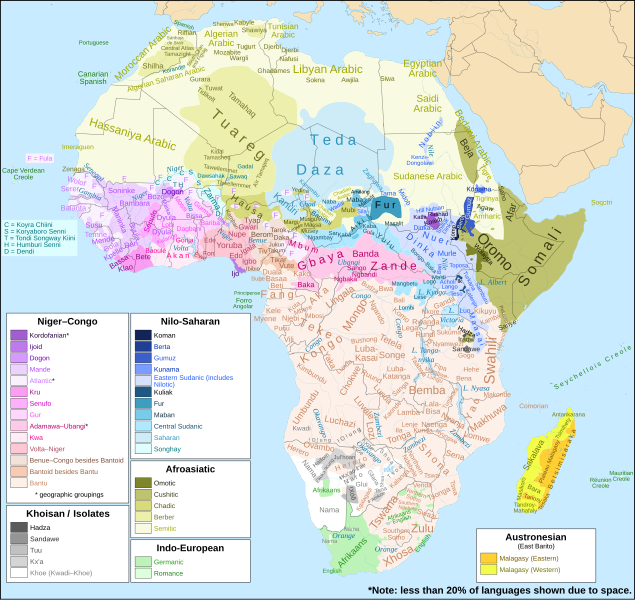
As for the most multilingual/cultural continent, it is Africa that is so linguistically diverse:

A study conducted by Shigeki Kaji of Kyoto University in 2013, centred on inhabitants of the Ugandan town of Hoima, found that the average inhabitant knows 4.34 languages. Interestingly, Uganda has no lingua franca, i.e. no common language used by speakers with different native languages. The average Ugandan therefore has to employ multiple languages during the course of daily life, depending on where he is and to whom he is speaking.

Such multilingualism is impressive, particularly when one considers that we are not talking about language scholars, but about average citizens just going about their business and flicking effortlessly between four or more languages.

WREXHAM:

We can consider Wales as Britain’s hidden corner of bilingualism:

Tucked away in the corner of the UK, one of the world’s most monolingual countries, you’ll find a beacon of bilingualism for the rest of the world: Wales. Out of the four home nations that make up the United Kingdom, Wales has led the way in its efforts to revive and promote the Welsh language, and has set a precedent for other countries all over the world. What makes this more impressive, is that it has managed to do so while living side-by-side with global giant English.

And Wrexham has been chosen as a bilingual town to promote the Welsh language...

SARAJEVO:

Today, there is life beyond war in Bosnia’s capital Sarajevo 30 years on. And despite all the attempts at ethnic cleansing, multicultural Sarajevo is the most diverse city in Europe.

CHERNIVTSI:

In his book Borderlines: A History of Europe in 29 Borders by Lewis Baston, the author walks us across these European borders and shares their stories. The book is named 'one of the most engaging and fascinating histories of Europe I've read for years' in a review by Dominick Sandbrook, the history podcaster.

Lewis Baston finishes his book by looking at Chernivtsi - "Secret Capital of Europe."

Deutsche Welle takes us to the undiscovered charm of Chernivtsi in a nice little video and there are many webpages looking at this town in the borderlands of Ukraine/Romania/Hungary/Slovakia/Poland, this place on the Brink: The forsaken Paradise , or this Little Vienna of the East.

Here's a very touching piece on coming across the book by someone whose grandparents lived there: Crying in bookstores, thinking of borders. And they finish:

Today, I teared up in a bookstore. Today, I bought a book because the first two paragraphs of its final chapter made me feel like crying. I picked it up and leafed through it to kill time, and because the title, Borderlines, caught my eye. I picked it up with some cynicism, wondering what this book might have to teach me about borders. I went to the last chapter, ‘The secret capital of Europe (Ukraine/ Romania)’ because I was curious what this book had to say about a border that tore hearts in half in my family. I read the first paragraph and I felt like crying.

Cernăuți (Chernivtsi) was my paternal grandparents’ birthplace, a home they fled under duress as young people, and where they never returned. A childhood home my grandmother spoke of often, when I went to visit her in the summers. These few lines, read by chance today, seemed to echo her words. Her voice, and not the writer’s, filled the page under my eyes.

Thus it was that, picking up a book at random in a listless moment, I found myself fighting back tears in a little bookshop in a quiet seaside town more than 1,400 miles away from where my grandparents started their lives’ journeys.

I am tired of tyranny, greed, and borders seared with violence, borders that shift with the desires and interests of small-minded men.

.

.

.

Friday, 12 September 2025

language distance

In many ways, we can see why English is so different from other languages. It's a mixture of other languages and its grammar has been greatly simplified

It can be very interesting to compare English with, say, Chinese. Do you see any similarities with your langauge? Language differences: English - Chinese

From an English-speakers perspective, there are 'difficult' languages. How do these compare with yours Most Difficult Language To Learn

... And there are the 'easy' languages: Easiest Foreign Languages To Learn - Business Insider

This is what we can 'language distance' - and there is a useful guide from Gill Ragsdale on how language distance shapes fluency in the E L Gazette:

The ‘language distance’ between English and a language learner’s first language affects reading fluency, but not comprehension according to a study by Victor Kuperman at McMaster University, Canada. Gill Ragsdale reports.

Clearly it is easier for someone to learn a language that is more like their native language than one that is more distant: learning English is generally easier for Italian than for Japanese speakers. What is less clear is which processes in language learning are affected and how to quantify those effects.

Kuperman set out to clarify the effect of language distance on reading fluency and comprehension. Past studies have given mixed results, possibly because the focus has been on comprehension, which is relatively easy to measure.

Data for this study was taken from the Multilingual Eye-movement Corpus. This database has measures of reading fluency and comprehension from 1,105 students and staff from 24 universities having 18 distinct first languages.

For more, see: How does language distance affect reading fluency and comprehension in English as second language? by Victor Kuperman.

And: Linguistic distance - Wikipedia

Plus the discussions on Language distance in Europe : r/languagelearning

Tuesday, 15 April 2025

new york, city of endangered languages

Last year, American author Ross Perlin won the British Academy Book Prize for Global Cultural Understanding for his book "Language City: The Fight to Preserve Endangered Mother Tongues"

Ross Perlin wins the £25k British Academy Prize for his book on endangered languages

It's now the Book of the Week on BBC Radio 4: 

Linguist Ross Perlin is racing against time to map little-known languages across the most linguistically diverse city in history - contemporary New York.

BBC Sounds - Language City by Ross Perlin - Available Episodes

Prof Perlin set up the ELA in NY:

Founded in 2010, the Endangered Language Alliance (ELA) is a non-profit dedicated to documenting Indigenous, minority, and endangered languages, supporting linguistic diversity in New York City and beyond.

Home - Endangered Language Alliance

Here's the project:

New York has long been a city of immigrants, but linguists now consider it a laboratory for studying and preserving languages in rapid decline elsewhere in the world.

N.Y./Region: City of Endangered Languages | The New York Times - YouTube

And there are indeed some very interesting projects coming out of this:

Revitalizing endangered Indigenous languages that have little or no digital presence is challenging with artificial intelligence—but not impossible.

Some endangered language speakers get creative with AI preservation efforts — WHYY

On any given Sunday in New York City, an evangelical church of Guatemalan immigrants in Brooklyn worships in the indigenous Mayan language K’iche’; a South Indian Orthodox church in Queens chants liturgies in Syriac, the first-century descendant of Aramaic; and a Mennonite church in the Bronx conducts services in Garifuna, a rare language developed from the marriages of West African slaves and Indigenous Caribbean people.

How NYC Churches Guard Endangered Languages - Christianity Today

The linguist’s celebration of the polyglot city inspires a series of shows at Manhattan’s Little Island.

Ross Perlin writes a love letter to New York — in Yiddish and 699 other languages - New York Jewish Week

.

.

.

Tuesday, 25 March 2025

the future is african

 How do we and how should we see Africa?

LANGUAGE:

The continent is part of the Anglosphere:

Jay Doubleyou: the english-speaking world: west africa

Jay Doubleyou: different african english accents

Jay Doubleyou: english is an african language

Jay Doubleyou: west african pidgin english

Nigeria is the third largest country when it comes to English speakers, after India and the USA, although the list on Wikipedia can be questioned...

List of countries by English-speaking population - Wikipedia

And arguably the largest English speaking city in the entire world is Lagos, Nigeria:

The largest city by population in Africa with close to 25 million people! Also, arguably the largest English speaking city in the entire... | Instagram

Here's a better list:

English Speaking Countries in Africa - WorldAtlas

CULTURE:

In that case, when learning English, we do not need to stick with the UK - but can read and listen to stuff and have conversations with people coming out of places such as Cameroon and Kenya:

Jay Doubleyou: "let’s not make english about british culture"

When it comes to music, there is so much coming out of Anglophone Africa:

Jay Doubleyou: the music of west africa

Yes, London is a cultural centre, but much of this is multicultural, with the African diaspora contributing considerably:

Jay Doubleyou: adventures in art at the british museum

Jay Doubleyou: shonibare - gorgeously recognisable artist

And as for writing, there are powerful African voices making up the 'canon':

Jay Doubleyou: english literature

POLITICS:

Europeans have made their mark in the continent of course - and some are only just realising their impact:

Jay Doubleyou: facing up to your imperial past: the belgians

And this might also involve 'paying back' for any gains and losses:

Jay Doubleyou: reparations

But Africa has not always been on the receiving end of violence and robbery - but might have something to teach the rest of the world:

Jay Doubleyou: non-western democratic traditions

Jay Doubleyou: non-western democratic traditions - part two

THE FUTURE IS AFRICAN

Maybe, then, Africa can be seen not as a victim but as a provider and innovator:

Myth 6: Africa needs our help - Global Justice Now Global Justice Now

Here's another list:

10 things Africa has given the world | Eliza Anyangwe | The Guardian

Here's real promise for the future:

How Africa can help drive global climate change solutions - ONE Data & Analysis

Including in sport:

Newly elected IOC President Kirsty Coventry celebrated on return home to Zimbabwe | AP News

View from Africa: how Kirsty Coventry will handle sport’s biggest job at the IOC | International Olympic Committee | The Guardian

We need to think of Africa as more than a place to extract stuff:

What does Africa offer to global world development apart from Natural Resources? - Quora

And this might well become a source of power:

Why Africa will become a prominent player in global geopolitics | World Economic Forum

The future is African:

The Future Is African | Council on Foreign Relations

6 numbers that prove the future is African | World Economic Forum

To finish:

Afrofuturism is a cultural aesthetic that combines science-fiction, history and fantasy to explore the African-American experience and aims to connect those from the black diaspora with their forgotten African ancestry

Afrofuturism | Tate

Afrofuturism | National Museum of African American History and Culture

Afrofuturism: Turning pain into possibility - YouTube

And:

Let's Talk About 'Black Panther' And Afrofuturism - YouTube

Black Panther and Afrofuturism - YouTube

.

.

.

Monday, 17 March 2025

the music of west africa

The music of West Africa is multi-layered and multi-faceted.

This would be one element:

Jay Doubleyou: polyrhythm and different rhythms

For example:

Butour Ngale - African polyrhythm demonstration - YouTube [Senegal]

Chaabi. That Moroccan groove that made you go WHHAAATTTTTT - YouTube

Mongo Santamaria - Afro Blue - YouTube [Afro-Cuban]

Tony Allen & Hypnotic Brass feat Baaba Mal - Ise Nla - LIVE@Broad Casting, London 29/01/09 - YouTube [Nigeria and Senegal]

There is a rich instrumental heritage: 

The kora (Manding languages: ߞߐߙߊ kɔra[1]) is a stringed instrument used extensively in West Africa.[2] A kora typically has 21 strings, which are played by plucking with the fingers. It has features of the lute and harp.

Kora (instrument) - Wikipedia

With very famous players:

Toumani Diabaté obituary | Music | The Guardian

Toumani Diabaté & Sidiki Diabaté - Jarabi - YouTube

Ali Farka Touré & Toumani Diabaté - In The Heart Of The Moon - YouTube [intro in English]

This is part of an inherited tradition: 

A griot (/ˈɡriːoʊ/; French: [ɡʁi.o]; Manding: jali or jeli (in N'Ko: ߖߋ߬ߟߌ,[1] djeli or djéli in French spelling); also spelt Djali; Serer: kevel or kewel / okawul; Wolof: gewel) is a West African historian, storyteller, praise singer, poet, and/or musician.

Griot - Wikipedia

Griot Music of West Africa | Steve Pile AND Jali Bakary Konteh | TEDxSonomaCounty - YouTube [intro in English]

And there are very interesting collaborations...

Welsh harpist Catrin Finch and Senegalese kora player Seckou Keita met by chance in 2012, when Keita was called in to substitute for Toumani Diabaté in rehearsals for a tour with Finch. A military coup in Mali had prevented Diabaté from leaving the country in time, so Keita stepped in to help prepare the repertoire with Finch—a classical musician who had never seen or heard a kora before. For his part, Keita, a Senegalese kora master and griot of royal descent, didn’t read music. A wonderful musical partnership was born.

Catrin Finch & Seckou Keita: A Magical Partnership | KCRW 

Two Harps That Beat As One: Catrin Finch and Seckou Keita - YouTube

Bach to Baïsso - Catrin Finch and Seckou Keita - YouTube

Different traditions can fuse together...

Tishoumaren (ⵜⵉⵛⵓⵎⴰⵔⴻⵏ in Neo-Tifinagh script) or assouf,[1] internationally known as desert blues, is a style of music from the Sahara region of northern and west Africa. Critics describe the music as a fusion of blues and rock music with Tuareg, Malian or North African music.[2] Various other terms are used to describe it[1] including desert rock, Saharan rock,[3] Takamba,[2] Mali blues,[4] Tuareg rock[5] or simply "guitar music".[6] The style has been pioneered by Tuareg musicians in the Sahara region, particularly in Mali, Niger, Libya, Algeria, Burkina Faso and others; with it also being developed by Sahrawi artists in Western Sahara.[7]

The musical style took shape as an expression of the culture of the traditionally nomadic Tuareg people, amid their difficult sociopolitical situation, including rebellions, widespread displacement and exile in post-colonial Africa.[7] The word Tishoumaren is derived from the French word chômeur, meaning "the unemployed".[1]

The genre was first pioneered by and popularized outside of Africa by Ali Farka Touré and later Tinariwen. In recent years, artists like Mdou Moctar and Bombino have continued to adapt Saharan rock music and have achieved international success.[8][2][3][9][7]

Desert blues - Wikipedia

With a very special festival happening in Mali:

Festival au Désert - Wikipedia

Ali Farka Toure - Festival In The Desert 2003 - YouTube

The Tragic Story of Africa's Festival In The Desert - YouTube

Perhaps the most international music has come from Nigeria/Ghana:

Afrobeat (also known as Afrofunk[3][4]) is a West African music genre, fusing influences from Yoruba music[5][6] and Ghanaian music (such as highlife),[7] with American funk, jazz, and soul influences.[5][8] With a focus on chanted vocals, complex intersecting rhythms, and percussion,[9] the style was pioneered in the 1960s by Nigerian multi-instrumentalist and bandleader Fela Kuti, who popularised it both within and outside Nigeria. At the height of his popularity, he was referred to as one of Africa's most "challenging and charismatic music performers."[10]

Distinct from Afrobeat is Afrobeats, a combination of sounds originating in West Africa in the 21st century. This takes on diverse influences and is an eclectic combination of genres such as hip hop, house, jùjú, ndombolo, R&B, soca, and dancehall.[11][12][13][14][15][16] The two genres, though often conflated, are not the same.[12][13]

Afrobeat - Wikipedia

With its most famous proponent: 

Fela Aníkúlápó Kútì (born Olufela Olusegun Oludotun Ransome-Kuti; 15 October 1938 – 2 August 1997) was a Nigerian musician and political activist. He is regarded as the principal innovator of Afrobeat, a Nigerian music genre that combines West African music with American funk and jazz.[2] At the height of his popularity, he was referred to as one of Africa's most "challenging and charismatic music performers".[3] AllMusic described him as "a musical and sociopolitical voice" of international significance.[4]

Fela Kuti - Wikipedia

He was 'the president':

FELA KUTI Live at GLASTONBURY [Film Concert] - YouTube [intro in English]

Fela Kuti: Music Is The Weapon | Full Music Documentary Movie - YouTube

Faces of Africa - Fela Kuti: The Father of Afrobeat, Part 1 - YouTube

The Genius of Fela Kuti and Afrobeat (feat. Femi & Made Kuti) - YouTube

He had an important collaborator:

Tony Allen - Afrobeat Revolution (Full Album) 2020 - YouTube

To finish, from Ghana:

it is pure, rootsy, raw, driving African funk music of the highest order,

In 1976, Marijata made an african Raw Funk masterpiece

Marijata - No Condition Is Permanent - YouTube

.

.

.

Monday, 10 March 2025

different african english accents

Most Africans are bilingual:

In a cafe in south London, two construction workers are engaged in cheerful banter, tossing words back and forth. Their cutlery dances during more emphatic gesticulations and they occasionally break off into loud guffaws. They are discussing a woman, that much is clear, but the details are lost on me. It’s a shame, because their conversation sounds fun and interesting, especially to a nosy person like me. But I don’t speak their language.

Out of curiosity, I interrupt them to ask what language they are speaking. They both switch easily to English, explaining that they are South Africans and had been speaking Xhosa. In Johannesburg, where they are from, most people speak at least five languages, says one of them, Theo Morris. For example, Morris’s mother’s tongue is Sotho, his father’s is Zulu; he learned Xhosa and Ndebele from his friends and neighbours and English and Afrikaans at school. “I went to Germany before I came here, so I also speak German,” he adds.

Was it easy to learn so many languages? “Yes, it’s normal,” he laughs.

He’s right. Around the world, more than half of people – estimates vary from 60-75% – speak at least two languages. Many countries have more than one official national language – South Africa has 11. People are increasingly expected to speak, read and write at least one of a handful of “super” languages, such as English, Chinese, Hindi, Spanish or Arabic, as well. So to be monolingual, as many native English speakers are, is to be in the minority and perhaps to be missing out.

Why being bilingual works wonders for your brain | Language | The Guardian

Jay Doubleyou: ça va?! bilingualism is good for the brain

Much of Africa is Anglophone:

Jay Doubleyou: english is an african language

Jay Doubleyou: the english-speaking world: west africa

But each country and region has its own accent:

WHICH AFRICAN COUNTRY HAS THE BEST ENGLISH ACCENT - YouTube

KENYANS HAVE THE BEST ENGLISH ACCENT & PRONUNCIATION. DO SOUTHERN AFRICANS NEED TO RELEARN ENGLISH? - YouTube

Here is an excellent overview:

Accents of Africa | IDEA: International Dialects of English Archive

And here's a nice conversational view of being South African:

Language: Accents, dialects, and the Queen’s English - SPEAK Blog

Finally, here 


Languages of Africa - Wikipedia


635px-Map_of_African_languages.svg.png (635×600)

.

.

.

Sunday, 22 December 2024

facing up to your imperial past: the belgians

A lot of countries have had (and still have?) empires. 

How many are looking back on the not-so glorious times? 

If we look at what the British did to India and elsewhere in the British empire things still have to be looked at a little more - and that is happening, whether it's as adventures in art at the British Museum, or considering the British empire past and present, or teaching empire in British schools.

There is much more thought being put into the idea of "decolonizing" - whether it's Britain... Israel... Russia... Canada... Australia... India....

All of these countries are 'big' or have had 'big empires' - but what about the 'smaller' countries?

The Dutch are facing up to their imperial past - although things are rather mixed up in the country: What Is New about Dutch Populism? Dutch Colonialism, Hierarchical Citizenship and Contemporary Populism.

What about their neighbours in Belgium?

The Belgian empire in Africa was particularly brutal:

How extraordinary it was to discover, then, that one of this small state’s kings was also one of history’s greatest mass murderers. Leopold II (1835-1909) wanted his country to join the league of European empires, but the Belgian state refused to finance its part in western Europe’s expensive scramble for Africa. So they outsourced the task to Leopold, who used personal diplomacy to convince the European powers to grant him control of a large portion of the Congo basin. He promised to bring civilisation to the so-called dark continent.

Belgium's Heart of Darkness | History Today

This even has a separate entry in Wikipedia:

Atrocities in the Congo Free State - Wikipedia

Belgians are facing up to this imperial past:

Confronting Belgium's Colonial Legacy in Congo

Leopold II: Belgium 'wakes up' to its bloody colonial past - BBC News

An extraordinary documentary looks at how the Americans took over from the Belgians in 1960 - as the Brussels Times points out:

The murder of Congo’s first post-independence leader Patrice Lumumba took place as famed jazzman Louis Armstrong was touring the country. The two events were not a coincidence, as the acclaimed documentary, ‘Soundtrack to a Coup d’Etat’, reveals.

How jazz played out over Congo’s chaotic coup

With more from Wikipedia:

To retain control over the riches of what used to be Belgian Congo, King Baudouin of Belgium finds an ally in the Eisenhower administration, which fears losing access to one of the world’s biggest supplies of Uranium, a mineral vital for the creation of atomic bombs. Congo takes center stage to both the Cold War and the scheme for control of the UN. The US State Department swings into action: Jazz ambassador Louis Armstrong is dispatched to win the hearts and minds of Africa. Unwittingly, Armstrong becomes a smokescreen to divert attention from Africa’s first post-colonial coup, leading to the assassination of Congo’s first democratically elected leader.

Soundtrack to a Coup d'Etat - Wikipedia

The filmmaker is Belgian:

Johan Grimonprez (born 1962) is a Belgian multimedia artist, filmmaker, and curator. He is most known for his films Dial H-I-S-T-O-R-Y (1997), Double Take (2009) and Shadow World: Inside the Global Arms Trade (2016), based on the book by Andrew Feinstein. Grimonprez wrote and directed the documentary Soundtrack to a Coup d'Etat about the promise of decolonisation, the hope of the non-aligned movement and the dream of self-determination.

Johan Grimonprez - Wikipedia

And another couple of reviews:

Soundtrack to a Coup d’Etat review – superb study of how jazz got caught between the cold war and the CIA | Music documentary | The Guardian

Coups, colonialism and all that jazz: the film that unravels extraordinary cold war truths | Film | The Guardian

Here's the trailer:

Soundtrack to a Coup d'Etat – Official Trailer - YouTube

.

.

.

Tuesday, 3 December 2024

passionate about the countryside

Firstly, what do we mean by 'the countryside'?

land outside towns and cities, with fields, woods, etc.
  • The surrounding countryside is windswept and rocky.
  • magnificent views over open countryside
  • the beautiful countryside of Wales
  • Everyone should enjoy the right of access to the countryside.
  • in the countryside the quieter pace of life in the countryside

countryside noun - Definition, pictures, pronunciation and usage notes | Oxford Advanced Learner's Dictionary at OxfordLearnersDictionaries.com

How do you feel about 'the countryside'?

Feeling at home in the countryside - Ramblers

‘A visit to the countryside is always accompanied by a feeling of unease; dread.’ - Changing Landscapes, Changing Lives

A lot of us wanted to move to the countryside during the pandemic:

COVID-19: Americans want to swap city for rural areas | World Economic Forum

Is it better to Live in the Countryside vs City Life -

Although moving to the countryside has an impact:

Jay Doubleyou: building on the greenbelt

But how open is the countryside?

The Book of Trespass by Nick Hayes review – a trespasser's radical manifesto | Travel writing | The Guardian

Nick Hayes on Trespassing: In Conversation with Dartington Trust - YouTube

Here we are looking at the history of the countryside:

Jay Doubleyou: the making of the british landscape...

Jay Doubleyou: stone circles in the west country

In other words we have had quite an impact on the countryside:

Jay Doubleyou: anthropocene

And we are only just understanding what that impact is:

Jay Doubleyou: climate literacy around the world

Jay Doubleyou: climate change in the english language classroom

But how much of this understanding is reliable, balanced and truthful?

Jay Doubleyou: green propaganda

Jay Doubleyou: green nationalism

Jay Doubleyou: how green are electric cars?

Jay Doubleyou: the spread of zoonotic diseases

Finally, perhaps we need to celebrate, to appreciate the countryside a little more:

Jay Doubleyou: earth day 2024

.

.

.

Thursday, 23 May 2024

comparing: education, society, culture

When we compare different countries or cities, especially our own, we tend not to be too critical.

Jay Doubleyou: comparing: countries

Jay Doubleyou: comparing: cities

EDUCATION:

The US and UK are not doing very well:

http://news.bbc.co.uk/nol/shared/bsp/hi/pdfs/13_02_07_nn_unicef.pdf

Here's a critical look at the state of the United States some fifty years ago:

Jane Elliott Brown Eyes vs Blue Eyes 1 - YouTube (incl intro - first minute)

Jane Elliott “Blue Eyes - Brown Eyes” Experiment Anti-Racism - YouTube (incl subtitles)

Here's the same experiment forty years later - and in the UK (main part from 9 mins - and to 14 mins)

How Racist Are You? - Jane Elliott's Blue Eyes/Brown Eyes Exercise - YouTube

The issue of class and race and gender in our education system is very complicated and very controversial:

‘Forgotten’ White working-class pupils let down by decades of neglect, MPs say - Committees - UK Parliament

Poorer white pupils let down and neglected - MPs - BBC News

White “working-class” boys aren’t failing because they’re White - Make it Plain

Looking at girls:

More than half of British girls lack confidence learning maths, poll finds | Schools | The Guardian

Ada Lovelace Day – Celebrating the achievements of women in science, technology, engineering and maths

Cafe Scientifique: Floating Offshore Wind Farms – Sidmouth Science Festival

2021 Sidmouth Science Festival programme.pdf

Let's compare the education system in India:

Sugata Mitra: The child-driven education | TED Talk

SOCIETY:

It seems that every 'marginalised' group have a hard time.

For example: Are British police interested in 'crimes against women'?

Every week in the UK, two women are murdered; as the documentary explained, a staggering 94 per cent of those cases involve stalking. As such, its illustration of the police response, near-universally dismissive or inept, was maddening – and terrifying. As State of Fear ended, there was precious little in the way of resolution – of course, there’s no way of wrapping up such a sprawling, systemic failure with a bow. Nonetheless, in its unflinching, forensic gaze, the show did essential work in simply taking women seriously and attending to their stories with measured and diligent interest. We can only hope that it pushes police to begin doing the same.

Stalking: State of Fear took women seriously - if only the police did too

And: Do immigrants commit more crime?

The academic literature and official statistics provide mixed findings for the relationship between immigration and crime. Research in the United States tends to suggest that immigration either has no impact on the crime rate or even that immigrants are less prone to crime.[1][2][3] A meta-analysis of 51 studies from 1994–2014 on the relationship between immigration and crime in the United States found that, overall, the immigration-crime association is negative, but the relationship is very weak and there is significant variation in findings across studies.[4] This is in line with a 2009 review of high-quality studies conducted in the United States that also found a negative relationship.[5]

Research and statistics in some other, mainly European countries suggest a positive link between immigration and crime: immigrants from particular countries are often overrepresented in crime figures.[6][7][8] The over-representation of immigrants in the criminal justice systems of several countries may be due to socioeconomic factors, imprisonment for migration offenses, and racial and ethnic discrimination by police and the judicial system.[9][10][11] The relationship between immigration and terrorism is understudied, but existing research is inconclusive.[12][13][14] Research on the relationship between refugee migration and crime is scarce and existing empirical evidence is often contradictory.[15][16] According to statistics from some countries, asylum seekers are overrepresented in crime figures.[17][18][19][failed verification]

Immigration and crime - Wikipedia

The mythical tie between immigration and crime | Stanford Institute for Economic Policy Research (SIEPR)

Trump says migrants are fueling violent crime. Here is what the research shows | Reuters

Immigrants less likely to commit crimes than U.S.-born : NPR

Many people who oppose immigration say that it increases crime. But does immigration really affect crime? Studying a country whose proportion of migrants has tripled in less than ten years, researchers find immigration significantly impacts people’s perceptions of crime but has no effect on actual crime.

Does immigration really increase crime? - McGill University

We causally analyse the link between immigrants and crime in Germany for 2008–2019. The effect is positive for the early sub-period and negative or insignificant for the later one. When analyzing the total period, the estimates average out to zero.

Do immigrants affect crime? Evidence for Germany - ScienceDirect

Reality Check: Are migrants driving crime in Germany? - BBC News

And: Are strangers dangerous when it comes to children?

Statistics on child sexual abuse | NSPCC Learning

And: What are the countries with the highest/lowest crime/murder/suicide rates?

Crime Rate by Country 2024

List of countries by intentional homicide rate - Wikipedia

List of countries by suicide rate - Wikipedia

And: What makes the English? Let's go to Munich (at 10:30)

From football fans watching England, to Dover, a Druid gathering, and a mass trespass near Reading, Grayson wonders who are the English?

Grayson Perry's Full English - Series 1: Episode 1 | Channel 4

FINALLY: CULTURE, COMEDY AND ENTERTAINMENT:

Here are some lists: how many of these represent 'minorities'?

Movies:

Greatest American Film Directors | Pantheon

Driven to Darkness: Jewish Emigre Directors and the Rise of Film Noir on JSTOR

Musicals:

West Side Story (1961 film) - Wikipedia

West Side Story is the product of a bunch of GAY JEWS!!

Musicians:

Big Mama Thornton - Hound Dog - YouTube

Elvis Presley - Hound Dog (1956) HD 0815007 - YouTube

The Rolling Stones - Little Red Rooster - YouTube [1:30]

Comedians:

Top 10 Best Comedians of All Time

Top 10 American Male Stand-Up Comedians of All Time - YouTube

The 20 Best Stand Up Comedy Specials of All Time - YouTube

Top 10 Absolutely Fabulous Moments - YouTube

Footballers:

Une équipe de foot multiculturelle peut-elle encourager la France à l'être aussi ?

It’s not just football – it’s a barometer of diversity. Bring on the Euros… | Euro 2020 | The Guardian

Finally, what country could possibly compare?

THIS IS RUSSIA WINTER IS COMING - YouTube 

Discussion of Tchaikovsky's personal life, especially his sexuality, has perhaps been among the most extensive of any composer in the 19th century and certainly of any Russian composer of his time.[102] It has also at times caused considerable confusion, from Soviet efforts to expunge all references to homosexuality and portray him as a heterosexual, to efforts at analysis by Western biographers.[103]

Pyotr Ilyich Tchaikovsky - Wikipedia (23 secs into the youtube video)

Compare:

BBC Radio 3 - Discovering Music, Tchaikovsky: Serenade for Strings

Ossip Abramovich Gannibal's father, Pushkin's great-grandfather, was Abram Petrovich Gannibal (1696–1781), a Cameroonian[14] page kidnapped and taken to Constantinople as a gift for the Ottoman Sultan and later transferred to Russia as a gift for Peter the Great.

Alexander Pushkin - Wikipedia (15 secs into the youtube video)

Compare:

Rare Editions of Pushkin Are Vanishing From Libraries Around Europe - The New York Times

Forgery or History? Peter Harrington Rare & First Edition Books.

whatthehell

.

.

.

Tuesday, 21 May 2024

comparing: cities

How would you compare your nearest city with another in your home country - or with your favourite city outside your home country?

There are lots of different ways to compare cities...

On this site, Hong Hong and Wichita in the US are the 'top cities':

City comparison | Compare cities around the world - Versus

Here we can chose two different cities to compare - but only in the States:

2024 Compare Cities

There's a nice list of things to compare:

How to Compare Different Cities | An Expertt Mini-guide

As a starting point, this app looks at how quickly you can get onto a highway/motorway, from Sao Paulo, New York and Santiago:

Urban Observatory

Here we can compare cost of living and quality of life:

Cost Of Living Comparison

Quality of Life Comparison

For example:

Cost of Living Comparison Between Exeter, United Kingdom And Santiago, Chile

Quality of Life Comparison Between Exeter, United Kingdom And Santiago, Chile

There are so many ways to measure things...

Nightlife Index 2023 – Consumer Choice Center

The Top Cities In The UK Empowering Independent Music Artists | iMusician

The best cities for art museums and graffiti

Which cities have the most museums? – Jack's Adventures in Museum Land

This is from a TED Talk from nine years ago. How have things changed since then?

Worldwide, violence is on the decline, but in the crowded cities of the global south — cities like Aleppo, Bamako and Caracas — violence is actually accelerating, fueled by the drug trade, mass unemployment and civil unrest. Security researcher Robert Muggah turns our attention toward these "fragile cities," super-fast-growing places where infrastructure is weak and government often ineffective. He shows us the four big risks we face, and offers a way to change course.

Robert Muggah: How to protect fast-growing cities from failing | TED Talk

Here's more on cities from TED Talks:

Ideas about Cities

The Best TED Talks about Cities and Urban Planning – parCitypatory

.

.

.

Monday, 20 May 2024

comparing: countries

What are the differences between your country and other countries? - those that you know, have visited, would like to go to...

There are lots of different ways to make comparisons:

Guide to Country Comparisons - The World Factbook

There are lots of statistics to look at to make comparisons:

The Diversity of Countries and Economies across the World | OpenStax Macroeconomics 2e

How different nationalities see the world differently - And why it matters | Listening Partnership | Oxford

How does does your country compare?

This study was carried out by UNESCO in 2007:

An overview of child well-being in rich countries

A comprehensive assessment of the lives and well-being of children and adolescents in the economically advanced nations

The true measure of a nation’s standing is how well it attends to its children – their health and safety, their material security, their education and socialization, and their sense of being loved, valued, and included in the families and societies into which they are born.

Click on this link to see a table which compares these different criteria - and the UK and US come out significantly badly:

http://news.bbc.co.uk/nol/shared/bsp/hi/pdfs/13_02_07_nn_unicef.pdf

www.unicef.org/media/files/ChildPovertyReport.pdf

There are plenty of other statistics about how well we look after our children.

For example, how many resources they have at school, with Scandinavian and German/Austrian/Swiss kids having more than enough - see page 36 of this more recent report from the OECD:

www.oecd.org/els/family/43570328.pdf

Jay Doubleyou: explaining how your country's education system works

And then there is the measurement of 'happiness':


Happy Planet Index - Wikipedia, the free encyclopedia

This idea originally came from Bhutan:


Gross national happiness - Wikipedia, the free encyclopedia

There are many other such indices:

Monday, 29 April 2024

how nations are invented

Is 'the nation' a 'natural' thing?

Nationalism is natural, multiculturalism is unnatural and foolish. : r/unpopularopinion

If you look at the history of the 'nation-state', it certainly doesn't seem 'natural':

Nation-state | Definition, Characteristics, & Politics | Britannica

Most 'nations' are in fact political creations - as this excellent BBC series with Misha Glenny has shown:

BBC Radio 4 - The Invention Of...

Including:

A four-part history of us - our borders, our peoples, the stories we tell ourselves.

BBC Radio 4 - The Invention Of..., Britain

And, amongst many:

Misha Glenny presents a history of Brazil, from the arrival of the Portuguese in 1500 to Brazil's entry in the Second World War

BBC Radio 4 - The Invention Of..., Brazil

The latest takes us to China:

How did the world's greatest civilisation find itself dragged into two Opium Wars and a century of humiliation? Misha Glenny heads to Hong Kong to find out.

BBC Radio 4 - The Invention Of..., China, To kowtow or not kowtow

It's a huge topic.

Here are some more examples:

India - An Unnatural Nation | History Forum

Natural borders of France - Wikipedia

The Invention of Canada: Literary Text and the Immigrant Imaginary

The Contested Idea of South Africa

Richard White’s Inventing Australia: revisiting the invention forty years later

La invencion de Mexico / The Invention of Mexico

Providence and the Invention of the United States

Here's more from these pages:

Jay Doubleyou: imposing one language on china

Jay Doubleyou: china, mandarin and domestic dominance

Jay Doubleyou: culture mix: germany

Jay Doubleyou: culture mix: norway

Jay Doubleyou: exceptionalism today

Jay Doubleyou: the politics of statues

Jay Doubleyou: official languages

Jay Doubleyou: language in ukraine: mariupol greek

Jay Doubleyou: language and politics in ukraine

Jay Doubleyou: not every english/swedish/german/russian-speaker is english/swedish/german/russian

Jay Doubleyou: facing up to your imperial past: the dutch

Jay Doubleyou: inglorious empire - what the british did to india

Jay Doubleyou: english traditions which aren't english...

.

.

.

Wednesday, 31 May 2023

why giving a welsh park a welsh name is problematic - or not

Recently, one of the national parks of Wales changed its name:

Brecon Beacons: Park to use Welsh name Bannau Brycheiniog - BBC News

And this is why:

Brecon Beacons: Bannau Brycheiniog rebrand shows why names matter - BBC News

Here's a bit of help with the pronunciation:

Bannau Brycheiniog is pronounced: ban-eye bruck-ein-iog. It’s derived form the plural of “ban”, meaning “peak”, and “Brycheiniog” referring to the old kingdom of King Brychan. Its English translation means “The Peaks of Brychan’s Kingdom”.

Brecon Beacons name change explained: How to pronounce the National Park’s new Welsh name Bannau Brycheiniog

But not everyone likes it:

Business chiefs call for Brecon Beacons' English name to be reinstated over tourism fears | Daily Mail Online

Brecon Beacons National Park: Tories criticise renaming as 'symbolic' attempt to look 'trendy' | UK News | Sky News

Why associate a rapist with Brecon Beacons? | cambrian-news.co.uk

Unfortunately, this has become part of the so-called 'culture wars':

The new name, which took effect yesterday, has been imposed without consulting any of the thousands of local residents (or 4 million annual visitors) who so enjoy this breath-takingly beautiful landscape. It is purely the brainchild of an unholy alliance of virtue-signalling politicians and civil servants who appear to be prepared to spend taxpayers' money on the most lame of initiatives, as long as they can be passed off as contributing in some way to the sunlit uplands of 'net zero'.

HARRY MOUNT: Renaming the Brecon Beacons is a victory for woke philistines | Daily Mail Online

There’s nothing that imperialists hate more than Welsh people (or Irish people, or Scottish people) doing Welsh (Irish/Scottish) things in their own country. Throw in concern about the environment and you basically have what amounts to a genius marketing strategy, and right before the coronation of the former “Prince of Wales” as King. Note my use of quotation marks, because the last true Prince of Wales – that’s literally his name – Llywelyn Ein Llyw Olaf, died in 1282. These sorts of union-flag-waving English jamborees can make even the mildest Welsh person feel a bit queasy...

Bannau Brycheiniog: is this Welsh national park where Tory culture warriors will meet their Waterloo? | Rhiannon Lucy Cosslett | The Guardian

As covered by the EL Gazette:

Just when we thought it was safe to go back down the pub, the language wars have again broken out. This time it is the mighty ire of the English directed against a Welsh National Park...
The most common complaint is that it is “anti-English”. “The Welsh just want to have a laugh at us because we can’t pronounce it,” spluttered one commentator. Certainly the Welsh might enjoy the spectacle, just as English people collapse in giggles every time we hear an American trying to pronounce the word Worcestershire.