Showing posts with label sport. Show all posts

Friday, 28 February 2025

teaching sport in the esl/esol/tefl class

There are many different approaches teachers can take when 'doing sport' in the English classroom.

Here are some ideas and lesson plans.

...

Thursday, 23 May 2024

comparing: education, society, culture

When we compare different countries or cities, especially our own, we tend not to be too critical.

Jay Doubleyou: comparing: countries

Jay Doubleyou: comparing: cities

EDUCATION:

The US and UK are not doing very well:

http://news.bbc.co.uk/nol/shared/bsp/hi/pdfs/13_02_07_nn_unicef.pdf

Here's a critical look at the state of the United States some fifty years ago:

Jane Elliott Brown Eyes vs Blue Eyes 1 - YouTube (incl intro - first minute)

Jane Elliott “Blue Eyes - Brown Eyes” Experiment Anti-Racism - YouTube (incl subtitles)

Here's the same experiment forty years later - and in the UK (main part from 9 mins - and to 14 mins)

How Racist Are You? - Jane Elliott's Blue Eyes/Brown Eyes Exercise - YouTube

The issue of class and race and gender in our education system is very complicated and very controversial:

‘Forgotten’ White working-class pupils let down by decades of neglect, MPs say - Committees - UK Parliament

Poorer white pupils let down and neglected - MPs - BBC News

White “working-class” boys aren’t failing because they’re White - Make it Plain

Looking at girls:

More than half of British girls lack confidence learning maths, poll finds | Schools | The Guardian

Ada Lovelace Day – Celebrating the achievements of women in science, technology, engineering and maths

Cafe Scientifique: Floating Offshore Wind Farms – Sidmouth Science Festival

2021 Sidmouth Science Festival programme.pdf

Let's compare the education system in India:

Sugata Mitra: The child-driven education | TED Talk

SOCIETY:

It seems that every 'marginalised' group have a hard time.

For example: Are British police interested in 'crimes against women'?

Every week in the UK, two women are murdered; as the documentary explained, a staggering 94 per cent of those cases involve stalking. As such, its illustration of the police response, near-universally dismissive or inept, was maddening – and terrifying. As State of Fear ended, there was precious little in the way of resolution – of course, there’s no way of wrapping up such a sprawling, systemic failure with a bow. Nonetheless, in its unflinching, forensic gaze, the show did essential work in simply taking women seriously and attending to their stories with measured and diligent interest. We can only hope that it pushes police to begin doing the same.

Stalking: State of Fear took women seriously - if only the police did too

And: Do immigrants commit more crime?

The academic literature and official statistics provide mixed findings for the relationship between immigration and crime. Research in the United States tends to suggest that immigration either has no impact on the crime rate or even that immigrants are less prone to crime.[1][2][3] A meta-analysis of 51 studies from 1994–2014 on the relationship between immigration and crime in the United States found that, overall, the immigration-crime association is negative, but the relationship is very weak and there is significant variation in findings across studies.[4] This is in line with a 2009 review of high-quality studies conducted in the United States that also found a negative relationship.[5]

Research and statistics in some other, mainly European countries suggest a positive link between immigration and crime: immigrants from particular countries are often overrepresented in crime figures.[6][7][8] The over-representation of immigrants in the criminal justice systems of several countries may be due to socioeconomic factors, imprisonment for migration offenses, and racial and ethnic discrimination by police and the judicial system.[9][10][11] The relationship between immigration and terrorism is understudied, but existing research is inconclusive.[12][13][14] Research on the relationship between refugee migration and crime is scarce and existing empirical evidence is often contradictory.[15][16] According to statistics from some countries, asylum seekers are overrepresented in crime figures.[17][18][19][failed verification]

Immigration and crime - Wikipedia

The mythical tie between immigration and crime | Stanford Institute for Economic Policy Research (SIEPR)

Trump says migrants are fueling violent crime. Here is what the research shows | Reuters

Immigrants less likely to commit crimes than U.S.-born : NPR

Many people who oppose immigration say that it increases crime. But does immigration really affect crime? Studying a country whose proportion of migrants has tripled in less than ten years, researchers find immigration significantly impacts people’s perceptions of crime but has no effect on actual crime.

Does immigration really increase crime? - McGill University

We causally analyse the link between immigrants and crime in Germany for 2008–2019. The effect is positive for the early sub-period and negative or insignificant for the later one. When analyzing the total period, the estimates average out to zero.

Do immigrants affect crime? Evidence for Germany - ScienceDirect

Reality Check: Are migrants driving crime in Germany? - BBC News

And: Are strangers dangerous when it comes to children?

Statistics on child sexual abuse | NSPCC Learning

And: What are the countries with the highest/lowest crime/murder/suicide rates?

Crime Rate by Country 2024

List of countries by intentional homicide rate - Wikipedia

List of countries by suicide rate - Wikipedia

And: What makes the English? Let's go to Munich (at 10:30)

From football fans watching England, to Dover, a Druid gathering, and a mass trespass near Reading, Grayson wonders who are the English?

Grayson Perry's Full English - Series 1: Episode 1 | Channel 4

FINALLY: CULTURE, COMEDY AND ENTERTAINMENT:

Here are some lists: how many of these represent 'minorities'?

Movies:

Greatest American Film Directors | Pantheon

Driven to Darkness: Jewish Emigre Directors and the Rise of Film Noir on JSTOR

Musicals:

West Side Story (1961 film) - Wikipedia

West Side Story is the product of a bunch of GAY JEWS!!

Musicians:

Big Mama Thornton - Hound Dog - YouTube

Elvis Presley - Hound Dog (1956) HD 0815007 - YouTube

The Rolling Stones - Little Red Rooster - YouTube [1:30]

Comedians:

Top 10 Best Comedians of All Time

Top 10 American Male Stand-Up Comedians of All Time - YouTube

The 20 Best Stand Up Comedy Specials of All Time - YouTube

Top 10 Absolutely Fabulous Moments - YouTube

Footballers:

Une équipe de foot multiculturelle peut-elle encourager la France à l'être aussi ?

It’s not just football – it’s a barometer of diversity. Bring on the Euros… | Euro 2020 | The Guardian

Finally, what country could possibly compare?

THIS IS RUSSIA WINTER IS COMING - YouTube 

Discussion of Tchaikovsky's personal life, especially his sexuality, has perhaps been among the most extensive of any composer in the 19th century and certainly of any Russian composer of his time.[102] It has also at times caused considerable confusion, from Soviet efforts to expunge all references to homosexuality and portray him as a heterosexual, to efforts at analysis by Western biographers.[103]

Pyotr Ilyich Tchaikovsky - Wikipedia (23 secs into the youtube video)

Compare:

BBC Radio 3 - Discovering Music, Tchaikovsky: Serenade for Strings

Ossip Abramovich Gannibal's father, Pushkin's great-grandfather, was Abram Petrovich Gannibal (1696–1781), a Cameroonian[14] page kidnapped and taken to Constantinople as a gift for the Ottoman Sultan and later transferred to Russia as a gift for Peter the Great.

Alexander Pushkin - Wikipedia (15 secs into the youtube video)

Compare:

Rare Editions of Pushkin Are Vanishing From Libraries Around Europe - The New York Times

Forgery or History? Peter Harrington Rare & First Edition Books.

whatthehell

.

.

.

Monday, 4 December 2023

giving a presentation about your favourite sport

How can we talk about sport in an interesting and engaging way?

Jay Doubleyou: football and poetry

Jay Doubleyou: sport and history

Let's take boxing.

Firstly, we need to create some sort of structure:

1: history 2: rules/equipment 3: countries 4: lifestyle/training/celebrities 5: popular sport 6: championships

Then we need to do some research:


Boxing - Simple English Wikipedia, the free encyclopedia

Ancient Greek boxing - Simple English Wikipedia, the free encyclopedia

How much of it is 'propaganda' and how useful is it?

A look at the history of boxing in Saudi Arabia | Arab News

How many 'controversial topics' will you look at?

Why are Muslim Men Dominating UFC and Boxing? - YouTube

Are videos useful?

A Brief History of Boxing and the Muscles Used - YouTube

How much detail do you need?

Boxing - Wikipedia

For example:

Bare-knuckle boxing - Wikipedia

Broughton Rules - Wikipedia

London Prize Ring Rules - Wikipedia

Marquess of Queensberry Rules - Wikipedia

If you want to keep a non-expert audience interested, what can you show them?

Boxing Highlights TV - YouTube

famous boxing matches - Google Search

And what would be your conclusion or summary?

And how would you handle the Q&As?

Enjoy!

.

.

.

Friday, 6 August 2021

team gb... or uk?

We know sport and politics mix:

Jay Doubleyou: bread and circuses

Jay Doubleyou: sport and politics

Jay Doubleyou: sport and politics mix badly

.

The liberal-minded New Statesman asks why the British media is so fixated on 'Team GB' at the Olympics:

The media’s fixation on Team GB has reduced the Olympics to a display of parochial nationalism

The BBC – reflecting the priorities of its audience – has reimagined the greatest sporting pageant on Earth as Team GB vs Everyone Else.

By any standard, Kimia Alizadeh’s journey to Tokyo is one of the most remarkable tales of this year’s Olympics. Born in modest circumstances in Karaj, Iran, she was catapulted to national fame in 2016 when she won bronze in the taekwondo 57kg category in Rio de Janeiro, becoming Iran’s first ever female Olympic medallist. She was publicly praised by the country’s supreme leader, Ayatollah Khamenei. The president Hassan Rouhani called Alizadeh “my daughter”. On arriving back in Tehran, she was greeted by huge crowds and garlanded with flowers.

But in January 2020, she defected and went into hiding. In a statement she described herself as “one of the millions of oppressed women in Iran”, denouncing the government’s corruption and exploitation of female athletes. She claimed asylum in Germany, where she lives with her husband. Now, officially stateless and competing for the Olympic Refugee Team, she won her first match against – as fate would have it – her friend and former team-mate, Nahid Kiani of Iran. Then, in a thrilling second-round encounter, she took on – and sensationally beat – Jade Jones, the double Olympic champion from Great Britain.

Alas, if you were following the Olympic taekwondo on BBC television, only the last part of this story will have been deemed to be of any relevance to you. Perhaps it was only natural that a British broadcaster would choose to linger on Jones’s shock defeat in pursuit of an unprecedented third taekwondo Olympic gold: the gasping heartbreak, the flowing tears, the glowing studio tributes to a “great champion”. Even so, there was a coldness to the way her conqueror was essentially edited out of the coverage.

Not only was there no mention of Alizadeh’s remarkable story, but there was barely any analysis of how she had won. The rest of the competition was discussed only in terms of what it meant for Jones (Alizadeh was defeated in the semi-finals but had she reached the final, Jones would have been eligible to fight for bronze). For the BBC, one of the most intriguing athletes at these Olympics existed only as a vague, faceless other, briefly illuminated by her proximity to Our Brave, Brilliant Jade.

As the delayed Olympics finally kicks into gear, this is becoming a recurring theme. The message coming out of the Team GB camp at these Games is that the ruthless, unstinting emphasis on medals at all costs is being diluted ever so slightly. After winning a spectacular 27 golds in Rio, finishing second in the medal table, expectations are a little more modest this time around. But based on the early coverage – both on traditional and social media – the cult of Team GB appears as strong as ever.

Early successes for the swimmer Adam Peaty, the diver Tom Daley and the mountain biker Tom Pidcock have generated the sort of familiar wholesale parochialism that now largely defines Britain’s relationship with the Olympics. Over the past decade, the greatest sporting pageant on Earth has been reimagined as Team GB vs Everyone Else.

...

So here are just a few of the stories you may have missed over the first few days of the Games: Hend Zaza, the 12-year-old Syrian table tennis player who survived a civil war and made it to Tokyo; France’s stunning 83-76 triumph over the all-star US team in the men’s basketball; the Austrian cyclist Anna Kiesenhofer, who won the women’s road race in one of the sport’s greatest upsets; Momiji Nishiya, the tearful, beaming 13-year-old home gold medallist in the women’s street skateboarding; and the Tunisian swimmer Ahmed Hafnaoui, who won the men’s 400 metres freestyle despite qualifying slowest for the final. So often the Games is folded into a narrative of national virility, national superiority, national glory. The real lesson of the Olympics, surely, is that greatness comes from everywhere.

The media’s fixation on Team GB has reduced the Olympics to a display of parochial nationalism

But it's even more bizarre.

British nationalists are concerned about the 'union' - that is, the 'united' kingdom of all the bits of the UK staying together.

However, as explained in an excellent piece by a foreign (ie, American) media outlet, the "Brits" don't seem to really know who they are or who they want to keep on board:

Why does the United Kingdom compete as Team GB instead of Team UK at the Olympics?

It has a lot to do with geography and branding.

ATLANTA — Many Americans watching the Olympics might catch a glimpse of our friends from across the Atlantic competing as Team GB - as in Great Britain - and wonder why they don't go by the name of their country, the United Kingdom. If the thought has crossed your mind and you're looking for an answer, buckle up for some geography, because the short answer basically boils down to: Northern Ireland is why.

See, the United Kingdom is one country composed of four distinct countries - England, Scotland, Wales and Northern Ireland (fans of the show "Ted Lasso" might recall Jason Sudeikis' famous quip, "How many countries are in this country?").

RELATED: Why is Russia called ROC at the Tokyo Olympics?

Without getting too into the weeds of how the government of the United Kingdom works, think of it as a distant cousin to how territories like Puerto Rico and Guam are part of the United States but self-governing (it's not a great analogy, because Scotland and Wales and Northern Ireland have significant involvement in the UK national government in ways Puerto Rico does not, but don't get too stuck on that.)

So while the UK refers to the political union of England, Scotland, Wales and Northern Ireland, Great Britain refers only to the island of Great Britain, which is composed of England, Scotland and Wales. Northern Ireland sits on the island of Ireland, sharing it with the Republic of Ireland, its own country separate from the UK (if you're wondering, yes, there is a whole lot of political history behind that division of Ireland that we won't be getting into).

So, to recap - the UK is England, Scotland, Wales and Northern Ireland; Great Britain is just England, Scotland and Wales. The official name of the UK, in fact, is the United Kingdom of Great Britain and Northern Ireland.

Here's where the Olympics come back in. The UK's official Olympic team name is the Great Britain and Northern Ireland Olympic Team - but that's not very catchy. Beginning in 1999, they shortened it to the snappier "Team GB." And, yes, this is a sore spot among some in Northern Ireland. The country's sports minister once said the Team GB name "excludes, and indeed alienates, the people of Northern Ireland."

There is one more layer to it - broadly speaking, athletes from Northern Ireland don't actually automatically have to compete with Team GB. In most cases they can choose, if they want, to compete with Ireland under the Republic of Ireland flag. This year, there are 31 athletes from Northern Ireland at the Olympics, most of them competing with Team Ireland. That distinction probably also plays some of the role in Great Britain taking prominence in the Team GB name at the expense, to a certain extent, of fully including Northern Ireland.

Olympics 2020 weirdest sports | 11alive.com

.

Here's a quick 'explanation' of the difference between UK and GB:

Jay Doubleyou: explaining how your country works

.

The 'British' have never really understood Northern Ireland - and even less so today, when it's really important:

The Northern Ireland Protocol was only ever a placeholder to get Brexit over the line - now the real work begins - CityAM : CityAM

In fact, the Brits have never understood Ireland:

'Suddenly everything just exploded' - Bonnie Greer on sticking up for Ireland on the BBC

.

Here's another quick explanation - of the difference between NI and Ireland:

Jay Doubleyou: brexit and ireland

.

Actually, the British could learn a thing or two from their neighbours:

Jay Doubleyou: what's the best country?

Jay Doubleyou: the good country party

.

.

.

Tuesday, 17 July 2018

bread and circuses today

We've looked at 'bread and circuses' before:
Jay Doubleyou: bread and circuses

But is it 'scientificically-crafted mental illness?

For the ancient Romans, killing wild animals is fun.
Bread and circuses - YouTube

Do spectator sports have an inherent value, bonding communities, giving people the sense of being part of something larger than themselves, and providing a diversion from the woes of the world? Or, as Alex Jones suggests, does following sports teams dull the mind, waste the taxpayers' money and distract attention from issues that genuinely DO affect people's lives?
Are Sports the True Opiate of the Masses? - YouTube

Are we just enslaved?

Here Jason Christoff describes the ancient and occult use of sports in regards to how the elite rule the masses. Sport is popular because it holds extreme benefit for the ruling elite and this is why the elite support sports, with no expense spared.
Jason Christoff - How The Elite Use Sports To Rule The Masses - YouTube

It's sport and politics:

Tell me the Truth about Sports

A goal

Dominic Hobson: Sport is a Zero Sum Game

Writer and entrepreneur Dominic Hobson argues that organised, competitive sport damages - rather than builds - the character of players and spectators alike. In common with war, Dominic condemns it as a zero sum game: what one side gains, the other loses: "Rich in triumphalism, disdain and pride". 
"I still recoil in horror from the behaviour of the parents, let alone the players, when my oldest son played for a youth football team in south London," he says. 


Tell me the truth about sport: 
HG Wells on sports arenas:
Orwell: "Serious sport has nothing to do with fair play. It is bound up with hatred, jealousy, boastfulness, disregard of all rules and sadistic pleasure in witnessing violence."
prolefeed: the steady stream of mindless entertainment to distract and occupy the masses
Amusing Ourselves to Death: Public Discourse in the Age of Show Business 
Postman distinguishes the Orwellian vision of the future, in which totalitarian governments seize individual rights, from that offered by Aldous Huxley in Brave New World, where people medicate themselves into bliss, thereby voluntarily sacrificing their rights.  

Amusing Ourselves to Death - Wikipedia, the free encyclopedia
Jay Doubleyou: sport as poetry in motion... ?

.
.
.

Sunday, 27 November 2016

football and poetry

Sport is seen as poetry:
http://jayjaydoubleyoudoubleyou.blogspot.co.uk/2013/02/sport-as-poetry-in-motion.html

Here is a poem about a footballer:

Goalkeeper with a Cigarette
By: Simon Armitage


That’s him in the green, green cotton jersey,
prince of the clean sheets – some upright insect
boxed between the sticks, the horizontal
and the pitch, stood with something up his sleeve,
armed with a pouch of tobacco and skins
to roll his own, or else a silver tin
containing eight or nine already rolled.
That’s him with one behind his ear, between
his lips, or one tucked out of sight and lit -
a stamen cupped in the bud of his fist.
That’s him sat down, not like those other clowns,
performing acrobatics on the bar, or press-ups
in the box, or running on the spot,
togged out in turtleneck pyjama-suits
with hands as stunted as a bunch of thumbs,
hands that are bandaged or swaddled with gloves,
laughable, frying-pan, sausage-man gloves.
Not my man, though, that’s not what my man does;
a man who stubs his reefers on the post
and kicks his heels in the stud-marks and butts,
lighting the next from the last, in one breath
making the save of the year with his legs,
taking back a deep drag on the goal-line
in the next; on the one hand throwing out
or snaffling the ball from a high corner,
flicking off loose ash with the other. Or
in the freezing cold with both teams snorting
like flogged horses, with captains and coaches
effing and jeffing at backs and forwards,
talking steam, screaming exhausting orders,
that’s not breath coming from my bloke, it’s smoke.


https://prezi.com/4ayd3oxzqm3b/goalkeeper-with-a-cigarette/


You can hear the poet here:
http://www.bbc.co.uk/programmes/b0833y4s
.
.
.

Friday, 23 September 2016

sport and politics mix badly

Sport and politics mix badly:
Jay Doubleyou: sport and politics

Here are a couple more provocative articles:

Of Flags and Football
The football hooligans are at it again but this time instead of street riots and violence, they are raising hell with flags and fundraisers. With the recent news of Colin Kaepernick refusing to stand during the U.S. national anthem and Gabby Douglas not placing her hand over her heart during the anthem at the 2016 Summer Olympics, the question of whether or not politics and sports should mix has been on a lot of minds. While it is really only a debate over etiquette in the United States, the mixing of politics and sports is actually a punishable offense in Ireland.
During a recent soccer game between Ireland’s Celtics and Israel’s Hapoel Be’er Sheva, fans of the Celtic team waved Palestinian flags and cheered on the Celtics against the Israelis. This obviously carried with it an overt political message of not only standing against the Hapoel Be’er Sheva in the Champions League qualifier, but also against Israel’s violent oppression of the Palestinian people. For this action, the Celtic Football Club was fined by the Union of European Football Associations (UEFA) for violating their ban against, “gestures, words, objects or any other means to transmit any message that is not fit for a sports event, particularly messages that are of a political, ideological, religious, offensive or provocative nature.”
In response, a group of fans calling themselves the Green Brigade set up a crowdfunding campaign on GoFundMe to #MatchTheFineForPalestine. Together they have collected more than £130,000 to donate to Palestinian charities, including Medical Aid Palestine,which provides medical care for those injured or harmed “by conflict, occupation and displacement”, and the Lajee Centre, an effort to help Palestinian children in the Aida refugee camp start their very own soccer team to compete in the Bethlehem Youth League, which they have affectionately dubbed the Aida Celtic as a thank you.
Since then, many Palestinians have filmed thankful response videos for the Celtic show of support in defiance of the UEFA, proving that sports and politics can mix in ways that are helpful for those who are oppressed by governments worldwide, “from Ferguson to Palestine,” as the saying goes, even if it pisses off a few overly-patriotic sports fans in the process. Oh, and to add the icing to the cake: the Celtics swept the floor with the Hapoel Be’er Sheva, beating the Israeli team 5-2 in the home victory. And soon, thanks to their Irish comrades, I’m sure we’ll see the Aida Celtic winning a number of symbolic victories as well on their way towards freedom.

Center for a Stateless Society » Of Flags and Football


For the Separation of 

Stadium and State

David R. Henderson
The title of this post is the same as the title of an article by Jonah Goldberg about the Colin Kaepernick incident. (If you haven't been paying attention to the NFL lately, here's the summary: Kaepernick is a San Francisco 49er who refused, and still refuses, to stand for the U.S. national anthem.)
I had been pondering writing a similar piece myself. And then I saw his title. Darn, I thought, Goldberg has beat me to it.
Except that he didn't.
Goldberg's article is all about his narrow way of keeping politics out of sports: players should stand for the national anthem. Some people would see this as a way of inserting politics into sports.
That means that people who don't like what Kaepernick did are being forced to pay for the very property on which he did it.
But how would you keep politics out of sports in a fundamental way? It would be by not forcing people to pay for sports.
You don't have to know a lot about the 49ers or the NFL to know that local governments tax their residents and others heavily to pay for luxurious stadiums.
That means that people who don't like what Kaepernick did are being forced to pay for the very property on which he did it. On the other hand, it also means that people who don't like the flag-waving that goes on at NFL games are also forced to pay for the property on which that occurs.
There's a simple solution here: actually separate sports and state. That is, quit forcing taxpayers to pay for sports.
Now that's a solution that I will salute.
For the Separation of Stadium and State | Foundation for Economic Education
.
.
.

Saturday, 20 August 2016

sport and politics

Is sport simply a matter of winning - or losing?
Jay Doubleyou: winning or losing?

Is it just a 'zero-sum game':
BBC Radio 4 - Four Thought, Series 2, Dominic Hobson: Sport is a Zero Sum Game

Tell me the truth about sport:
Alan Watt - The Truth About Sports - YouTube
Alan Watt: How Television & Sports Are Used to Control The Masses. - YouTube
Noam Chomsky on the role of sports in propaganda-based authority - YouTube

The Romans and George Orwell had one or two ideas:
Bread and circuses - Wikipedia, the free encyclopedia
Amusing Ourselves to Death - Wikipedia, the free encyclopedia
Jay Doubleyou: sport as poetry in motion... ?

And it's still a game being played today:
Thai junta: Let them watch football | The World
Lots of circuses, not enough bread: EM’s failure to reform and invest | beyondbrics
Jay Doubleyou: bread and circuses

Looking at the 2012 Olympics in London:

The Olympics have always been a bit fascist, Tracey

21 JUNE 2011
Tracey Emin's observation that vintage Olympic posters "look a bit fascist" is cannier than she knows

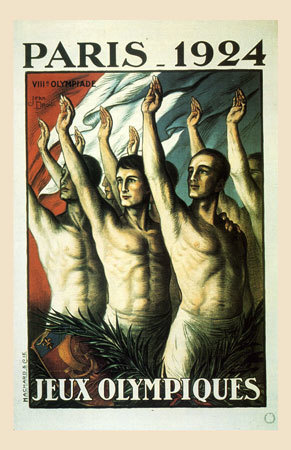
It was announced yesterday that Tracey Emin would be among twelve artists who would be designing posters for next year's Olympic Games. As she posed for the photographers, Emin said that she wanted her effort to look different from posters from previous Games, "because they look a bit fascist, to be honest". I have yet to see any footage of Lord Coe as he stood alongside her, but I've no doubt that he must have winced considerably. Whatever Coe's reaction, the fact is, Emin is right - the posters do look a bit fascist, because the Olympic Games themselves are a bit fascist.

Essentially, both Olympism and fascism are secular religions that venerate the human body and seek the triumph of the will. The Olympic motto of "citius, altius, fortius" ("faster, higher, stronger") is something that could have been dreamed up by Hitler or Mussolini. Indeed, throughout the 1920s and 1930s, celebrations of the Olympiads and fascist rallies grew increasingly indistinct. Both were quasi-religious experiences, complete with increasingly sophisticated rites and rituals, and adorned with striking iconography. Even their salutes looked the same. (Just check out the Paris 1924 poster.)

During that period, the Olympics and fascism also adhered to a cult of personality. The founder of the Olympics, Pierre de Coubertin, was almost regarded as Christ, and the IOC president, Henri de Baillet-Latour, as his chief disciple. As I wrote in my book Berlin Games:

"[T]hese men were regarded as being infallible, because they embodied an idealism that far transcended the grubby quotidian strivings of humanity. It was a pagan idealism, its pageantry godless, but its chauvinist adherents were nothing less than fanatic, men for whom no other point of view was acceptable. If anyone obstructed their ideals, then they would be subjected to the most vicious ad hominem attacks."

Sounds familiar?

And then there is the notion of race. Although anybody watching next year's 100 metres final would be hard pressed to claim that the OIympics were today racially discriminatory, early adherents of Olympism such as the future IOC president, Avery Brundage, spoke about the Olympics in the 1920s in ways that sounded like Alfred Rosenberg:

"Perhaps we are about to witness the development of a new race," Brundage observed at a dinner in Chicago in 1929, "a race of men actuated by the principles of sportsmanship learned on the playing field, refusing to tolerate different conditions in the other enterprises of life; a race physically strong, mentally alert and morally sound; a race not to be imposed upon, because it is ready to fight for right and physically prepared to do so; a race quick to help an adversary beaten in fair combat yet fearlessly resenting injustice or unfair advantage..."

The Olympians and the fascists also regarded the success of a nation as the result of the physical health of its people. Admiring Hitler's programme of enforced physical education, Brundage observed that countries that performed well at the Olympics, such as Finland, did well in other arenas. "What pleases those of us who are interested in sports is that the Finns carry the ideals from the playing field into other relations," Brundage wrote. "At least little Finland is the only country that recognises its obligations to pay war debts." The idea that athletic prowess is linked to sound financial management was a curious one to say the least, but such views were taken seriously at the time, not least by the Nazis.

When the Games went to Berlin in 1936, the union between the two movements was blessed. In many ways, the Berlin Olympics were the ultimate Olympic Games, because the Nazis were the only people who really "got" Olympism. For the Nazis, Olympism and Nazism dovetailed so neatly that, in the words of a memorandum from the Propaganda Ministry from October 1934, "the Olympic idea is a cultural requirement of National Socialism, which concerns the entire German people".

The Nazis added many little flourishes to the Olympics that are still evident today, not least the torch relay, which was the idea of the Secretary General of the Organizing Committee, Carl Diem. It was Diem who was later to rally thousands of Hitler Youth at the Olympic stadium in March 1945 as the Russians assaulted Berlin. Diem called on the assembled teenagers not to capitulate, and to show some "Olympic spirit". (In case Olympic spirit was not enough, execution stakes were set up around the stadium, ready to be used if there were any displays of cowardice.)

Since the war, the whiff of fascism has always clouded around the Olympics, not least in the form of Juan Antonio Samarach, who was a member of the Spanish Falange. And the Olympic movement still carries on with its funny rituals at its opening and closing ceremonies. It will be interesting to see what sort of poster Emin comes up with. In a way, I'd like her to do something a bit fascisty, because - ultimately - that would be an accurate reflection of the type of mumbo-jumbo that accompanies a few running races and some women's beach volleyball.


The Olympics have always been a bit fascist, Tracey


London 2012 Olympics: leading artists unveil official posters | Sport | The Guardian

Not everyone agrees:

Britain's Olympic success and post-Brexit vim are cause for celebration, not cringe

ZOE STRIMPEL 18 AUGUST 2016 • 10:00PM


Team GB’s performance in Rio is both remarkable and refreshing, a ray of sunshine in the relentless gloom surrounding not just the usual dire outings in international football, but fears over Brexit, home-grown terror, a dysfunctional Labour Party, childhood obesity, housing shortages, a collapsing health system, rail crises … the list goes on. Britain’s magnificent haul of gold and silver has finally given us something to shout about. Hasn’t it?

Sadly, for many, the answer is a sneering No. According to the arbiters of socially acceptable opinion, national pride can only be one of two things: a money-grubbing charade, or a show of proto-fascism. For the Left-wing grandee Sir Simon Jenkins, British Olympic pride in Rio is not only the result of a nasty, cynical government spending spree, but also evidence of both a far-Right and a “Soviet” sensibility. For Sir Simon, the BBC’s coverage of the Games has turned British success in Rio into something “close to a British National party awayday”.


That the Left seems confused by Olympic success – unable to decide whether it’s an odious capitalist stitch-up or a jingoistic harangue – is hardly a surprise. After all, vitriolic anti-Britain sentiment has been on full display among them since before the European Union referendum.

Some Remainers didn’t even seem to think Britain deserved to exist outside Europe. As one Cambridge academic told me: “I don’t give a –––– about this country, to be honest; I only care about Europe”. Others spoke of the regret that “idiots” (meaning people who live outside London and Brighton and are over 60) were allowed to vote.

Following the result, veteran Leftist Polly Toynbee spoke for thousands of doom-mongers when she wrote of “the dark place” that “Britain for the British” would become after Brexit.

Little wonder that the idea of a triumphant Team GB rankles with such people: celebrating the victories of athletes draped in the Union flag is intellectually impossible for those who believe any move by Britain to assert its national independence is by definition a backwards and morally dubious step.

Britain’s detractors will always find a way to blame the Tories, or Ukip, or capitalism, or stupid voters, for what they are convinced is the parlous state of the nation. But why do the naysayers live here – many out of choice – and not elsewhere? It’s because Britain has a huge amount going for it, including a culture of full and free and frank public debate that allows them to engage so vociferously in self-laceration.

The period since the Brexit vote – seen as the beginning of the end – actually testifies to this country’s dynamism. Out of chaos, our political system rapidly produced a strong new Prime Minister at the head of a stable and popular government. Then there were the predictions of economic apocalypse: instead, unemployment has gone down and retail spending has risen sharply. The property market Armageddon hasn’t happened either in most places. If London prices are cooling, they were overdue a correction anyway. And the predicted 3 per cent slowdown in property prices this year is hardly worth weeping over.

Such facts will, of course, cut no ice with people who decry British “neoliberalism” – namely market economics. They don’t fit the narrative of British decline, so they will be ignored. Likewise evidence that Olympic glory is boosting a country that – away from the chattering classes in their metropolitan ghettoes – actually cares about sporting prowess.

It’s never been the British way to celebrate our virtues too loudly, of course. We can leave that to the Americans, with their flagpoles on the front lawn and their odes to the star-spangled banner. But as we reach the end of an Olympic Games where Britain may well finish second only to the US, perhaps we can learn a small lesson from the Americans about how to deal with national success.

We don’t need to wear Union Jack bikinis, but should learn to give credit where credit is due. Taking pride in Britain and its triumphs should – at the very least – be as acceptable as doing it down.


Tuesday, 3 May 2016

the english and the germans

This weekend saw England and Germany play football to mark a 50-year anniversary:
England "legends" are thrashed by Germany as 15,000 fans watch former stars and celebs at Upton Park - Mirror Online
The Legends: Germany beat England 7-2 at Boleyn Ground in game marking 50 years since World Cup win | Football | Sport | London Evening Standard
England–Germany football rivalry - Wikipedia, the free encyclopedia

Where do the English come from?
Jay Doubleyou: identity

What are the differences in humour?
Jay Doubleyou: british vs german humour

What language do they speak?
Jay Doubleyou: “you felt uncomfortable about people speaking foreign languages..."

What is 'typical'?
Jay Doubleyou: what is typically english... german... nigerian... brazilian?
Jay Doubleyou: how others see us...

And what about 'culture'?
Jay Doubleyou: english traditions which aren't english...

How do different countries see their history?
Jay Doubleyou: how is world war one seen in different countries
Jay Doubleyou: the first world war: triumph and pride ... or ... tragedy and sorrow?

What about how the British Museum sees German history?
Jay Doubleyou: telling stories about the germans on the bbc

Would you like a holiday?
Jay Doubleyou: "drunk stupid brits"
.
.
.

Thursday, 23 April 2015

frog invasion

Here's quite a strange video:
20 Minuten Online Videoportal - Frosch-Invasion beim Fussball
20 Minuten - Spielabbruch wegen Frosch-Invasion - Fussball

You can read it in English from The Local website:

Frog invasion forces halt to Zurich football game
Photo: FC Embrach

Frog invasion forces halt to Zurich football game

Published: 20 Apr 2015 22:34 GMT+02:00

After 41 minutes of play between the Embrach and Räterschen teams the game on Friday night was abandoned with the score at 2-2 after the amphibians took over the pitch.
 At first just a few frogs were spotted on the sidelines but after a few minutes the pitch was “swarming with thousands of frogs”, FC Embrach said on its website.
The football club is used to seeing a few frogs in the grass but never in these kinds of numbers.
"It has occurred on and off,” the football club’s s vice president Sandro Caviola told the 20 Minuten newspaper.
“But something like Friday we have never experienced before.”
 The frog invasion followed heavy rains in the area last week.
“The frogs were travelling to the forest — unfortunately, our (field) is on the way there,” Caviola said.
The two teams are hoping the frogs will have moved on by May 11th when they are set to replay the match.
Frog invasion forces halt to Zurich football game - The Local

The Guardian took up the story:
Croak Park: frog invasion causes match in Switzerland to be abandoned | Football | The Guardian

And here is the website of the football club from 18th April:
FC Embrach - Willkommen auf der Website des FC Embrach
.
.
.

Monday, 15 December 2014

not hemingway's spain: ten ready-made lessons

An excellent blog from an American living in Spain:
Not Hemingway's Spain

A couple of years ago he produced a very nice page full of ideas:

October 5, 2012

Teaching English as a Second Language: Ten Ready-Made Lessons

I can't remember what blogger or expat friend of mine said it, but I once heard someone claim that nearly every English speaker who passes through Spain will eventually, at some point or another end up teaching English for a living here. Such was the case for me this last year, when I landed a (great) job at a private institute in Valencia teaching mostly adults (though some kids and teenagers) at the intermediate (i.e. Preliminary English Test, or PET) and advanced (First Certificate, or FCE) level.

I've noticed that many of you expat bloggers and readers out there who are interested in Spain are also English teachers or "auxiliares de conversación" (whether you're "ESL" versus "ESOL" depends on if you're from the U.S. or Britain, but we're all really "TEFL" if doing it in Spain). So I thought I'd share with you here some of the ideas I've had for English lessons. (NOTE: these lessons were designed to aid Spanish speakers from Spain, and some are specifically tailored to them.) While I'm no expert on language acquisition, I spent a fair amount of time making these language tools and I think they work for helping students explore different aspects of the language —be it cultural, grammatical, or whatnot— and, just as importantly, provide a tool for the teacher to escape from the tyranny of the textbook.

If you are curious, these are the two textbooks I used most heavily. They were both pretty good.
The New English File Intermediate was better for explaining the grammar in a simple,
schematic way, and had nice cultural activities, while the First Certificate Masterclass
was better for test-preparation (for the format of the test) and had excellent applied grammar
exercises, especially for phrasal verbs and collocations.

Digression: A funny story about how my wife and I met, and national differences in language learning... My wife and I met in French class in England. (Yes, long story!) On the first day of class, the poor French teacher asked the class, "How many of you know what a noun is?", and most everyone raised their hands. Then he asked, "How many of you know what a verb is?" Amazingly, some Brits didn't raise their hand. Then he asked, "adverbs?" I kept my hand up (barely), but other Americans didn't. And finally, "Participles?", to which my hand dropped, but my wife and other continental Europeans continued to raise their hands... But they now looked at us doofus Anglophones wondering, what planet did we come from that we didn't even know our basic grammar? 

What I learned from this, and from teaching English to Spaniards this past year, is that continental Europeans learn language in a way that is very different from most English-speaking countries. Whereas we use the immersion method for our own language, and thus (ironically) only learn grammar when learning foreign languages, Europeans tend to still learn structured grammar in their own languages, such as sentence-diagramming, verb conjugations, and identifying sentence elements like adverbs or independent clauses. In other words, many of my students understood the grammar-grammar of English better than me, but often without understanding how to actually use it well.


Me want speak English good!


*** Lesson 1Tongue Twisters ("trabalenguas") to practice pronunciation ***

Pronunciation is often a key challenge for EFL students, but I personally find the pronunciation listen-and-repeat exercises in language books to be quite boring. One day I got the idea to use tongue twisters, which are not only fun and culturally significant (natives are always happy to perform them for you on the spot), but often highlight a particular pronunciation challenge quite effectively. I compiled this list of what I saw as either the most classic of tongue-twisters, or the coolest that I could find online:

Click here to load a PDF I made with tongue twisters.

To make this lesson more than just repeat-after-me, I recommend you look at the links at the bottom of the PDF, which offer great ideas for more interactive tongue-twister lessons. I found that the "disappearing tongue twister" exercise, using "She sells seashells by the seashore" on the chalkboard, was an excellent exercise for Spanish speakers to practice. And for adult learners who would like to take the pronunciation practice home, I highly recommend the website Forvo.com, which hosts audio pronunciations recorded by native speakers for words in many different languages and dialects.


*** Lesson 2"The History of English in Ten Minutes" and fun proverbs ***

I ran across this excellent video series by the Open University, which in ten chapters, each one-minute long, manages to provide a pretty good summary of the evolution of the English language, many of the most important internal and external influences reshaping it, as well as the origin of many words and popular phrases and proverbs... all in just ten minutes! To give you an idea of which trends it describes, the chapters in the series are: 1) Anglo-Saxon, 2) The Norman-Conquest, 3) Shakespeare, 4) The King James Bible, 5) The English of Science, 6) English and Empire, 7) The Age of the Dictionary, 8) American English, 9) Internet English, and 10) Global English.


"Chapter 1: Anglo-Saxon or, whatever happened to the Jutes?"

"The History of English in Ten Minutes" is an excellent teaching tool, though it moves too quickly for most non-native speakers to be used unaided. I recommend you show it in class, but be prepared to pause the video to discuss specific phrases and proverbs that it describes, and to add your own embellishments. What with my being a trained historian, I used it to talk a bit more about the history of the English language, to encourage them to think about the language as a product of a history and culture that is constantly changing.

For my advanced students, I brought a Dictionary of English/Spanish Proverbs, and asked them to name some proverbs in Spanish for which I tried to give them the English equivalent. (The video on Shakespeare is "chock full" of wonderful phrases and proverbs coined or canonized by the famous bard.) Even if this proves to be too difficult a translation challenge for you or the students, it gets them speaking about colorful sayings in their own culture and thus trying to articulate subtle meanings. And it is also incredibly fun!


*** Lesson 3Dictation exercises to practice listening comprehension and spelling ***

I sorely underestimated the value of doing dictations in my classes, and only really tried them towards the end of the year when many of my students began to worry about the listening comprehension portion of the Cambridge Exams. I found some excellent guides to giving dictations, many of which were online and I realized (almost too late for my students) would make excellent self-guided educational tools for them outside of class:

Click here to load a PDF I made with dictation exercises.

In this handout, I tried several different kinds of dictation exercises. I read excerpts from classic novels (which www.dictationsonline.com has wonderfully classified by levels to match the Cambridge Exam system). I read sentences with the "-ough" root, to illustrate how the same spelling can change dramatically in pronunciation for different words. And I founda wonderful online exercise playing with homophones (words that sound the same, but are spelled differently), which was fun for how it tested my students' ability to recognize different spellings, but also introduced them to new and unusual words. Lesson learned. These dictations are activities I will now do from the start next year and will return to regularly.


*** Lesson 4Christmas special... holiday vocabulary and pop culture ***

For holiday fun and classic cultural iconography,
I recommend students watch the 1964 stop-motion
animation short, Rudolph, the Red-Nosed Reindeer.
Chic Soufflé wrote a nice entry in Spanish about it.
I'm a big believer that the only real way people will learn a foreign language is by learning about the culture, partly because language reflects culture and some things really are lost in (literal) translation, and partly because I think students have to be motivated, even passionate, to really learn a language well, and so it helps if you can link the language acquisition to their pre-existing personal interests, hobbies or passions. 

Oh, and I love Christmas! I thinkChristmas (a.k.a. Xmas, a.k.a. "Navidad") is slightly different in Spain than in the United States. So naturally for the last class before the December holiday break I decided to give my students a cultural lesson on classic English-language (mostly American) Christmas songs, poems and other traditions, which introduces them to a lot of new holiday-related vocabulary. A particularly good one which many Spaniards don't know about is the poem, "Twas the Night Before Christmas," which has lots of new vocabulary ("dash away", "snug", "clatter") and is fun to read together with the class. Few of them know about Rudolph the Red-Nosed Reindeer, so I also included the song lyrics for them:

Click here to load a PDF I made for Christmas.

There are a lot of opportunities for constructive digression with this lesson... you can talk about cultural differences in holiday traditions (the Spanish "belén""El Gordo" lottery or theThree Kings, versus Santa in the Macy's parade), winter/snow-related vocabulary, or Xmas pop-culture that they might not know about. (I try to bring in a lot of less conventional songs, like "Grandma Got Run Over By a Reindeer" by Elmo & Patsy or "Santa Baby" by Eartha Kitt, to play for them, since I've noticed that in Spain Christmas music tends to be more traditional and less diverse than in the United States.)


*** Lesson 5: The Amazing Verb "To Get"... or how phrasal verbs are key in English***

This handout started with a conversation with one of the other teachers at my language institute. He and I were talking at the end of the day about how interesting it was to re-learn English by teaching it to non-native speakers, and he said, "Like the verb, to get. I mean, I love it! Have you thought about all the different ways we use that verb in English?" We started riffing on that theme, and then to wrap up I joked, "Do you get me?" to which he replied, "Get out of here!" That night I talked about it with my wife, and the next morning I sat down and started to make a list. Many hours later, and consulting a few grammar books to construct a loose, informal but helpful categorization, the result was this 4-page handout of examples:

Click here to load a PDF I made on "The Amazing Verb 'To Get'".

I suspect this list is still not comprehensive, and I could have done a more serious job at formalizing it with grammar concepts... but you can have fun with your class for easily an hour just talking about all these different usages and tying it in to larger points about phrasal verbs, how they work (are they "separable", "transitive", or not?) and examples of slang formed from common ones.


 - - - - - INTERLUDE - - - - -

For a laugh, I highly recommend watching this skit by Gomaespuma on "Clases de inglis",
wonderful English-Spanish puns and erroneous explanations of 
how English works according to a Spanish teacher.

 - - - - - - - - - - - - - - -  - - - - -


*** Lesson 6Baseball Language, sports language and fun cultural sayings ***

So to give this lesson you kind of need to understand the game of baseball. And it might make more sense to teach it if you are an American. (Any Brits out there want to work up a similar lesson using cricket?) But the fact is that for American English there are a _ton_ of phrases used which come from baseball or sports in general, and for which it helps to have a basic understanding of the game. And I myself love baseball, so one day I decided to teach my students how it works, and then tie it to commonly heard expressions like "be on the ball" or "you hit it out of the park":

Click here to load a PDF I made on baseball and baseball sayings.

Now as you will see, this lesson is currently targeted to adults. Because the best part of it is when you arrive to the section about "getting to 1st base" or "going all the way". Needless to say, there is nothing more fun than talking indirectly about sex in foreign language classes. So this classic American euphemism, which they are likely to have heard in American movies, can be an interesting launch point into other common sexual innuendoes. (But, of course, if you want to adapt this for younger audiences, I suggest you remove those expressions from the handout and skip explaining them!)

And for advanced students you can take the baseball discussion to another level by introducing them to the classic poem, "Casey at the bat", published by Ernest Lawrence Thayer in 1888. Baseball is rightfully called "America's national pastime", not because it's the most watched sport (today American football or basketball probably trump it), but because it's part of our national DNA, so to speak. Thayer's poem is a classic because of how it takes the baseball-game quintessential moment of tension, "the bottom of the ninth, two outs and three runners on base", and transforms it into a broader cultural metaphor about hubris, human struggle, and defeat. Reading the poem to your class will not only introduce new vocabulary but will also teach them a classic American literary text.


Disney adapted the poem to this equally or even more famous 


*** Lesson 7Latin and Greek expressions used in English ***

This lesson still needs some work. At the moment, this is just a list of commonly used Latin (and some Greek) phrases that appear in English. It was prompted by my observation that it is more common in English than Spanish to leave certain ancient, fixed expressions in the original Latin rather than translate them to the native language. (This is probably because Spanish and Latin resemble each other, so translating to Spanish doesn't alter the expression much.) The reasons for why these phrases appear in English are manifold, ranging from the entry of legal language ("alibi", "addendum", and "de facto") or scientific language (psychoanalysis: "alter ego") into pop culture to the popularity of "Greek culture" in America, by which I don't mean Greek Americans, but rather fraternities and sororities("going Greek"?: "alma mater", "alumnus"). But the result is that one encounters a lot of Latin in English, though pronounced differently and sometimes used in a way that is not a linear translation of the phrase:

Click here to load a PDF handout listing common Latin phrases or expressions in English.

Your Spanish students will recognize many of these phrases, but it is still useful to cover them for a variety of reasons: 1) they will not know which expressions English-speakers tend to say in the original Latin, and which we translate, 2) they will probably have seen, and been confused by many of the commonly used abbreviations (for example, "e.g.", "AM" and "PM", "etc.", "P.S."), and 3) they will want to know how you, a native-speaker, pronounce them, which is not the way they might have said it. Also, many of these expressions have cultural nuances in how they appear in popular usage, which you can elaborate on.


It's funny. In English we say "It's Greek to me" when we mean, "I can't understand it at all."
But in Spanish they say, "Me suena a chino" ("It sounds like Chinese to me").
Apparently, every language culture has it's own idea of what a cryptic language
would be, a subject which this blogger wrote up a nice entry about here.

Ideally, you could combine a discussion of these phrases with a discussion about the Latin and Greek prefixes and suffixes that populate the English language. For example, "pre" and "ante" mean before, such as "prequel" whereas "post" and "seq" mean after, such as "sequel". (I have to express a debt of gratitude to my 9th Grade English teacher for this inspired idea, which is his... He really "blew our minds" with this lesson way back then!) Eventually I'll add that to this lesson plan, but for now I direct you to these webpages for a list of examples: Wikipedia's entries on "Latin words with English derivatives" and "Greek words with English derivatives".

It's all relative: Here's a flow chart posted by a UPenn language blog,
which shows the flow of "It's [as confusing as] language X to me" for different languages.
Notice how nobody considers English to be incomprehensible.


*** Lesson 8"To Be" Versus "To Get", applied grammar ***

This lesson is specifically targeted to Spanish speakers learning English, or English speakers learning Spanish, and centers on the structural differences in the two languages in how they attempt to distinguish between provisional, superficial descriptive statements and deeper more permanent statements using the verbs "To Be" and "To Get", in English, andSer/Estar and Ponerse in Spanish. I attempt with this handout to systematically explain and explore the parallels between Ser/Estar and Be+past participle (p.p.)/gerund. And then move this discussion on to a parallel structure, where "To Get" works with p.p. and gerunds for descriptors much the way "To Be" does, except it means "to become", much the way PonerseVolverse (and similar reflexive verbs) do in Spanish:


Click here to load a PDF handout explaining differences between verbs To Be and To Get.

This was what the board looked like after I taught this topic of "-ed"/"-ing" adjectives
used with "to be" and "to get". I brainstormed some opinion/emotion verbs that use it,
and had students practices talking about things they find annoying, upsetting, or disturbing.

("Oh, no, I've gone cross-eyed!") I don't know how well this grammar lesson translates to paper, so please let me know if you are still confused by what I'm saying here. I wish I was better at sketching, because then I could draw for you the stick figures I draw for my students on the chalkboard, to illustrate some of the comparisons I'm making. Maybe one day, if I get inspired and organized, I can work up a video explanation of it, since mastering these verbs is foundational to speaking both languages well.


The Pre-Existing Conditional tense in America:
This cartoon is just excellent on so many levels... A laugh for any of you who
have ever taught the conditional tense to a non-native speaker.
And (tragically) a laugh for any of you Americans who have ever tried to

explain to all others the U.S.'s non-universal, private healthcare and insurance system.


*** Lesson 9"English Pronunciation" Poem by G. Nolst Trenité***

I ran across this wonderful poem during the course of the year, and decided to torture read it to my students. It is a great poetic critique of the English language's idiosyncratic tendency to butcher complicate the relationship between pronunciation and orthography. I would hope that students found the poem entertaining, and enjoy learning some new vocabulary and pronunciations. But I suspect it will also frighten them a bit:

Click here to load a PDF handout for the "English Pronunciation" poem by Trenité.

Of course, it is also just darn fun to attempt to read out loud. I bet you will, despite your best native-speaker effort, manage to mispronounce at least one or two words. Which is why you can direct your students to this video of a British speaker reading it, for them to practice listening to it...


*** Lesson 10 (for kids ages 5 to 10): "In the Jungle" ***

So this final lesson is a quick activity I threw together one day "to mix things up" a bit with a 9-year-old kid I was giving private tutorials to. He was a sweet kid, and though probably a bit old for the lesson, he ended up really enjoying it. It was a short vocabulary exercise on the Jungle. Kids love this s**t stuff, and chances are yours will already know most of the animals' names in English. But you can use this as a springboard to discuss other animals, or talk about plants versus animals, or whatever.


Click here to load a PDF handout on Jungle vocab and "Lion Sleeps Tonight" lyrics.

After discussing the vocabulary, my student especially enjoyed singing along with me to the classic song, "The Lion Sleeps Tonight," whose lyrics I included on the handout. He loved the video version which I've posted below with a singing hippo. After we watched it together, I had him sing the lyrics, and I sang the "wimoweh" accompaniment. It was good fun. He was requesting the song for weeks afterwards. Whether it was the most instructive lesson is hard to say, but at this age I think the main challenge is making English-acquisition exciting and fun, and it was hard to top this song for that. (I'd place it up there with the "Head, shoulders, knees and toes" for a younger age-group.)


Spanish kids may recognize this song, but have probably never had the chance to sing-along to it.


And that's it for activities I developed this past year. (Addendum: However, the following year I developed 5 More Ready-made Lessons which you can find at this post here, and a "part 3" post with 5 more lessons.) If I come up with new ones I'll be sure to post more in a later entry. I very much welcome any and all TEFL readers to post their feedback on these lessons, or descriptions or links to their own tricks-of-the-trade or lesson ideas. The best teaching is done in an open community of collaboration and criticism, so consider this an open call for that!

I should close by making a plug for my language institute employer:
the American Institute in Valencia is one of the oldest in town.
It has great teachers and offers great rates!


_____________ADDENDUM: FURTHER TEFL RESOURCES_____________

In the spirit of reducing redundancy and the work of new TEFL recruits (why reinvent the wheel?), here I'll add and periodically update a list of web resources that I (or others) have found useful in teaching English to foreigners and specifically to Spaniards. They are listed in no particular order. [A special thanks to Spanish Sabores for this section, since I got many of these initial ideas from her series of posts on "Language Assistants", and in particular her post on "11 Best TEFL Resources"! There is also her 2013 updated and very thorough compilation of links, "Required Reading for Future English Teachers in Spain".]

• BBC Learn English – Recommended by Spanish Sabores as "the best", I have to agree that it is a very solid resource for all levels and ages, and very professional.
• The Internet TESL Journal – Again, I only discovered this now-dormant website recently through Spanish Sabores, but wow! With 15 years of posts from many different people, it is full of ideas and useful suggestions for lesson plans, techniques and games of use to the English teacher.
• Oral English Activities [found by Spanish Sabores] – As a native-speaker, getting students to practice speaking is your number one job here in Spain, so this site and its many ideas for speaking exercises is really great.
• Dictations Online – The name says it all. This is a great stop for getting dictations to use in class.
• ESL Base [finder: Spanish Sabores] – Another great all-around resource for teaching English, complete with useful worksheets to print out and use with your students.
• America's Library – This Library of Congress website, designed for American students, is a perfectly good resource to use for your Spanish students when talking about U.S. history or culture.
• To Learn English – Very obnoxious web format and images, but this site has some really nice interactive exercises, such as the homophone one I mentioned above in dictations, or aPride and Prejudice video with fill-in-the-blanks exercise that is nice.
• British Council's Teaching English – This is up there with the BBC site for solid, professional web resources for teaching English.
• Common Errors in English Usage – Frankly, this is a list of typical mistakes that even native English-speakers make, but I think it can be useful to pass along to your EFL students. The list is from a book by Paul Brians, Common Errors in English Usage (2008)... and it lists some more online resources for ESL:
          – Curricular Resources for English as a Second Language
          – ESL Online Help Desk Washington State University 

27 comments:

Kaley [Y Mucho Más] said...
What a great resource -- bookmarking!


Not Hemingway's Spain: Teaching English as a Second Language: Ten Ready-Made Lessons
.
.
.