Showing posts with label video. Show all posts

Tuesday, 31 March 2026

Friday, 27 March 2026

music is multi - multifaceted, multi-rhythmic, multicultural

Music has many faces: it is a multifaceted art form

Music is a multifaceted art form that encompasses a vast array of styles, genres, and cultural traditions. At its core, music is an expressive medium that harnesses sound, rhythm, melody, harmony, and often lyrics to convey emotions, stories, and ideas. It is a universal language that transcends boundaries, connecting people across cultures, generations, and backgrounds.

One of the most remarkable aspects of music is its ability to evoke emotions and stir the human spirit. Whether it’s the uplifting euphoria of a triumphant anthem, the melancholic introspection of a soulful ballad, or the invigorating energy of a lively dance tune, music has a profound impact on our moods and emotions. It has the power to uplift our spirits during times of joy, provide solace and comfort in moments of sorrow, and inspire us to persevere in the face of adversity.

It brings people together:

It's for all generations:

Music has many rhythms: and when there's more than one, it's polyrhythm:

Polyrhythm (/ˈpɒlirɪðəm/) is the simultaneous use of two or more rhythms that are not readily perceived as deriving from one another, or as simple manifestations of the same meter.[2] The rhythmic layers may be the basis of an entire piece of music (cross-rhythm), or a momentary section... In some European art music, polyrhythm periodically contradicts the prevailing meter. For example, in Mozart's opera Don Giovanni, two orchestras are heard playing together in different metres (3/4 and 2/4)...

It's all about the rhythm:

Music is never a 'pure' art form untouched by other forms: we can see the cross-cultural influence in music - in a journey through genres:

Music, often described as the universal language, transcends boundaries and connects people across different cultures. In our globalized world, music has become a vibrant tapestry woven with threads from every corner of the globe. Here we explore this fascinating interplay of cultures in the realm of music. Through this exploration we come to understand not just the music itself, but its profound impact on society. Music breaks stereotypes, fosters understanding, and can even act as a tool for cultural diplomacy...

With more 'multicultural music' here:

Music is 'multi' - considering the multimodal, multidimensional nature of music from multiple perspectives:

Beyond human engagement with music, [there are] a number of additional themes, such as emotion and musical expression, the multi-modality and multi-dimensionality of music and the fact that music is not just about listening and sound but also about movement, touch and embodiment...; and the many different perspectives from which music can be approached, considering the experiences and practices of performers, composers, and listeners.

It's a question of taste:

It's also cross-genre/disciplinary:

.

.

.

Wednesday, 17 December 2025

bridget riley, artist

At 94, the British artist Bridget Riley has a lot of work to show - and she has two shows on at the moment: Exhibition Bridget Riley Point de départ | Musée d'Orsay in Paris and Bridget Riley: Learning to See | Turner Contemporary in Margate, an hour from London on the coast.

Bridget Riley | Check it out from the DISD Library | DI Library | Flickr

Here's a super documentary on Bridget Riley - Painting the Line (BBC):

With exclusive behind-the-scenes access, seldom-seen footage from the archives, insights from admirers, experts and contemporaries including Tracey Emin, Michael Craig-Martin and Martin Freeman, and a revealing interview by Kirsty Wark, this is the story of a true visionary of British art. 
Bridget Riley has been challenging our perception through painting for over 60 years, with radical work that has transformed how we look at art and invites us to feel with our eyes. With simple black and white geometric shapes, repeated curves of colour or an array of muted dots, Riley’s work moves, shimmers and - in some cases - unsettles. 
At the age of 90, Bridget Riley shows no signs of stopping. Her paintings command millions at auction, she has won prestigious awards and honours, and continues to innovate, paint, publish and exhibit around the world. BBC cameras have filmed with Riley over the past few years in two of her studios, on the cliffs of Cornwall, where she spent the Second World War, and at the National Gallery in London during the installation of her enormous mural there in 2018. 
In a rare and revealing interview with Kirsty Wark, Riley dispels the numerous misconceptions which have followed her throughout her career. Many consider her as a poster girl for the Swinging 60s, while others hail her as a titan of abstract art. However, Riley considers herself a traditional painter who has merely picked up the baton from those who have gone before her, such as Leonardo da Vinci, Monet, Cezanne and Matisse.

Finally, here's the Bridget Riley | Homepage

.

.

.

Friday, 5 December 2025

yinka shonibare, artist

The future is African whether in language [Nigeria is the third largest country when it comes to English speakers] or music or politics. 

But also when it comes to art - with an exhibition happening at London's Tate Modern on Nigerian Modernism

As a review on the BBC says, Nigerian Modernism gets recognition, as "a transfer of the old ideas, old items, old technologies, old thought into a different, modern time". It is "projecting the present, and showing the way towards the future".

Certainly when it comes to art and culture, there are all sorts of adventures in art at the British Museum - from Status Symbols (1200 - 1400 AD), Ife head to The First Global Economy (1450 - 1600 AD), Benin plaque - the Oba with Europeans to The World of Our Making (1914 - 2010 AD), Throne of Weapons.

Another place to go for art in London is the Royal Academy and its summer exhibition - and back in 2014 it was British-Nigerian artist Yinka Shonibare at the Royal Academy.


Ten years later, and Shonibare was a gorgeously recognisable artist, although some critics say he's simply doing the same thing.

Judge for yourself in a new BBC documentary: In My Own Words - Series 2: Yinka Shonibare - BBC iPlayer [and a comment about being an artist at 25:50]

.

.

.

Tuesday, 2 December 2025

cornelia parker, artist

From the Science Museum we looked at how art and nature interact:

discover how we have questioned our relationship with society, our bodies, the environment and found patterns in nature, as we continue to interpret and explore the world around us.

Another way of looking at the world could be how we see sheds - those little huts in the garden where we leave and forget lots of stuff:

or perhaps you prefer your sheds to explode...

which takes us to a reconstructed barn

A good place to see art in London is the Royal Academy summer exhibition

There is some great art happening, including from Yinka Shonibare, artist - whose work, as with many artists, is interesting to be seen next to others...

Including Cornelia Parker, also at Tate Britain in London - and New Zealand's City Gallery reopening with a bang with a major Cornelia Parker exhibition.


Cornelia Parker's 'Cold Dark Matter: An Exploded View’ (1991). SUPPLIED / Courtesy Tate Collection

These are brilliant ideas from Cornelia Parker - giving us Art from Destruction as seen in this recent video.

Finally in a new documentary from the BBC, In My Own Words, Cornelia Parker looks back over her extraordinary life and career.

.

.

.

Sunday, 30 November 2025

lexical lab online and online resources

The Lexical Lab platform is innovative, stimulating and full of useful up-to-date English:

Jay Doubleyou: Lexical Lab: learn languages with an online teacher through everyday english and common words, chunks, idioms, phrasal verbs, phrases and expressions used in spoken language

Their social media is also informative - from the founders Hugh Dellar and Andrew Walkley


They also offer an excellent Blog

You can sign up to their very entertaining Newsletter, which this month looks at 'No-vember'

November has flown by, to be honest, and I've been busy teaching online. With Lexical Lab, we've now only got one more week of our twelve-week term to go before we knock off, but we will be back early in 2025 with more, so do keep an eye on our website and make sure you follow us on Instagram too...

I’ve been writing the last webinar of the year which is on Saturday 6th December. We'll be discussing the nature of difficulty and challenge in the classroom – and why easier doesn't always mean better. You can sign up here.

PS: Here's my vote for the greatest Xmas song of all-time! Enjoy.

To finish on a more serious note, Two weeks ago, Ternopil was the site of a massive Russian terror attack. Earlier today they did an Instagram Live with Tetyana Ivanenko, a teacher based in the city talking about the situation there now, her roots in eastern Ukraine, how the war is affecting her teaching and her students, and much more besides:

...

LIVES WITH UKRAINIAN TEACHERS: Tetyana Ivanenko - YouTube

.

.

.

Thursday, 4 September 2025

the huge variety of films in english

This evening at the BBC Proms ["the world's greatest classical music festival"], the music of the "classic period" of Hollywood is being celebrated - including that of what has been voted the best film ever [Vertigo] and certainly the most iconic horror-thriller [Psycho] by composer Bernard Herman: BBC Radio 3 - BBC Proms, 2025, Classic Thriller Soundtracks

Vertigo - official 60th anniversary trailer - YouTube

Psycho Official Trailer 1960 HD - YouTube [or the full trailer: Psycho (1960) Theatrical Trailer - Alfred Hitchcock Movie - YouTube]

Psycho is part of the film genre film noir

Top 10 Film Noirs - YouTube

There are many different kinds of film out there: what's your favourite film genre?


And, yes, it can be difficult to put a film into one compartment: Fight Club: how many film genres in one film?

Especially those 'big films': blockbusters don't have to be stupid

If we really want to improve our English language, perhaps we need to go for quality: Shakespeare

Four Versions of the Witches from Macbeth - YouTube

But there is more than American and British film when it comes to the English language:

Australia: Picnic at Hanging Rock is just as unsettling and relevant 50 years on - ABC News

PICNIC AT HANGING ROCK - 4K Restoration Trailer - YouTube 

Nigeria: the English-speaking world: West Africa and Jay Doubleyou: Nigeria making an impact on America

MAID OF LOVE TRAILER - (Showing 5TH of September by 6:00 pm WAT) NIGERIAN MOVIES 2025 - YouTube [plus subtitles!]

India: English-language Indian films - Wikipedia

Gandhi (1982) Trailer - YouTube and SLUMDOG MILLIONAIRE - Trailer - YouTube and Best Exotic Marigold Hotel (2011) Movie Trailer HD - YouTube

Finally, yes we can improve our English through film! how to learn english from movies

But be careful with those subtitles! how watching films can help your english

Here are some personal recommendations: 20 Great Films That Will LEVEL UP Your English — Podcast for Learners - YouTube and My 5 Favorite Movies for English Fluency - YouTube and 10 Great MOVIES To Learn English - YouTube

.

.

.

Wednesday, 30 July 2025

managed dystopia

The writer of 'Trainspotting' has just given The Interview - Celebrities: 9. Irvine Welsh: The Next Chapter - BBC iPlayer [See from 2:30 minutes, 7.30, 13:30 and 19:00 - and at 14:25 he talks about 'managing dystopia']

This is managed dystopia.

Or, from George Carlin - The American Dream.

Taking us from America to Russia to Ukraine, here's a piece by Paul Mason in the latest The New World

It started on the eve of independence day. In an hour-long phone call with Donald Trump, Vladimir Putin told the US president that Russia had played a major role in America’s war of independence, offered to send him a movie about traditional values, chatted about mutually beneficial business ventures… and then flatly insisted that “Russia would strive to achieve its goals” in Ukraine. That night Russian forces staged the biggest strike of the war so far, launching 539 long-range drones and seven ballistic missiles at Kyiv.

This is what's happening in Russia now, in its war on culture:

As predicted in science fiction:

.

.

.

Wednesday, 25 June 2025

what is neurodiversity?

There are plenty of 'tests for dyslexia' online - some rather simplistic:

Do I Have Dyslexia? - International Dyslexia Association

Others a little more nuanced:

Dyslexic Test | Free Online Am I Dyslexic Quiz

The first link above comes from a charity/non-profit: International Dyslexia Association - …until everyone can read!

The second comes from a company providing "neurodiversity consulting, recruitment and employment support to employers and individuals with dyslexia, dyspraxia, ADHD and autism": Exceptional Individuals | Neurodiverse Recruitment & Employee Support

In the UK the 'debate about diagnosing dyslexia' and other conditions such as ADHD and autism has become highly politicised: Farage sparks furious backlash after claiming children with special educational needs are ‘over diagnosed’ | The Independent and Setting the Record Straight: Why Nigel Farage’s Claims on Children’s Mental Health and SEND Are Deeply Misleading - Codebreakers

Perhaps we need to step back and consider what is 'neurodiversity':

Why there is no such thing as a ‘normal’ brainHaving been diagnosed with ADHD at 38, Howard Timberlake went on a personal quest to discover whether any of us has a “typical” mind.

According to one survey from 2016, around 62 million people across the globe were thought to have an autism spectrum disorder (including Asperger's syndrome), and 63 million had ADHD (though there can be crossover as some with autism can have ADHD and vice versa). That’s not to mention many other conditions – such as dyslexia, Tourette’s and Williams Syndrome (which involves a hypersocial personality) – that are also be due to differences in the brain’s anatomy.

People involved in the diagnosis and discussion of these conditions often use the term “neurodiverse” to describe the differences, and “neurotypical” to describe everyone else. But these terms have a long history and their meaning is constantly evolving.

The word neurodiverse was first coined in 1998 by an Australian sociologist, Judy Singer, who used it in her honours thesis. Shortly afterwards, it was picked up by a US journalist writing in a 1998 edition of The Atlantic, and the term began to evolve from there. As Singer explains to me, her original aim was to draw attention to a wide variety of conditions. “It was a time of incredible sharing and exploration,” she says. “I was just so overwhelmed with all these senses that people had that we didn't even know about – people who couldn’t recognise faces, people with extraordinary synaesthesia. There are so many things in the mind that we never imagined.

“I just thought, this is incredible diversity. With our stupid educational systems, we're trying to lock people into this narrow channel, instead of exploring what this diversity can bring us. We needed a movement, like the feminist movement, and that's where it came from.”

The term has since been employed for many purposes – as a word for empowerment, a means for celebrating qualities some neurological conditions can bring, and as a term of identity. But Singer had never intended for it to be used to describe a particular condition. Instead, she meant to for it to be used in a more general sense, to describe the variety of all brains.

“You cannot have neurodiverse as an adjective to describe anything else except the whole world,” she says. She draws a parallel with “biodiversity”, which is not used for a particular type of plant or animal but the overall variety of every living creature. “It’s the property of the whole biosphere.”

...

Diagnoses are essential to ensure that people get the support they need - but there is a risk of "over-medicalising" traits and behaviours (Credit: Emmanuel Lafont)

Why there is no such thing as a ‘normal’ brain - BBC Future

Here's a discussion and a video:

Why You’re Probably Not Neurodivergent | Revisiting Neurodiversity — Stephanie Bethany | Autistic Adult

And we do have to be careful about the language we use:

Aren't We All on the Neurodiversity Spectrum? - NeuroBridge

Finally, are 'creative' people 'neurodiverse'?

Research Shows Neurodivergent Individuals Excel Creatively | Psychology Today United Kingdom

Creativity, Creative Arts, and Neurodivergence Conference | Faculty of Arts and Social Sciences

Although, again, we have to be careful with words!

Elon Musk: how being autistic may make him think differently

Is Elon Musk Autistic? Exploring His Traits | Connect n Care

Bill Gates: Trump, Musk and how my neurodiversity made me

From ‘Aspie supremacy’ to vaccines: The toxic autism politics of Trump’s second administration | The Independent.

.

.

Wednesday, 30 April 2025

pop videos for learning english

There are lots of great places to go on YouTube:

Learn English with Music - YouTube

10 Great Songs For English Fluency & How to Learn with Music - YouTube

Planet Pop by ELT Songs - YouTube

Learn English with Michael Jackson: 10 Pop Songs (to improve your fluency) - YouTube

Here are some suggested guides on how to do it:

A step-by-step guide to learning English with songs

  • Choose a song that's in English. It can be any song at all. ...
  • Listen to the song. Do you understand all of the lyrics? ...
  • Read the lyrics. Find the lyrics online. ...
  • Notice pronunciation. You may notice some strange-looking words! ...
  • Listen again and join in. ...
  • Sing along.

The power of music: How to learn English with songs | LearnEnglish

8 Tips for Learning English with Song Lyrics | FluentU

Here are some lessons:

Learn English With Songs - Online Lessons and Exercises

ESLSongs.com | The best pop song lyrics to teach ESL English

And more from Google's AI search:

Learning English through pop songs can be a fun and effective way to improve your listening skills, expand your vocabulary, and improve your pronunciation. Here's how:

1. Choose your songs wisely:
Start with songs you enjoy and that have clear, easy-to-understand lyrics. Songs by artists like The Beatles or Ed Sheeran are often recommended for their simple and relatable language.

2. Listen actively:
Don't just passively listen; actively engage with the lyrics. Try to pick out new words and phrases, pay attention to the rhythm and flow of the music, and try to understand the meaning of the song.

3. Read the lyrics:
Find the lyrics online and read them while listening to the song. This will help you connect the written words with the spoken words and improve your understanding.

4. Sing along:
Singing along is a great way to practice pronunciation and rhythm. Try to mimic the singer's pronunciation and sing along to the beat of the music.

5. Look up new words:
If you encounter new words or phrases, look them up in a dictionary or online translator. Understanding the meaning of new words will help you understand the song better and expand your vocabulary.

6. Use music videos:
Watch music videos to see how the lyrics are interpreted visually. This can also help you understand the context of the song and its meaning.

7. Focus on repetition:
Pop songs often repeat phrases and lines, which can be helpful for memorizing new words and phrases.

8. Create playlists:
Compile a playlist of songs that you enjoy and that are suitable for learning English. This will help you stay motivated and keep your learning process engaging.

9. Find resources:
There are many websites and apps that offer lyrics, translations, and other resources for learning English through music, such as LyricsTraining.

10. Don't be afraid to make mistakes:
Learning a new language is a process, and it's okay to make mistakes. Embrace the mistakes and keep practicing.

how to learn english through pop songs - Google Search

...

Saturday, 12 April 2025

black mirror: a cautionary tale

There's something about the TV series Black Mirror:

Black Mirror is a British anthology television series created by Charlie Brooker. The series explores various genres, with most episodes set in near-future dystopias containing sci-fi technology—a type of speculative fiction.

Black Mirror - Wikipedia

``Black Mirror,'' created by Charlie Brooker, serves as a cautionary anthology series that explores the dark side of technology and its impact on society. Each episode presents a standalone narrative, often set in a near-future world where technological advancements lead to unsettling, dystopian outcomes.

What is Black Mirror warning us about? - Quora

Black Mirror is very much about political satire:

Jay Doubleyou: political satire on film

For example:

Jay Doubleyou: checking in at the airport

That particular episode is heavily satirising one aspect of modern Chinese life:

Jay Doubleyou: controlling ai - part three: china controlling ai

Here's an interview from a couple of years ago, when the sixth series was launched:

The sci-fi anthology is a social satire playing with society's deepest fears about our increasingly digital lives. Special correspondent Malcolm Brabant caught up with show creator Charlie Brooker in London to discuss why he thinks this work has gripped audiences.

‘Black Mirror’ creator on why the techno-dystopian show has gripped audiences | PBS News

The next series has just started:

Black Mirror Season 7 Review — 'Wildly unpredictable'

Black Mirror season seven review – Charlie Brooker’s thrilling satire gets its warmest, most human season ever | Television | The Guardian

The point is that it tells us a lot about now:

After years of creating dark, disturbing, thought-provoking TV, Charlie Brooker is changing it up. The creator and star-studded cast of Black Mirror talk about why this season is the most moving and vulnerable yet

‘If you want dystopia, look out your window!’ Black Mirror is back – and going beyond tech hell | Black Mirror | The Guardian

But some aren't happy about it:

Black Mirror is more than science fiction – its stories about modernity have become akin to science folklore, shaping our collective view of technology and the future.

Each new innovation gets an allegory: smartphones as tools for a new age caste system, robot dogs as overzealous human hunters, drones as a murderous swarm, artificial intelligence as new age necromancy, virtual reality and brain chips as seizure-inducing nightmares, to name a few. Episodes most often channel our collective anxieties about the future – or foment new ones through masterly writing, directing, casting and acting. It is a must-watch, but must we take it so seriously?

Black Mirror fails to consistently explore the duality of technology and our reactions to it. It is a critical deficit. The show mimics the folly of Icarus and Daedalus – the original tech bros – and the hubris of Jurassic Park’s Dr Hammond. Missing are the lessons of the Prometheus myth, which shows fire as a boon for humanity, not doom, though its democratization angered benevolent gods. Absent is the plot twist of Pandora’s box that made it philosophically useful: the box also contained hope and opportunity that new knowledge brings. While Black Mirror explores how humans react to technology, it too often does so in service of a dystopian narrative, ignoring Isaac Asimov’s observation: that humans are prone to irrationally fear or resist technology.

Black Mirror is more pessimism porn than Plato’s parable, imparting to its audience a tacit lesson: fear the future more than the past. Fear too much technological change, not too little. It is an inherently populist narrative, one that appeals to nostalgia: intellectually, we understand the present is better than the past in large part due to scientific and technological change, yet emotionally and instinctually we can’t help but feel this time in history is different, that the future can only get worse...

We must move away from binary tales of catastrophe, not towards naive utopianism that ignores problems and risks that comes with change, but hopeful solutionism that reminds us we can solve and mitigate them – stories that don’t make us forget that brain chips can liberate paraplegics, robot dogs can protect us from landmines, AI can prevent super bugs and VR can connect us rather than cut us off from reality – even if their vibes are “a bit Black Mirror”.

Black Mirror’s pessimism porn won’t lead us to a better future | Louis Anslow | The Guardian


.

.

.

Tuesday, 25 March 2025

the future is african

 How do we and how should we see Africa?

LANGUAGE:

The continent is part of the Anglosphere:

Jay Doubleyou: the english-speaking world: west africa

Jay Doubleyou: different african english accents

Jay Doubleyou: english is an african language

Jay Doubleyou: west african pidgin english

Nigeria is the third largest country when it comes to English speakers, after India and the USA, although the list on Wikipedia can be questioned...

List of countries by English-speaking population - Wikipedia

And arguably the largest English speaking city in the entire world is Lagos, Nigeria:

The largest city by population in Africa with close to 25 million people! Also, arguably the largest English speaking city in the entire... | Instagram

Here's a better list:

English Speaking Countries in Africa - WorldAtlas

CULTURE:

In that case, when learning English, we do not need to stick with the UK - but can read and listen to stuff and have conversations with people coming out of places such as Cameroon and Kenya:

Jay Doubleyou: "let’s not make english about british culture"

When it comes to music, there is so much coming out of Anglophone Africa:

Jay Doubleyou: the music of west africa

Yes, London is a cultural centre, but much of this is multicultural, with the African diaspora contributing considerably:

Jay Doubleyou: adventures in art at the british museum

Jay Doubleyou: shonibare - gorgeously recognisable artist

And as for writing, there are powerful African voices making up the 'canon':

Jay Doubleyou: english literature

POLITICS:

Europeans have made their mark in the continent of course - and some are only just realising their impact:

Jay Doubleyou: facing up to your imperial past: the belgians

And this might also involve 'paying back' for any gains and losses:

Jay Doubleyou: reparations

But Africa has not always been on the receiving end of violence and robbery - but might have something to teach the rest of the world:

Jay Doubleyou: non-western democratic traditions

Jay Doubleyou: non-western democratic traditions - part two

THE FUTURE IS AFRICAN

Maybe, then, Africa can be seen not as a victim but as a provider and innovator:

Myth 6: Africa needs our help - Global Justice Now Global Justice Now

Here's another list:

10 things Africa has given the world | Eliza Anyangwe | The Guardian

Here's real promise for the future:

How Africa can help drive global climate change solutions - ONE Data & Analysis

Including in sport:

Newly elected IOC President Kirsty Coventry celebrated on return home to Zimbabwe | AP News

View from Africa: how Kirsty Coventry will handle sport’s biggest job at the IOC | International Olympic Committee | The Guardian

We need to think of Africa as more than a place to extract stuff:

What does Africa offer to global world development apart from Natural Resources? - Quora

And this might well become a source of power:

Why Africa will become a prominent player in global geopolitics | World Economic Forum

The future is African:

The Future Is African | Council on Foreign Relations

6 numbers that prove the future is African | World Economic Forum

To finish:

Afrofuturism is a cultural aesthetic that combines science-fiction, history and fantasy to explore the African-American experience and aims to connect those from the black diaspora with their forgotten African ancestry

Afrofuturism | Tate

Afrofuturism | National Museum of African American History and Culture

Afrofuturism: Turning pain into possibility - YouTube

And:

Let's Talk About 'Black Panther' And Afrofuturism - YouTube

Black Panther and Afrofuturism - YouTube

.

.

.

Monday, 17 March 2025

the music of west africa

The music of West Africa is multi-layered and multi-faceted.

This would be one element:

Jay Doubleyou: polyrhythm and different rhythms

For example:

Butour Ngale - African polyrhythm demonstration - YouTube [Senegal]

Chaabi. That Moroccan groove that made you go WHHAAATTTTTT - YouTube

Mongo Santamaria - Afro Blue - YouTube [Afro-Cuban]

Tony Allen & Hypnotic Brass feat Baaba Mal - Ise Nla - LIVE@Broad Casting, London 29/01/09 - YouTube [Nigeria and Senegal]

There is a rich instrumental heritage: 

The kora (Manding languages: ߞߐߙߊ kɔra[1]) is a stringed instrument used extensively in West Africa.[2] A kora typically has 21 strings, which are played by plucking with the fingers. It has features of the lute and harp.

Kora (instrument) - Wikipedia

With very famous players:

Toumani Diabaté obituary | Music | The Guardian

Toumani Diabaté & Sidiki Diabaté - Jarabi - YouTube

Ali Farka Touré & Toumani Diabaté - In The Heart Of The Moon - YouTube [intro in English]

This is part of an inherited tradition: 

A griot (/ˈɡriːoʊ/; French: [ɡʁi.o]; Manding: jali or jeli (in N'Ko: ߖߋ߬ߟߌ,[1] djeli or djéli in French spelling); also spelt Djali; Serer: kevel or kewel / okawul; Wolof: gewel) is a West African historian, storyteller, praise singer, poet, and/or musician.

Griot - Wikipedia

Griot Music of West Africa | Steve Pile AND Jali Bakary Konteh | TEDxSonomaCounty - YouTube [intro in English]

And there are very interesting collaborations...

Welsh harpist Catrin Finch and Senegalese kora player Seckou Keita met by chance in 2012, when Keita was called in to substitute for Toumani Diabaté in rehearsals for a tour with Finch. A military coup in Mali had prevented Diabaté from leaving the country in time, so Keita stepped in to help prepare the repertoire with Finch—a classical musician who had never seen or heard a kora before. For his part, Keita, a Senegalese kora master and griot of royal descent, didn’t read music. A wonderful musical partnership was born.

Catrin Finch & Seckou Keita: A Magical Partnership | KCRW 

Two Harps That Beat As One: Catrin Finch and Seckou Keita - YouTube

Bach to Baïsso - Catrin Finch and Seckou Keita - YouTube

Different traditions can fuse together...

Tishoumaren (ⵜⵉⵛⵓⵎⴰⵔⴻⵏ in Neo-Tifinagh script) or assouf,[1] internationally known as desert blues, is a style of music from the Sahara region of northern and west Africa. Critics describe the music as a fusion of blues and rock music with Tuareg, Malian or North African music.[2] Various other terms are used to describe it[1] including desert rock, Saharan rock,[3] Takamba,[2] Mali blues,[4] Tuareg rock[5] or simply "guitar music".[6] The style has been pioneered by Tuareg musicians in the Sahara region, particularly in Mali, Niger, Libya, Algeria, Burkina Faso and others; with it also being developed by Sahrawi artists in Western Sahara.[7]

The musical style took shape as an expression of the culture of the traditionally nomadic Tuareg people, amid their difficult sociopolitical situation, including rebellions, widespread displacement and exile in post-colonial Africa.[7] The word Tishoumaren is derived from the French word chômeur, meaning "the unemployed".[1]

The genre was first pioneered by and popularized outside of Africa by Ali Farka Touré and later Tinariwen. In recent years, artists like Mdou Moctar and Bombino have continued to adapt Saharan rock music and have achieved international success.[8][2][3][9][7]

Desert blues - Wikipedia

With a very special festival happening in Mali:

Festival au Désert - Wikipedia

Ali Farka Toure - Festival In The Desert 2003 - YouTube

The Tragic Story of Africa's Festival In The Desert - YouTube

Perhaps the most international music has come from Nigeria/Ghana:

Afrobeat (also known as Afrofunk[3][4]) is a West African music genre, fusing influences from Yoruba music[5][6] and Ghanaian music (such as highlife),[7] with American funk, jazz, and soul influences.[5][8] With a focus on chanted vocals, complex intersecting rhythms, and percussion,[9] the style was pioneered in the 1960s by Nigerian multi-instrumentalist and bandleader Fela Kuti, who popularised it both within and outside Nigeria. At the height of his popularity, he was referred to as one of Africa's most "challenging and charismatic music performers."[10]

Distinct from Afrobeat is Afrobeats, a combination of sounds originating in West Africa in the 21st century. This takes on diverse influences and is an eclectic combination of genres such as hip hop, house, jùjú, ndombolo, R&B, soca, and dancehall.[11][12][13][14][15][16] The two genres, though often conflated, are not the same.[12][13]

Afrobeat - Wikipedia

With its most famous proponent: 

Fela Aníkúlápó Kútì (born Olufela Olusegun Oludotun Ransome-Kuti; 15 October 1938 – 2 August 1997) was a Nigerian musician and political activist. He is regarded as the principal innovator of Afrobeat, a Nigerian music genre that combines West African music with American funk and jazz.[2] At the height of his popularity, he was referred to as one of Africa's most "challenging and charismatic music performers".[3] AllMusic described him as "a musical and sociopolitical voice" of international significance.[4]

Fela Kuti - Wikipedia

He was 'the president':

FELA KUTI Live at GLASTONBURY [Film Concert] - YouTube [intro in English]

Fela Kuti: Music Is The Weapon | Full Music Documentary Movie - YouTube

Faces of Africa - Fela Kuti: The Father of Afrobeat, Part 1 - YouTube

The Genius of Fela Kuti and Afrobeat (feat. Femi & Made Kuti) - YouTube

He had an important collaborator:

Tony Allen - Afrobeat Revolution (Full Album) 2020 - YouTube

To finish, from Ghana:

it is pure, rootsy, raw, driving African funk music of the highest order,

In 1976, Marijata made an african Raw Funk masterpiece

Marijata - No Condition Is Permanent - YouTube

.

.

.

Monday, 10 March 2025

different african english accents

Most Africans are bilingual:

In a cafe in south London, two construction workers are engaged in cheerful banter, tossing words back and forth. Their cutlery dances during more emphatic gesticulations and they occasionally break off into loud guffaws. They are discussing a woman, that much is clear, but the details are lost on me. It’s a shame, because their conversation sounds fun and interesting, especially to a nosy person like me. But I don’t speak their language.

Out of curiosity, I interrupt them to ask what language they are speaking. They both switch easily to English, explaining that they are South Africans and had been speaking Xhosa. In Johannesburg, where they are from, most people speak at least five languages, says one of them, Theo Morris. For example, Morris’s mother’s tongue is Sotho, his father’s is Zulu; he learned Xhosa and Ndebele from his friends and neighbours and English and Afrikaans at school. “I went to Germany before I came here, so I also speak German,” he adds.

Was it easy to learn so many languages? “Yes, it’s normal,” he laughs.

He’s right. Around the world, more than half of people – estimates vary from 60-75% – speak at least two languages. Many countries have more than one official national language – South Africa has 11. People are increasingly expected to speak, read and write at least one of a handful of “super” languages, such as English, Chinese, Hindi, Spanish or Arabic, as well. So to be monolingual, as many native English speakers are, is to be in the minority and perhaps to be missing out.

Why being bilingual works wonders for your brain | Language | The Guardian

Jay Doubleyou: ça va?! bilingualism is good for the brain

Much of Africa is Anglophone:

Jay Doubleyou: english is an african language

Jay Doubleyou: the english-speaking world: west africa

But each country and region has its own accent:

WHICH AFRICAN COUNTRY HAS THE BEST ENGLISH ACCENT - YouTube

KENYANS HAVE THE BEST ENGLISH ACCENT & PRONUNCIATION. DO SOUTHERN AFRICANS NEED TO RELEARN ENGLISH? - YouTube

Here is an excellent overview:

Accents of Africa | IDEA: International Dialects of English Archive

And here's a nice conversational view of being South African:

Language: Accents, dialects, and the Queen’s English - SPEAK Blog

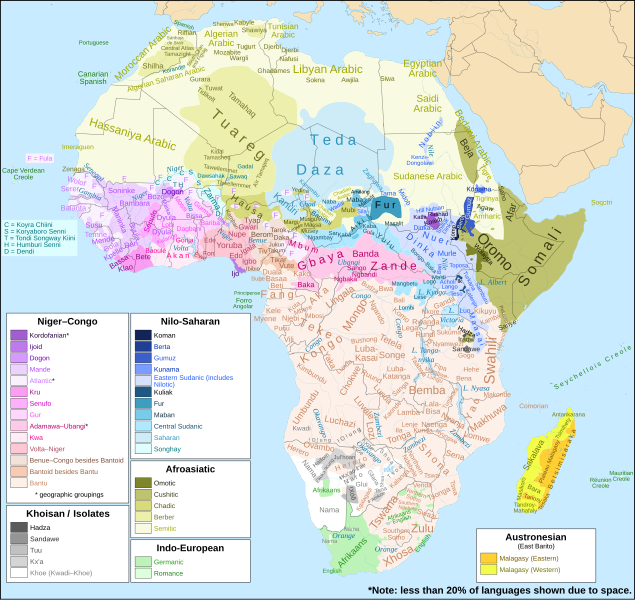
Finally, here 


Languages of Africa - Wikipedia


635px-Map_of_African_languages.svg.png (635×600)

.

.

.

Friday, 28 February 2025

teaching sport in the esl/esol/tefl class

There are many different approaches teachers can take when 'doing sport' in the English classroom.

Here are some ideas and lesson plans.

...

Tuesday, 18 February 2025

how to become an excellent teacher - giving feedback and demanding high

For teachers to really get it right, they need to connect with their students - and what students want more than anything is to have their teachers tell them how they are doing.

As educationalist John Hattie discovered in his research, the most important thing is feedback - answering the question ‘what has the greatest influence on student learning?':

Jay Doubleyou: students want feedback

It's all about trusting relationships and 'oodles of feedback':

Schools to provide a positive , optimistic, invitational, trusting and safe learning climate. One that welcomes student errors and develops positive peer influences.

Teachers who are seen by their students as quality teachers. Who provide clarity of expectations and a belief that all can learn. Teachers who are 'open' to new ideas, who develop a positive learning climate, and who value the importance of student effort to improve.

Jay Doubleyou: students want feedback part 2

Educationalist Scott Thornbury also sees feedback as central:

feedback | Search Results | An A-Z of ELT

Correct Me If I'm Wrong (Scott Thornbury) - YouTube

Vic Richardson draws on similar research with similar results:

Vic Richardson - Developing teachers for stronger results - YouTube

All of this amounts to gathering the evidence and realising what students need and what teachers need to do and to be:

Jay Doubleyou: evidence-based teaching

Over a decade ago educationalists Adrian Underhill and Jim Scrivener launched a new initiative:

Demand High Teaching asks: • Are our learners capable of more than we currently ask of them? • Have the tasks and techniques we use in class become rituals and ends in themselves? • How can we stop “covering material” and start focusing on the potential for deep learning? • What small tweaks and adjustments can we make to shift the whole focus of our teaching towards getting that engine of learning going? TTJ 25_2

What is Demand High? | Demand High ELT

Here's an excellent introduction they wrote for the Guardian: 

Teachers urged to go beyond 'right' answers and stretch all learners throughout the lesson

Demand more from students and they will learn more | Tefl | The Guardian

And here's their blog:

Demand High ELT | A discussion about re-inventing our profession

Here Silvana Richardson gives a talk and workshop session on the topic of demand high and quality learning:


Silvana Richardson - Beyond demand high: Making quality learning happen for all - YouTube

But let's finish with a video from Jim Scrivener:

Are you challenging your students enough to learn English? How do you know if tangible learning is taking place in your English language classroom?

Jim Scrivener - Demand High for teachers and learners | TeachingEnglish | British Council

And there's lots more!

Why “Challenging” Isn’t Quite The Right Goal

Demanding the best from your students, and helping them believe they can achieve it (Infographic) - McREL International

.

.

.

Saturday, 4 January 2025

using songs in the esl/esol/tefl classroom

We all love songs - and so they usually make a great resource in the language classroom.

There are lots of things in songs for the English learner:

Jay Doubleyou: conditionals in songs

Jay Doubleyou: singing songs to learn english

Jay Doubleyou: listening to song lyrics will help your pronunciation

Jay Doubleyou: modal verbs in song

And for the English teacher:

Jay Doubleyou: every song has its lesson plan

Jay Doubleyou: every song has its lesson plan - part two

The British Council has got some ideas:

How to use songs in the English language classroom | British Council

Using music and songs | TeachingEnglish | British Council

There are some good videos out there with more ideas:

5 ways to use songs to teach English - YouTube

12 fun activities you can do with pop songs in the ESL classroom - YouTube

Going beyond the conventional 'gap fill' exercise, here are some more activities suggested by Eleanor Spicer-Lundholm of the International Teacher Training Institute, Hastings, UK:

> Song in Strips: cut up the song into strips which the students need to put back together.

> Creative writing to Song: put some of the key words from the song on the board and ask the students to make them into a poem/email/short story in pairs; then share and share the 'original song'.

> Word partnerships to Song: put some of the key phrases on the board, but cut in half and in two columns, which the students have to put together in pairs; then play the song, with the students shouting out 'bingo' when they hear their collocation.

> Word order to Song: put all the words of a sentence, but mixed up, from a song on the board, which the students have to order in teams; then compare each team's sentences before playing the part of the song.

> Whoops! Find the mistakes: put up a 'wrong' version of sentences from the song where the students have to identify the 'mistakes' before listening and correcting.

> Mime to Song: standing in a circle, first the students listen to a line and copy the teacher's mime; then the students suggest mimes to further lines which the class agree to copy.

Here's a lesson plan from Fiona Aish at the Itafel - looking at teaching connected speech through songs:

> Play the first 2/3 lines from the song 2/3 times and get the students to write what they hear; confirm the correct version.

> Elicit from the students the stressed words and then the connected words; the students should try this in pairs with the following lines.

> Play the song's lines again, getting the students to tap the beat/rhythm; the students should then speak out... and sing the song (if they want!)

Finally, here's a list from OnTesol:

  • put the verse in the right order;
  • put the verbs in brackets in the correct tense/or, form of the verb (for example, gerund or infinitive);
  • identify the past tenses in the song (or, any other tense or grammar topic, for example, conditionals, modal verbs, reported speech…);
  • reorder the verses;
  • reorder the letters;
  • correct the words/mistake;
  • question on the theme, the message or meaning of the song to encourage discussion;
  • write to the protagonist and (give advice, or tell him what you think);
  • write the story in the song.
  • put the underlined words under the right column according to … (pronunciation, vocabulary related to any specific category, or a grammatical pattern);
  • complete the blanks with the words in the box;
  • choose the right word;
  • answer the questions;
  • match the verses;
  • check the words that you hear

Using Songs with Adult ESL Students

Have fun!

.

.

.

Sunday, 22 December 2024

facing up to your imperial past: the belgians

A lot of countries have had (and still have?) empires. 

How many are looking back on the not-so glorious times? 

If we look at what the British did to India and elsewhere in the British empire things still have to be looked at a little more - and that is happening, whether it's as adventures in art at the British Museum, or considering the British empire past and present, or teaching empire in British schools.

There is much more thought being put into the idea of "decolonizing" - whether it's Britain... Israel... Russia... Canada... Australia... India....

All of these countries are 'big' or have had 'big empires' - but what about the 'smaller' countries?

The Dutch are facing up to their imperial past - although things are rather mixed up in the country: What Is New about Dutch Populism? Dutch Colonialism, Hierarchical Citizenship and Contemporary Populism.

What about their neighbours in Belgium?

The Belgian empire in Africa was particularly brutal:

How extraordinary it was to discover, then, that one of this small state’s kings was also one of history’s greatest mass murderers. Leopold II (1835-1909) wanted his country to join the league of European empires, but the Belgian state refused to finance its part in western Europe’s expensive scramble for Africa. So they outsourced the task to Leopold, who used personal diplomacy to convince the European powers to grant him control of a large portion of the Congo basin. He promised to bring civilisation to the so-called dark continent.

Belgium's Heart of Darkness | History Today

This even has a separate entry in Wikipedia:

Atrocities in the Congo Free State - Wikipedia

Belgians are facing up to this imperial past:

Confronting Belgium's Colonial Legacy in Congo

Leopold II: Belgium 'wakes up' to its bloody colonial past - BBC News

An extraordinary documentary looks at how the Americans took over from the Belgians in 1960 - as the Brussels Times points out:

The murder of Congo’s first post-independence leader Patrice Lumumba took place as famed jazzman Louis Armstrong was touring the country. The two events were not a coincidence, as the acclaimed documentary, ‘Soundtrack to a Coup d’Etat’, reveals.

How jazz played out over Congo’s chaotic coup

With more from Wikipedia:

To retain control over the riches of what used to be Belgian Congo, King Baudouin of Belgium finds an ally in the Eisenhower administration, which fears losing access to one of the world’s biggest supplies of Uranium, a mineral vital for the creation of atomic bombs. Congo takes center stage to both the Cold War and the scheme for control of the UN. The US State Department swings into action: Jazz ambassador Louis Armstrong is dispatched to win the hearts and minds of Africa. Unwittingly, Armstrong becomes a smokescreen to divert attention from Africa’s first post-colonial coup, leading to the assassination of Congo’s first democratically elected leader.

Soundtrack to a Coup d'Etat - Wikipedia

The filmmaker is Belgian:

Johan Grimonprez (born 1962) is a Belgian multimedia artist, filmmaker, and curator. He is most known for his films Dial H-I-S-T-O-R-Y (1997), Double Take (2009) and Shadow World: Inside the Global Arms Trade (2016), based on the book by Andrew Feinstein. Grimonprez wrote and directed the documentary Soundtrack to a Coup d'Etat about the promise of decolonisation, the hope of the non-aligned movement and the dream of self-determination.

Johan Grimonprez - Wikipedia

And another couple of reviews:

Soundtrack to a Coup d’Etat review – superb study of how jazz got caught between the cold war and the CIA | Music documentary | The Guardian

Coups, colonialism and all that jazz: the film that unravels extraordinary cold war truths | Film | The Guardian

Here's the trailer:

Soundtrack to a Coup d'Etat – Official Trailer - YouTube

.

.

.

Friday, 13 December 2024

kolb and experiential learning

Here's a very good start for learning and teaching|:

Constructivism

Main article: Constructivism (learning theory)

Founded by Jean Piaget, constructivism emphasizes the importance of the active involvement of learners in constructing knowledge for themselves. Students are thought to use background knowledge and concepts to assist them in their acquisition of novel information. On approaching such new information, the learner faces a loss of equilibrium with their previous understanding, and this demands a change in cognitive structure. This change effectively combines previous and novel information to form an improved cognitive schema. Constructivism can be both subjectively and contextually based. Under the theory of radical constructivism, coined by Ernst von Glasersfeld, understanding relies on one's subjective interpretation of experience as opposed to objective "reality". Similarly, William Cobern's idea of contextual constructivism encompasses the effects of culture and society on experience.[34]

Constructivism asks why students do not learn deeply by listening to a teacher, or reading from a textbook. To design effective teaching environments, it believes one needs a good understanding of what children already know when they come into the classroom. The curriculum should be designed in a way that builds on the pupil's background knowledge and is allowed to develop with them.[35] Begin with complex problems and teach basic skills while solving these problems.[36] The learning theories of John Dewey, Maria Montessori, and David A. Kolb serve as the foundation of the application of constructivist learning theory in the classroom.[37] Constructivism has many varieties such as active learning, discovery learning, and knowledge building, but all versions promote a student's free exploration within a given framework or structure.[38] The teacher acts as a facilitator who encourages students to discover principles for themselves and to construct knowledge by working answering open-ended questions and solving real-world problems. To do this, a teacher should encourage curiosity and discussion among his/her students as well as promoting their autonomy. In scientific areas in the classroom, constructivist teachers provide raw data and physical materials for the students to work with and analyze.[39]

Learning theory (education) - Wikipedia

Jay Doubleyou: learning theory: a short guide

Which takes us to this: 

It will soon be twenty years old, but the Theory of Experiential Learning has had little presence in ESL. "Experiential" learning is not just "fieldwork" or "praxis" (the connecting of learning to real life situations) although it is the basis for these approaches, it is a theory that defines the cognitive processes of learning. In particular, it asserts the importance of critical reflection in learning. As we shall see, David Kolb was one of the key contributors.

Kelly - David Kolb, The Theory of Experiential Learning and ESL (TESL/TEFL)

Jay Doubleyou: kolb's learning cycle

Or we can see it like this:

With a video:

In Experiential Learning: Experience as the Source of Learning and Development (1984), Kolb defined learning as “the process whereby knowledge is created through the transformation of experience” (p. 38). This learning experience consists of four stages:Concrete Experience (CE): feeling

Reflective Observation (RO): watching
Abstract Conceptualization (AC): thinking
Active Experimentation (AE): doing
.
These four stages, or steps, of learning typically move through a cycle that begins with a student having a concrete experience and ends with them actively experimenting with the knowledge they gained.

Kolb's Four Stages of Learning - Center for Instructional Technology and Training - University of Florida

And a helpful diagram:


Kolb’s Experiential Learning Theory & Learning Styles - Educational Technology

With another excellent introductory video:

Kolb's Experiential Learning Cycle: A Complete Guide - Growth Engineering

Which takes us to this:

Kolb's Learning Styles & Experiential Learning Cycle

David A. Kolb - Institute for Experiential Learning

This is in a way a challenge to the rather lazy 'learning styles' approach:

As with any methodology or tool, use VAK and other learning styles concepts with care. The concepts are an aid, not a dogma to be followed and applied rigidly. See the notes for using Learning Styles with young people on the Kolb Learning Styles page.

Howard Gardner: Multiple Intelligences Theory – BusinessBalls.com

Jay Doubleyou: visual, auditory, kinesthetic learning styles

Finally, here's Kolb on Wikipedia:

David A. Kolb - Wikipedia

Kolb's experiential learning - Wikipedia

.

.

.