Showing posts with label travel. Show all posts

Monday, 10 November 2025

reading broadens the mind

They say that 'travel broadens the mind': 

It’s hard to not have any prejudices, especially when we are bombarded by bad news on a 24/7 schedule. However, we implore you to act against these; by visiting these countries, having an open mind for their culture and cuisine and asking questions. Being genuinely curious and respectful will guarantee to open doors for you and lead to experiences you would never have had before... Why Does Travel Broaden the Mind?

Studies suggest that taking a gap year or studying abroad can positively influence your brain to make you more outgoing and open to new ideas... Travel broadens the mind, but can it alter the brain? | Students | The Guardian

And perhaps 'reading broadens the mind' in the same way:

Reading is a gateway to new worlds, cultures, and perspectives. Through books, we can travel across time and space, experiencing different eras, countries, and societies. Whether we delve into historical accounts, immerse ourselves in fiction, or explore the realms of science, reading broadens our minds and expands our horizons. It allows us to step into the shoes of diverse characters, fostering empathy and a deeper understanding of the human condition. By encountering different viewpoints and narratives, we become more tolerant, open-minded, and compassionate individuals... The Profound Benefits of Reading: Expanding Horizons, Sharpening Minds, and Enriching Lives | by Lanu Wilson | Medium

Yes, it's good for us! What Reading Does To Your Brain - YouTube

As Matthew D'Ancona, writing in the New World/European, says, reading is the new resistance:

“If you can learn a simple trick, Scout, you’ll get along a lot better with all kinds of folks,” Atticus Finch tells his daughter in To Kill a Mockingbird (1960). “You never really understand a person until you consider things from his point of view – until you climb into his skin and walk around in it.”

But how is this done? Or (more specifically) what practices encourage the kind of radical empathy that Harper Lee’s lawyer prescribes? Allow me to suggest that reading – reading often, closely and critically – is a significant part of the answer.

As Harold Bloom puts it in How to Read and Why (2000), the company of books “returns you to otherness, whether in yourself or in friends, or in those who may become friends… One of the uses of reading is to prepare ourselves for change.” ...

Books are the rebel contraband of the idiot age.

As Malcolm X recalled in his autobiography: “I knew right there in prison that reading had changed forever the course of my life. As I see it today, the ability to read awoke inside me some dormant craving to be mentally alive.”

For the young Nye Bevan, books also represented a form of liberation. As Michael Foot writes in his biography of the founder of the National Health Service, the Tredegar Workmen’s Institute Library was an intellectual temple for the teenaged Bevan: “his reading became prodigious… He seized on everything and would often stay awake reading until the dawn. He wrote poems of his own and declaimed many more.”

This is why it is so infuriating when the campaign for reading is dismissed as a middle-class preoccupation or an elitist cause. The opposite is the case: it is precisely those who do not grow up in a household rich in intellectual capital who most deserve access to the full range of culture and knowledge. Why should books be the preserve of the affluent, a luxury rather than a basic entitlement at the core of modern citizenship?

See also some more recent blog posts on the value of reading:

Jay Doubleyou: what makes a good detective story - it's not the plot

Jay Doubleyou: today is world book day in the uk and ireland!

Wednesday, 30 October 2024

foreign-educated graduates reduce extreme poverty

There's quite a big story from this month about the effects of a 'foreign education' in helping to reduce poverty at home:

Int'l student mobility reduces global poverty, new study finds

Study shows how international student mobility can reduce poverty in low and middle-income countries | University of Oxford

Here is that study :

International student mobility and poverty reduction: A cross-national analysis of low- and middle-income countries - ScienceDirect

And here is the coverage from the EL Gazette:

International student mobility shown to reduce poverty

A new study published in the International Journal of Educational Research has found that foreign-educated graduates reduce extreme poverty in low- and middle-income countries. Researchers from the University of Oxford examined how international higher.

International student mobility shown to reduce poverty - E L Gazette

The EL Gazette give a particular example of this:

News in numbers: young Turkish students abroad drive growth

Türkiye’s junior ELT market is showing significant signs of growth, with 88% of young people expressing interest in studying abroad, according to Engin Cosar, owner of Academix Study Abroad Services. Recent research from BONARD has taken...

News in numbers: young Turkish students abroad drive growth - E L Gazette

Generally though, education, whether 'foreign' or not, is good at reducing poverty:

How does education affect poverty? It can help end it.

.

.

.

Thursday, 23 May 2024

comparing: education, society, culture

When we compare different countries or cities, especially our own, we tend not to be too critical.

Jay Doubleyou: comparing: countries

Jay Doubleyou: comparing: cities

EDUCATION:

The US and UK are not doing very well:

http://news.bbc.co.uk/nol/shared/bsp/hi/pdfs/13_02_07_nn_unicef.pdf

Here's a critical look at the state of the United States some fifty years ago:

Jane Elliott Brown Eyes vs Blue Eyes 1 - YouTube (incl intro - first minute)

Jane Elliott “Blue Eyes - Brown Eyes” Experiment Anti-Racism - YouTube (incl subtitles)

Here's the same experiment forty years later - and in the UK (main part from 9 mins - and to 14 mins)

How Racist Are You? - Jane Elliott's Blue Eyes/Brown Eyes Exercise - YouTube

The issue of class and race and gender in our education system is very complicated and very controversial:

‘Forgotten’ White working-class pupils let down by decades of neglect, MPs say - Committees - UK Parliament

Poorer white pupils let down and neglected - MPs - BBC News

White “working-class” boys aren’t failing because they’re White - Make it Plain

Looking at girls:

More than half of British girls lack confidence learning maths, poll finds | Schools | The Guardian

Ada Lovelace Day – Celebrating the achievements of women in science, technology, engineering and maths

Cafe Scientifique: Floating Offshore Wind Farms – Sidmouth Science Festival

2021 Sidmouth Science Festival programme.pdf

Let's compare the education system in India:

Sugata Mitra: The child-driven education | TED Talk

SOCIETY:

It seems that every 'marginalised' group have a hard time.

For example: Are British police interested in 'crimes against women'?

Every week in the UK, two women are murdered; as the documentary explained, a staggering 94 per cent of those cases involve stalking. As such, its illustration of the police response, near-universally dismissive or inept, was maddening – and terrifying. As State of Fear ended, there was precious little in the way of resolution – of course, there’s no way of wrapping up such a sprawling, systemic failure with a bow. Nonetheless, in its unflinching, forensic gaze, the show did essential work in simply taking women seriously and attending to their stories with measured and diligent interest. We can only hope that it pushes police to begin doing the same.

Stalking: State of Fear took women seriously - if only the police did too

And: Do immigrants commit more crime?

The academic literature and official statistics provide mixed findings for the relationship between immigration and crime. Research in the United States tends to suggest that immigration either has no impact on the crime rate or even that immigrants are less prone to crime.[1][2][3] A meta-analysis of 51 studies from 1994–2014 on the relationship between immigration and crime in the United States found that, overall, the immigration-crime association is negative, but the relationship is very weak and there is significant variation in findings across studies.[4] This is in line with a 2009 review of high-quality studies conducted in the United States that also found a negative relationship.[5]

Research and statistics in some other, mainly European countries suggest a positive link between immigration and crime: immigrants from particular countries are often overrepresented in crime figures.[6][7][8] The over-representation of immigrants in the criminal justice systems of several countries may be due to socioeconomic factors, imprisonment for migration offenses, and racial and ethnic discrimination by police and the judicial system.[9][10][11] The relationship between immigration and terrorism is understudied, but existing research is inconclusive.[12][13][14] Research on the relationship between refugee migration and crime is scarce and existing empirical evidence is often contradictory.[15][16] According to statistics from some countries, asylum seekers are overrepresented in crime figures.[17][18][19][failed verification]

Immigration and crime - Wikipedia

The mythical tie between immigration and crime | Stanford Institute for Economic Policy Research (SIEPR)

Trump says migrants are fueling violent crime. Here is what the research shows | Reuters

Immigrants less likely to commit crimes than U.S.-born : NPR

Many people who oppose immigration say that it increases crime. But does immigration really affect crime? Studying a country whose proportion of migrants has tripled in less than ten years, researchers find immigration significantly impacts people’s perceptions of crime but has no effect on actual crime.

Does immigration really increase crime? - McGill University

We causally analyse the link between immigrants and crime in Germany for 2008–2019. The effect is positive for the early sub-period and negative or insignificant for the later one. When analyzing the total period, the estimates average out to zero.

Do immigrants affect crime? Evidence for Germany - ScienceDirect

Reality Check: Are migrants driving crime in Germany? - BBC News

And: Are strangers dangerous when it comes to children?

Statistics on child sexual abuse | NSPCC Learning

And: What are the countries with the highest/lowest crime/murder/suicide rates?

Crime Rate by Country 2024

List of countries by intentional homicide rate - Wikipedia

List of countries by suicide rate - Wikipedia

And: What makes the English? Let's go to Munich (at 10:30)

From football fans watching England, to Dover, a Druid gathering, and a mass trespass near Reading, Grayson wonders who are the English?

Grayson Perry's Full English - Series 1: Episode 1 | Channel 4

FINALLY: CULTURE, COMEDY AND ENTERTAINMENT:

Here are some lists: how many of these represent 'minorities'?

Movies:

Greatest American Film Directors | Pantheon

Driven to Darkness: Jewish Emigre Directors and the Rise of Film Noir on JSTOR

Musicals:

West Side Story (1961 film) - Wikipedia

West Side Story is the product of a bunch of GAY JEWS!!

Musicians:

Big Mama Thornton - Hound Dog - YouTube

Elvis Presley - Hound Dog (1956) HD 0815007 - YouTube

The Rolling Stones - Little Red Rooster - YouTube [1:30]

Comedians:

Top 10 Best Comedians of All Time

Top 10 American Male Stand-Up Comedians of All Time - YouTube

The 20 Best Stand Up Comedy Specials of All Time - YouTube

Top 10 Absolutely Fabulous Moments - YouTube

Footballers:

Une équipe de foot multiculturelle peut-elle encourager la France à l'être aussi ?

It’s not just football – it’s a barometer of diversity. Bring on the Euros… | Euro 2020 | The Guardian

Finally, what country could possibly compare?

THIS IS RUSSIA WINTER IS COMING - YouTube 

Discussion of Tchaikovsky's personal life, especially his sexuality, has perhaps been among the most extensive of any composer in the 19th century and certainly of any Russian composer of his time.[102] It has also at times caused considerable confusion, from Soviet efforts to expunge all references to homosexuality and portray him as a heterosexual, to efforts at analysis by Western biographers.[103]

Pyotr Ilyich Tchaikovsky - Wikipedia (23 secs into the youtube video)

Compare:

BBC Radio 3 - Discovering Music, Tchaikovsky: Serenade for Strings

Ossip Abramovich Gannibal's father, Pushkin's great-grandfather, was Abram Petrovich Gannibal (1696–1781), a Cameroonian[14] page kidnapped and taken to Constantinople as a gift for the Ottoman Sultan and later transferred to Russia as a gift for Peter the Great.

Alexander Pushkin - Wikipedia (15 secs into the youtube video)

Compare:

Rare Editions of Pushkin Are Vanishing From Libraries Around Europe - The New York Times

Forgery or History? Peter Harrington Rare & First Edition Books.

whatthehell

.

.

.

Tuesday, 21 May 2024

comparing: cities

How would you compare your nearest city with another in your home country - or with your favourite city outside your home country?

There are lots of different ways to compare cities...

On this site, Hong Hong and Wichita in the US are the 'top cities':

City comparison | Compare cities around the world - Versus

Here we can chose two different cities to compare - but only in the States:

2024 Compare Cities

There's a nice list of things to compare:

How to Compare Different Cities | An Expertt Mini-guide

As a starting point, this app looks at how quickly you can get onto a highway/motorway, from Sao Paulo, New York and Santiago:

Urban Observatory

Here we can compare cost of living and quality of life:

Cost Of Living Comparison

Quality of Life Comparison

For example:

Cost of Living Comparison Between Exeter, United Kingdom And Santiago, Chile

Quality of Life Comparison Between Exeter, United Kingdom And Santiago, Chile

There are so many ways to measure things...

Nightlife Index 2023 – Consumer Choice Center

The Top Cities In The UK Empowering Independent Music Artists | iMusician

The best cities for art museums and graffiti

Which cities have the most museums? – Jack's Adventures in Museum Land

This is from a TED Talk from nine years ago. How have things changed since then?

Worldwide, violence is on the decline, but in the crowded cities of the global south — cities like Aleppo, Bamako and Caracas — violence is actually accelerating, fueled by the drug trade, mass unemployment and civil unrest. Security researcher Robert Muggah turns our attention toward these "fragile cities," super-fast-growing places where infrastructure is weak and government often ineffective. He shows us the four big risks we face, and offers a way to change course.

Robert Muggah: How to protect fast-growing cities from failing | TED Talk

Here's more on cities from TED Talks:

Ideas about Cities

The Best TED Talks about Cities and Urban Planning – parCitypatory

.

.

.

Wednesday, 8 May 2024

writing about your holiday in different registers

REGISTER: THE BASICS:

It's important to be able to handle different registers:

the way a speaker uses language differently in different circumstances. Think about the words you choose, your tone of voice, even your body language. You probably behave very differently chatting with a friend than you would at a formal dinner party or during a job interview.

What Is Register in Linguistics?

a variety of language used for a particular purpose or particular communicative situation. For example, when speaking officially or in a public setting, an English speaker may be more likely to follow prescriptive norms for formal usage than in a casual setting, for example, by pronouncing words ending in -ing with a velar nasal instead of an alveolar nasal (e.g., walking rather than walkin'), choosing words that are considered more "formal" (such as father vs. dad or child vs. kid), and refraining from using words considered nonstandard, such as ain't and y'all.

Register (sociolinguistics) - Wikipedia

With a little more here:

Jay Doubleyou: register

Jay Doubleyou: register: populism, culture wars and woke

Jay Doubleyou: learning to use the appropriate register @ fawlty towers

REGISTER: TRYING TO WRITE IN DIFFERENT VARIETIES OF ENGLISH

Here are some ideas about making writing more nuanced:

Jay Doubleyou: writing with register: a lesson in using different levels of 'politeness'

Here are some more ideas around the theme of writing about your holiday:

1: Write a postcard to a friend

2: Write the same but to a great-aunt

3: Write a report to a local town council which is asking for input from tourists - in its consultation on its local tourism policy. Make use of the specific holiday experiences as outlined in your postcards, but put it in the language and format of an official report, giving your opinions and any recommendations.

4: Write an academic piece analysing the different aspects of holidaying in this part of the world. Again, make use of the examples referred to in the above pieces, but in an impersonal style with no personal opinions, with reference to statistical data and other academic studies.

5: Write in a highly subjective manner, following the stream of consciousness style of Virginia Wolfe's "To the Lighthouse", a story of a family on holiday, recounting in the same type of language the feelings and impressions when on holiday as it happens: To the Lighthouse - Wikipedia and To-the-Lighthouse-Etext-Edited.pdf

.

.

.

Saturday, 6 January 2024

how are student numbers doing for the elt industry?

The EL Gazette looks at travel trends for English language learners, post-COVID

Uneven recovery across destinations in 2023 continues as the ELT Travel sector emerges from the pandemic crisis, shaped by new trends.

Looking back at the now seemingly distant past, 2022 brought mixed recovery. The return to English language student mobility was built around three main challenges: capacity issues, such as teachers, accommodation, flights, as well as visa application workload; ongoing restrictions in key markets; and increased costs.

On the move - E L Gazette

Things are better in the UK, but still not as good as earlier:

UK ELT: Student numbers and weeks up in 2022 but still below pre-pandemic levels

The situation looks a little better Down Under:

Partial recovery for Australia's ELT sector last year, 2023 looking strong - StudyTravel Network

In the meantime, Malta is doing very well:

Record student weeks for Malta's ELT sector in 2022 - StudyTravel Network

This of course is connected to Brexit - although the UK might be having more French schoolchildren:

UK's ban on French EU ID cards officially lifted by Home Office

UK confirms France group travel concessions, industry calls for expansion - StudyTravel Network

Finally, there is the largest sector to consider:

Chinese students: border opening releasing study abroad demand

.

.

.

Saturday, 2 December 2023

translating with an accent

What should a translations sound like?

They should certainly reflect the original - which will included dialect and accent:

Translation is a tough enough discipline at the best of times, but when accents and dialects are factored in it becomes a real test of a linguist’s skills. So anyone hoping to use free software to translate something where accents are involved should give up now!

You may think that producing translations where the source includes a variety of dialects is something you’ll rarely be called upon to do, but everything from classic works of literature to Disney films makes use of accents as a way of fleshing out characters. By simply wiping all accents out, and making all of the characters speak a standardised version of the target language, the translator significantly alters the way the character is perceived by the reader.

Accents and Dialects: A Thorny Issue for Translators | Language Insight

Nelson Mandela famously said “If you talk to a man in a language he understands, that goes to his head. If you talk to him in his language, that goes to his heart.” That’s exactly why businesses need to consider regions as well as languages by using a localised translation service and dialect translator when translating content.

Translating Dialects And Interpreting Accents - Global Voices

Lost sales opportunities. Lost depth of character. Miscommunication between two people who, in theory, speak the same language. Glossing over differences between accents and dialects can be a recipe for disaster in all sorts of situations.

Would all of the characters in Mark Twain’s The Adventures of Huckleberry Finn be as good if their dialogue was blankly rendered into standard American English? Would a misused dialect word instantly kill off your chances of connecting with your new target audience?

Accents and Dialects in Translation

Much has been said about translation’s challenges, joys, and nuanced politics of choice – of the decision-making it necessitates. Perhaps not many people think simultaneously in two (or more) languages, two cultures, two texts as intimately as a translator. In the course of engaging with the rewarding art of translating a text – and translating a reader, as the writer, poet and translator A K Ramanujan saw it – I found myself struck by thoughts on language and specifically on literature in India, far more than I wanted to be, some days. These evolving, shape-shifting metaphors and ideas started with an untethered phrase: ‘to translate with an accent’...

I submit to you this: could we as translators cultivate a practice of translating with an accent? And editors and readers process it and read it, respectively, while noticing said accent? I understand this is a tricky premise to begin with, for the lines between foreignisation and domestication are constantly shifting, the blurriness between the choices blurred further by the translator’s own language, experiences, and so on. But what if we could find a way to retain a phrase here, a word there, to remind the reader that the text comes from another language; that, in reading an unfamiliar word, they have just learnt something new, have learnt a word which they might never use themselves but whose meaning, should they see it again, they might remember? In doing so, in my case, Kannada gains another reader. It goes without saying that there is a fine balance to be sought, between keeping some source language and ensuring a reader in English (in this case) is not met with an impenetrable target text. Here is where I shall argue that we, as various parties in this transfer between cultures, should, instead of trying to contort the source language to fit the English idiom, look for ways to stretch English so that it too can speak somewhat with the accent of the original language. Because, devoid of the musicality with which retained accents enrich the translation, we would remain separate languages and cultures, condemned to bear the burden of the proper in our unaccommodating, un-elastic cultural lives.

Working in the English language as an Indian with many languages is a process in negotiating with its politics every other day. Decolonising the mind, and then our outer worlds, and therefore our culture is but a lifelong attempt. In the meanwhile, though, I wonder if perhaps we could see the English language, in this context, for its elasticity. Language is meant to stretch this way and that; when an elastic band snaps back in place, it often no longer retains its perfect round shape. When we speak with an accent, write with one, translate with many, the palimpsest of language loses not much, but stretches across the artificiality of bridges and borders. Like that only, as we would say here in India.

To Translate with an Accent – PEN Transmissions

.

.

.

Thursday, 30 June 2022

to practice your english, it still makes sense to spend time in an english-speaking country

Earlier in the year, Liz Granirer wrote on which countries were attractive for English language students:

According to the Emerging Futures research by IDP, an Australia-based leader in global education services, the most popular countries for international study are Canada, the USA and, sharing third place, the UK and Australia.

The reasons for these rankings are as follows: Canada is number one (with 26% of respondents giving it as their first choice) due to its post-study work policies and welfare. While the USA (which attracted 20% of respondents) and the UK (with 19% of respondents) were both perceived as offering the best education, the UK isn’t perceived as offering employment opportunities to its international graduates, particularly among Indian students.

“The results of this comprehensive research are clear,” says Simon Emmett, CEO of IDP Connect. “For competing destinations to remain competitive they must deliver a positive experience and positive outcomes for students, whilst improving the ways in which they communicate this with future students.”

Which country attracts the most international students? | E L Gazette

It does seem then, that to practice your English or Spanish, it still makes sense to spend time in an English/Spanish-speaking country:

Living in English-Speaking Regions | Employment & Education Buzz

But it won't be easy:

Can You Really Learn a Language by Moving Abroad? - Migrating Miss

How does living in an English-speaking country help you with speaking English? - Quora

Here are some tips to make it a bit easier:

8 Ways to USE English while living in the USA - YouTube

9 TIPS for English learners in English-speaking countries! | mmmEnglish

But which 'English-speaking countries'?

67 English Speaking Countries & More: A Huge & Helpful Guide

15+ Best English Speaking Countries to Visit - EnglishProficiency.com

.

.

.

Saturday, 26 June 2021

anthroposcenery

Singapore’s refurbished Changi Airport now features the world’s tallest indoor waterfall… Known as the ‘City in a Garden’, Singapore is already famous for its Gardens by the Bay, which contain a grove of human-made ‘super trees’ that actually mimic the processes of photosynthesis and rainwater collection through the use of photovoltaic cells, which convert sunlight into energy. In this sense such innovations fit more broadly into what is known as ‘biomimicry’, or the process by which scientists, architects and others imitate natural processes as a solution to human-centred dilemmas or inventions. Architecture is at the forefront of this movement.

STRUCTURE magazine | Engineering an Icon

But while such imitation is generally viewed favourably, it also suggests that for nature to be viable and appreciated in our digital age it must merge with the technical worlds of machinery and architecture. What we are witnessing is a fusion of the Anthropocene, a new geological era defined by human actions, and scenery, an anthroposcenery, in which nature, ever more unpredictable in the wake of human-driven climate change, is transformed and repackaged as heavily choreographed scenery for the ‘well-being’ of humans inhabiting the cityscape.

The New Anthroposcenery – Arena

“At the apex of Jewel’s glass roof is an oculus that showers water down to the center of the building. The Rain Vortex will be the world’s tallest indoor waterfall, transforming into a light and sound show in the evening. Additionally, rainwater is funneled into the waterfall and harvested for building services and landscape irrigation systems. At peak conditions, water will flow through the oculus at more than 10,000 gallons per minute.”

Safdie Architects

Solarpunk architecture at the Singapore airport : solarpunk

Jewel Changi Airport – YouTube

.

.

.

.

.

.

.

.

.

.

.


Jewel Changi Airport – Buro Happold

The current surge in ‘green buildings’ grows out of the solarpunk movement, whose vision promotes a nature interwoven through metallic cityscapes, endorsing a chimerical city that brings the best of nature to the city and gives the metropolis a green makeover. Solarpunks are much more optimistic (if not dangerously utopian) about the future than, say, cyberpunks. One of the aims of the solarpunk movement, it seems, is to keep the dystopian cityscapes of Blade Runner and The Fifth Element at bay. The worlds depicted in those films were unapologetic in their abandonment of wilderness in favour of unending metallic fortresses, bleak yet visually striking. In Cinema and Landscape, Christina Kennedy and colleagues write that The Fifth Element was ‘an extension of the stereotypical city of today: a thoroughly complex and artificial environment, that maybe even despite all of its problems, can be stunningly beautiful’. Both films feature characters cut off from nature, a feature that we, the audience, are to view with concern. An antidote to this abundance of steel is now given in the form of the ‘sustainable city’, or the ‘green city’, a hybrid creation that is meant to function as a well-oiled ecosystem.

Tim Beatley envisions what he calls ‘biophilic cities’, arguing that in the endeavour to green our cities, planners focus on everything but nature. His view emphasises nature: ‘Biophilic Cities acknowledge the importance of daily contact with nature as an element of a meaningful urban life, as well as the ethical responsibility that cities have to conserve global nature as shared habitat for non-human life and people’. Beatley’s sentiments carry a distinctly Romantic feel in their plea to humans to harness a ‘meaningful’ relationship with nature. He writes that because humans ‘coevolved with the natural world’, cities need to make room for green spaces and make daily interactions with nature possible, but while we may have coevolved with the natural world and other animals, that evolutionary trajectory has long since deviated into destruction and self-idolatry.

The New Anthroposcenery – Arena

.

.

.

Saturday, 28 September 2019

open cities: gdansk

How mono-ethnic is Poland?

The tradition of a mono-ethnic Poland is relatively new, and it has two main contributors—Hitler and Stalin...
Turning Muslims Away, Poland Welcomes Ukrainians - WSJ

Interwar Poland was a multiethnic state despite the official rhetoric promoting its image to be that of a monoethnic nation-state. According to the 1931 census, national minorities accounted for thirty-one per cent of Poland’s population of thirty-two million (that is, almost ten million). However, a recent reassessment of this apparently massaged number sets the figure at 35.4 per cent (that is, over eleven million) (Chałupczak, 1998: 22; Tomaszewski, 1985: 31-51). In a nutshell, ethnic Poles constituted two-thirds of the population while the national minorities – the remaining one-third.
Kamusella: Polish Minorities

Looking at today:
Poland's Hidden MulticulturalismThe conspiracy theorists who have taken over Poland | Christian Davies | World news | The Guardian
Opinion | Poland Digs Itself a Memory Hole - The New York Times

And there's been a big bust-up in Gdansk:
Open House in Gdansk

After the killing of its mayor:
The murder of Gdansk mayor Paweł Adamowicz reflects Poland’s increasingly toxic political climate
‘We feel orphaned’: Polish city mourns Paweł Adamowicz | World news | The Guardian
2019 Foretells Political and Social Turmoil in Poland | Jewish Culture | Hamodia

Much of this has to do with how we remember our history:
Charlottesville: The ideological battle dividing the world is perfectly illustrated by this fight over a Polish museum — Quartz

And it's very much in the news now:
The populist rewriting of Polish history is a warning to us all | Estera Flieger | Opinion | The Guardian

As are other museums:
Poland's Ministry of Culture Again Accused of Trying to Control Progressive Institution
Poland’s Ruling Party Puts an Extraordinary Museum of Polish-Jewish History Into Limbo | The New Yorker

Within the context of remembering the outbreak of the last war:
WW2 commemorations expose differences at heart of Europe | World news | The Guardian

It's a beautiful, open city:


Google Image Result for https://s.iha.com/00113741246/Gdansk-Architecture-of-old-town.jpeg


File:Gdańsk kamienice przy Długim Targu.jpg - Wikimedia Commons


Gdansk Waterfront | Gdansk Poland - 09/12/2017 | Charlie Jackson ...
.
.
.

Monday, 5 June 2017

a journey through the balkans

This is a very interesting part of the world:
The Tiger's Wife Movie Trailer - YouTube
Watch Full Episodes Online of PBS NewsHour on PBS | 'The Tiger's Wife' Mixes Realism, Fantasy in...
'The Tiger's Wife' Mixes Realism, Fantasy in Larger-Than-Life Tale From Balkans - YouTube

With another book being read on BBC Radio 4:
BBC Radio 4 - Book of the Week, Border - Tales from the Edge of Europe

It's all about borders:
audioBoom / Borders: On the ground, on the map, in the mind

The long tragedy of Europe's borderland


Kapka Kassabova explores the rich and haunting history of the border between Bulgaria, Greece and Turkey


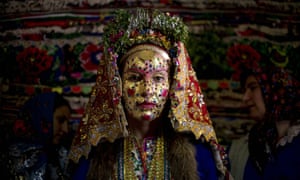
Pomak Muslims still live in Greek and Bulgarian villages. This bride is embarking on her two-day winter wedding in Ribnovo, 210 km from Sofia

Simon Kuper

25 February 2017

Border: A Journey to the Edge of EuropeKapka Kassabova

Granta, pp.379, £14.99

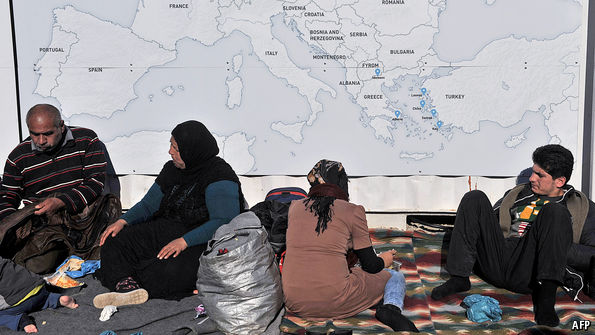
In Ali’s Café, just inside Turkey on the Bulgarian border, Iraqi and Syrian refugees spend their days drinking tea. Now and then, someone goes into the back room to give bundles of money to smugglers who have promised to get him into the European Union. Only when piano chords strike up on the radio does Kapka Kassabova realise what Ali’s reminds her of: Rick’s Bar in the movie Casablanca, a transit realm ‘where the homeless of the day come in search of passage’.

The Syrian refugees literally walked into Kassabova’s book. Like many ruined peoples before them, they were heading for the border she was writing about — the crossing point between Turkey, Bulgaria and Greece where ‘Europe’ has tried for centuries to build its wall with the East. This lazy-paced, directionless yet valuable book brings to life not just a neglected region but also one of the themes of our time: borders, open and closed.

Kassabova has the obsession with borders that comes from growing up behind the Iron Curtain. Raised in communist Bulgaria, she later emigrated to New Zealand, and now lives in Scotland. But she always yearned to see the borderlands that had been sealed to her, ‘the forbidden places of my childhood’. For this book she spent years gathering the stories of ordinary border-dwellers.

Today Turkey, Greece and Bulgaria have ‘three alphabets, three currencies, three versions of history’. But for most of history the border was blurrier. People on all sides descended from the ancient Thracians (almost forgotten now, because unlike their Greek contemporaries they didn’t leave behind any writing). Later, Muslims, Catholics and orthodox Christians were sprinkled almost randomly around the region. In the Ottoman empire, you found the unlikeliest people all over the place.

The anthropologist Ernest Gellner famously said that the ethnographic map of Europe used to look like a painting by Oskar Kokoschka, a ‘riot of diverse points of colour’. But after the multi-ethnic empires collapsed in 1918, the map came to resemble a Modigliani: neat flat surfaces clearly separated from each other.

The post-Ottoman nation states achieved this through ethnic cleansing. Kassabova describes the horrors: Greek-speakers in Turkey and Muslims and Bulgarian-speakers in Greece were wrenched from their ancestral homes and marched off to ‘homelands’ they didn’t know. They would arrive, writes Kassabova, in ‘an empty house in a foreign country with the kitchen pots still warm’. Many of these people remained ‘homesick for the rest of their lives’. Kassabova finds one family, displaced from Bulgaria just across the border into Turkey, who could look across the hills at their original village, until it was cleared by the army in 1948 and eventually swallowed by the forest.

Some displaced people transmitted their homesickness to their children, even their grandchildren. Every summer now, Thrace witnesses an ‘ancestral pilgrimage’ of people who drive across borders to visit their grandparents’ houses. They are generally welcomed by the locals, who know how it feels.

Many of the characters in this book think of themselves as still exiled. Some clearly wish themselves back in that pre-1918 Kokoschka painting: Kassabova attends an Orthodox Easter service in a Turkish border town where half the congregants are Muslims. And tiny vestiges of the original Kokoschka painting survive, such as the Pomak Muslims still living in Greek and Bulgarian villages.

The region’s Jews were scrubbed from the painting in the second world war. Afterwards, the border became the southern section of the Iron Curtain. Previously people had been forced to cross; during the Cold War, they weren’t allowed to cross. Kassabova recounts the story of a Turkish shepherd in 1970, who, watering his horse at the border river, exchanged cheery greetings with a shepherd across the way in Bulgaria. A Turkish patrol saw him do it. The shepherd was jailed for espionage and eventually hanged himself. Hundreds of people, especially Bulgarians and East Germans, were killed trying to cross this border. In 1989, the dying Bulgarian communist regime revived the periodic ritual of forcing the country’s ethnic Turks to take Slav names. About 340,000 people preferred to move to Turkey.

A closed border is a dead end, where few people want to live, and where the authorities distrust everybody. Some border-dwellers were moved during the Cold War to less sensitive regions. Others left voluntarily, abandoning their houses. The two heartland villages of the ancient Greek-Bulgarian cult of fire worship, Madjura and Pirgopulo, now each have a population of zero. In an otherwise empty Turkish village, a man and wife living alone with their sheep sigh, ‘All we need is another family.’

Kassabova finds Greek villages that were ‘decimated four times: by refugee outflows, the second world war, the civil war, and then the Cold War’. After all this, the region, always sparsely populated, has become possibly Europe’s last wilderness. Kassabova describes a viper-filled forest straight out of the Iliad, and a dying village with plum trees that very occasionally feels like Eden.

When the border reopened in the 1990s, people on all sides discovered all the things they still had in common. There is a (much too long) chapter on Bulgarian and Greek villagers getting together for a fire-walking ceremony. (Kassabova has a spiritual streak, and readers will need high tolerance for evil eyes, bean readers and mystical fireballs.)

Now the border is closing again. As the Syrians and Iraqis try to head west, Turkey’s president Recep Tayyip Erdogan has done a deal with the EU to keep them in his country. Kassabova empathises with the refugees. In 1991, during Bulgaria’s post-communist collapse, her freshly impoverished academic family sat in Sofia waiting by candlelight for emigration visas. Now, when she meets Iraqi Kurdish teenage girls stuck in a Turkish nowheresville, she feels everything with them: the humiliation, the injustice, the mindfuck of having to hate where you come from but having nothing new to love… The sensation of being invisible, unwanted, speechless, a disembodied soul waiting in one of history’s drafty corridors.

Many of today’s border peoples feel that same empathy: they see in the exhausted figures walking into exile the ghosts of their own great-grandparents.

Some of the new refugees may remain stuck in Turkey their whole lives. They will have children there, become new ethnic groups — post-2011 Syrian Turks, say. Then one day some ruler might decide to cleanse them too.

This is an occasionally fascinating but flawed book. It has no narrative drive. Though Kassabova has merged bits of her interviewees’ stories, she has scarcely imposed structure or selection. She also has an odd habit of beginning a story at the end, and then continuing to the beginning. Then there is her tendency to the high-flown:

The border forest is where destiny becomes manifest, if we linger too long. No wonder it repels and attracts like a karmic magnet. In the border forest, we condemn and absolve ourselves, again and again. There is death foretold in that, and there is immense compulsion.

Whatever.

But even when the writing isn’t great, the subject is. Most books are written by metropolitans, who tend to ignore peripheries. Reading Kassabova, you get a sense of an eternal pendulum swing between open and closed borders. The latest swing has just begun, with Brexit, Erdogan’s border wall, and soon maybe Trump’s. Almost by accident, Kassabova has written a book for our time.

Simon Kuper is a columnist for the Financial Times. His books include Football Against the Enemy and Why England Lose.


The long tragedy of Europe’s borderland | The Spectator

Border: A Journey to the Edge of Europe by Kapka Kassabova – review


This study of a conflict-strewn corner of Europe, where minorities have frequently been oppressed, is highly topical


A Bulgarian Pomak bride: one of the groups treated with suspicion in the communist era. Photograph: Nikolay Doychinov/AFP/Getty Images

Sara Wheeler

Sunday 5 February 2017

This is a book about that shadowy region where Bulgaria, Greece and Turkey converge and diverge. During “half a century of cold war hardness”, writes Kapka Kassabova in this thoughtful and impressive volume, the zone was “a forested Berlin Wall darkened by the armies of three countries”. She says it remains “prickly with dread”.

Born in 1973 under Pontic skies, Kassabova, whose previous books include Street Without a Name: Childhood and Other Misadventures in Bulgaria, now lives in Scotland. `In Border, she arranges her material broadly geographically, starting and ending on the Black Sea at the edge of the Strandja ranges where Mediterranean and Balkan currents meet. She mixes memoir with travelogue, journeying mostly in an old Renault, directed by “freakish serendipities” and with topographical description, literary references, reflection on what the concept of “border” means, and above all, long quotations from people she encounters on her travels, oral history style.

For her composite picture, Kassabova draws artfully on Slavic folklore, ancient customs such as fire walking, myths involving Uzbek-bred vipers and snippets of history, though she never falls into the trap of rehashing the whole damn political tragedy. She also focuses on key words exemplifying her themes, such as memleket (homeland) from the Turkish meme (breast).


Border: A Journey to the Edge of Europe by Kapka Kassabova – review | Books | The Guardian


A writer explores Europe’s south-eastern border

Mapping history

A walk through the continent’s mountainous south-eastern corner


Print edition | Books and artsFeb 11th 2017

Border: A Journey to the Edge of Europe. By Kapka Kassabova. Granta; 379 pages; £14.99. To be published in America by Graywolf in September; $16.

TRAGEDIES and mistakes are strewn across Europe’s borderlands. Nowhere more so than in the continent’s mountainous south-eastern corner, where the Iron Curtain once divided communist Bulgaria from capitalist Greece and Turkey. The land is haunted by that divide, and by vanished kingdoms, peoples and wars. Kapka Kassabova’s poignant, erudite and witty third book, “Border”, brings hidden history vividly to light.

The central theme of the book, topically, is frontiers. Lines on the map that are drawn and policed by the powerful, protect one sort of interests while severing others. “An actively policed border is always aggressive,” she writes. “It is where power acquires a body, if not a human face, and an ideology.”

Some of the book’s most striking passages are about “well-oiled feudal barbarity”, the abominable treatment that was meted out to those who tried to escape: tricked and betrayed, beaten and jailed, or shot in cold blood and left to bleed to death. At a time when memories of the Soviet empire’s vast prison camp are fading, the story Ms Kassabova has to tell is important. She grew up in communist Bulgaria and remembers that system’s arbitrary cruelty, which finds echoes today in the mistreatment of refugees and migrants.

The post-communist era brought new problems: corruption, petty nationalist quarrels and environmental ruin. Ms Kassabova’s book drips with scorn for the spivs, goons and far-off politicians whose greed and carelessness wreak such mischief and misery. She was inspired to write it after witnessing the “roughshod levelling” of her adopted home in the Scottish Highlands, and later, when helping Bulgarians clean up after a flood caused by illegal logging and the looting of sand, she shouts, “Something must be done.” “It’s because you don’t live here…You still believe in justice,” comes the crushing retort.

A particular treat is her ear for lurid local myths. Extraterrestrial beacons, mysterious balls of fire, lost pyramids and a secret site guarded by specially bred Uzbek vipers all get a look in. The first account of the region was in the fifth century BC, by Herodotus. Ms Kassabova gamely takes up the first historian’s torch. Her writing also has echoes of Patrick Leigh Fermor’s epic tramp across the pre-war Balkans. But her sparse, ironic style lacks the self-conscious self-indulgence of Fermor’s prose, and is all the better for it.

She treads lightly but distinctly through the stories she tells, displaying an enviable mixture of rapport with her subjects and detachment from their peculiarities. Leaving her favourite valley in the Strandja mountains was “like pulling myself out with a corkscrew”, she writes. She highlights stories barely known outside the region, such as the communist Bulgarian regime’s vindictive deportation of 340,000 ethnic Turks in the 1980s and the doomed 15-year struggle of the Goryani (Woodlanders) against communist rule. Their fate is absent from Bulgaria’s modern history: their mouths, she writes, “are full of earth”.

Yet the author’s astringent approach to myths and falsehoods could be more evenly applied. Many might quibble with Ms Kassabova’s unsupported assertion that the Goryani were the “largest, longest-sustained resistance movement against Soviet state terror in eastern Europe” (Ukraine’s and Poland’s anti-communist guerrilla movements were the biggest, and the last Estonian partisan was on the run until 1978). The story of an East German family fleeing to the West in a home-made balloon is not, as she dismisses it, “apocryphal”: the briefest research reveals that it really happened, in 1979. Britain’s foreign espionage service is MI6, not MI5.

But these flaws pale against the strength of the book: its treatment of history’s blessings and curses. Past imperial ages—chiefly Byzantine and Ottoman—laid down complex, and mostly harmonious, layers of languages, ethnicities, cultures and religions, erased in the name of nation-building and tidiness. Communities with roots going back centuries were pulled up and dumped across borders that had once hardly mattered, into countries that they scarcely knew. It is a “melancholy miracle”, writes Ms Kassabova, that “odd ragged bits of this once-rich human tapestry” survive. They could have no better chronicler.


A writer explores Europe’s south-eastern border: Mapping history | The Economist
.
.
.

Wednesday, 31 December 2014

city breaks - listening exercises

There is some very helpful information available if you're planning a city break - in easy English for the non-English speaker:
Jay Doubleyou: city guides in english

The very good website Esol Courses
Jay Doubleyou: free english lessons with esolcourses.com

... has some very useful exercises to help you with tourist information:

Reading and Listening Exercises for Intermediate and Advanced Students


Travel and Holidays - ESL Lesson Activities and Printable Worksheets
.
.
.

free english lessons with esolcourses.com

An excellent place to go for lots of free interactive stuff is Esol Courses:

Welcome to ESOL Courses - FREE English Lessons Online

Practise your English with our free interactive listening lessons, reading exercises, quizzes and games.

BEGINNER
English lessons for beginners
ELEMENTARY
elementary lesson resources for English language teachers
PRE-INTERMEDIATE
English lessons for Pre-Intermediate level students
INTERMEDIATE
English for Intermediate learners
ADVANCED/IELTS
Upper Intermediate English activities
VOCABULARY
English vocabulary games and quizzes
ENGLISH FOR WORK
English for Work
READING
ESL reading activities
WRITING
ESL cloze activities
GRAMMAR
grammar for English students
SONG QUIZZES
song quizzes to learn English
PICTURE MATCH
English picture vocabulary quizzes
CROSSWORDS
Crossword Puzzles for English students
Mouse TrapFree online English lessons, by ESOL Courses

ESOL Courses - Free English Lessons Online

Just a couple of examples, looking at holidays and travel:
Elementary English - Planning a Holiday
Travel and Holidays - ESL Lesson Activities and Printable Worksheets
.
.
.