Sunday, 9 October 2016

poetry on bbc radio

Radio 3's The Verb: is a good starting point.

Last Friday's programme was looking at Sound Frontiers on National Poetry Day

And a special guest was Luke Kennard
- with examples of his pieces here: being read by the poet: poetryarchive
and here are a few more poems: poetrysociety

There is Radio 4's Sunday afternoon slot, which lately has been Conversations on a Bench:

Anna Scott-Brown returns to hear more stories from the people who stop to sit beside her on benches around the country. In this episode, she is joined on a bench overlooking Beadnell Harbour in Northumberland by holiday-makers, environmentalists and some members of the last remaining fishing families of Beadnell.
Throughout the programme, a specially commissioned work by poet and Beadnell resident, Katrina Porteous draws on the voices of locals and passers by.

There is the nation's favourite, Poetry Please

And the last episode took us to Seamus Heaney's work Poetry Please - Death of a Naturalist

Here is one example from the book of poems, Death of a Naturalist:

Mid-Term Break 

I sat all morning in the college sick bay
Counting bells knelling classes to a close.
At two o'clock our neighbors drove me home.

In the porch I met my father crying--
He had always taken funerals in his stride--
And Big Jim Evans saying it was a hard blow.

The baby cooed and laughed and rocked the pram
When I came in, and I was embarrassed
By old men standing up to shake my hand

And tell me they were 'sorry for my trouble,'
Whispers informed strangers I was the eldest,
Away at school, as my mother held my hand

In hers and coughed out angry tearless sighs.
At ten o'clock the ambulance arrived
With the corpse, stanched and bandaged by the nurses.

Next morning I went up into the room. Snowdrops
And candles soothed the bedside; I saw him
For the first time in six weeks. Paler now,

Wearing a poppy bruise on his left temple,
He lay in the four foot box as in his cot.
No gaudy scars, the bumper knocked him clear.

A four foot box, a foot for every year.


Here are some more wonderful pieces and programmes from BBC Radio: Readings
.
.
.

Monday, 3 October 2016

grayson perry and philip larkin on the british

A charming programme yesterday:
BBC Radio 3 - Private Passions, Grayson Perry

Listen to Philip Larkin at 36:30:

Vers de Société

Related Poem Content Details

My wife and I have asked a crowd of craps
To come and waste their time and ours: perhaps   
You’d care to join us? In a pig’s arse, friend.   
Day comes to an end.
The gas fire breathes, the trees are darkly swayed.   
And so Dear Warlock-Williams: I’m afraid—

Funny how hard it is to be alone.
I could spend half my evenings, if I wanted,   
Holding a glass of washing sherry, canted   
Over to catch the drivel of some bitch   
Who’s read nothing but Which;
Just think of all the spare time that has flown

Straight into nothingness by being filled   
With forks and faces, rather than repaid   
Under a lamp, hearing the noise of wind,   
And looking out to see the moon thinned   
To an air-sharpened blade.
A life, and yet how sternly it’s instilled

All solitude is selfish. No one now
Believes the hermit with his gown and dish   
Talking to God (who’s gone too); the big wish   
Is to have people nice to you, which means   
Doing it back somehow.
Virtue is social. Are, then, these routines

Playing at goodness, like going to church?
Something that bores us, something we don’t do well   
(Asking that ass about his fool research)   
But try to feel, because, however crudely,   
It shows us what should be?
Too subtle, that. Too decent, too. Oh hell,

Only the young can be alone freely.
The time is shorter now for company,
And sitting by a lamp more often brings
Not peace, but other things.
Beyond the light stand failure and remorse   
Whispering Dear Warlock-Williams: Why, of course—
Philip Larkin, "Vers de Société" from Collected Poems. Copyright © Estate of Philip Larkin.  Reprinted by permission of Faber and Faber, Ltd.
Source: Collected Poems (Farrar Straus and Giroux, 2001)
Vers de Société by Philip Larkin - Poetry Foundation
Vers De Societe - Philip Larkin - YouTube

And Grayson has had fun looking at the British:
All In The Best Possible Taste With Grayson Perry, Channel 4 (UK) Trailer, 40" - YouTube

With an overview of his work:
Grayson Perry's The Vanity of Small Differences - YouTube
.
.
.

fronted adverbials

Fronted adverbials have been in the news:
Quiz: Can you pass a primary school grammar test? - Telegraph
Grammar teaching in primary schools a poor use of time | Schools Week
School Governor: why I took my children out of class to travel the world - Telegraph

Here we have an attempt to explain to parents - but the examples are not very good:

For example:

The fronted adverbials in these sentences are in blue.

Fronted adverbials explained for parents | Fronted adverbials KS2 | TheSchoolRun

Here are a few boo-boos from the heart of government:
Gird your fronted adverbials: 14 grammatical mistakes in the schools White Paper | News

And how good is your grammar?


Could you pass the new SATs test?

By Grimsby Telegraph | Posted: April 20, 2016

By Michelle Hurst


I RECENTLY expressed my concern at the Government bid to curb the extraneous exclamation mark and the fact that the marking guidance was just one point among pages and pages of rules on marking Key Stage 1 tests.

The guidance included finding evidence of the use of fronted adverbials, subordinating conjunctions, co-ordinating conjunctions, articles, interrogative pronouns, subject-verb inversion and so on – and the tests are for Year Two ... ages 6 to 7!

Further to that, the changes to Year Six SATs push the boundaries even further – in fact they are being compared to GCSE English level.

I support raising standards. What I do not support, as an outsider merely commenting, is putting children off learning at the very stage in their lives when you can either grab them for the rest of the school days – or lose them entirely.


As one headteacher wrote in a resignation letter to their school near Darlington last week: "I believe that the standards set for our pupils to achieve this year, in Year Two and in Year Six, have been raised to a point where the pupils are being set up to fail.

"The current expectations will not raise standards. They will turn pupils off from what should be an exciting time in their lives, with pupils being branded as failures.

"The unrealistic expectations of the Year Six SATs will also result in resits for failed SAT tests being carried out in Year Seven.

"Teaching to the test is becoming a normal and there is a move away from the broad and balanced curriculum as teaching focuses on a test – yet no expectation of a pass mark has been given. The teachers are working endlessly towards an unset goal."

And the teachers have to learn it all, each time it changes. You might not think that's an issue – and it is their job – but just see how you get on with these sample SATs questions for Year Six, ages 10 and 11 via sats2016.co.uk, where you can take the test yourself and see how you get on:

1. In this sentence, is the word after being used as a subordinating conjunction or as a preposition? He moved here after the end of the war.
Subordinating conjunction
Preposition

2. Find the adverb in the sentence below.
"Soon," he thought, "I'll be able to see my family."
Soon, he, thought, I'll, be, able, to, see, my or family.

3. What does the word "Others" refer to in the passage below?

Some plants, such as sunflowers, die in winter. Others, such as daffodils, survive as bulbs underground.
Plants, sunflowers, daffodils or bulbs

4. Tick the option that shows how the underlined words are used in the sentence.

My baby brother was born in the hospital where my father works.
as a preposition phrase
as a relative clause
as a main clause
as a noun phrase

5. In this sentence, is the word after being used as a subordinating conjunction or as a preposition?

I went to the cinema after I had eaten my dinner.
Subordinating conjunction
Preposition

6. Which one shows how the modal verb affects the meaning of the sentence?

You could finish your work by the end of the lesson.
Modal verb indicates certainty
Modal verb indicates possibility

7. Which sentences contain a preposition?
Ali locked the door before he left.
The shops are beyond the main road.
My brother is behind me in the race.
Barry is below Andrew in the register.

8. Which sentence is written in the active voice?
The book was returned to the library yesterday.
The assembly was held in the hall.
The bad weather led to the cancellation.
The floods were caused by the heavy rain.

9. Which sentence uses the past progressive?
After Ali finished his homework, he went out to play.
Gemma was doing her science homework.
Jamie learnt his spellings every night.
Anna found her history homework difficult.

10. Tick all the determiners in the sentence below.

Two apple trees screened the open windows on one side.
Two, apple, trees, screened, the, open, windows, on, one or side.

Oh, and by the way, you have ten minutes ...

See how you get on with the test at www.sats2016.co.uk


Could you pass the new SATs test? | Grimsby Telegraph
.
.
.

Wednesday, 28 September 2016

hygge

Denmark is the home of hygge:


7 reasons Denmark is the happiest country in the world

1K
Happiness expert Meik Wiking hails from Denmark, the happiest country in the world.
His newly released book, “The Little Book of Hygge,” explores a word he believes is central to that happiness.
As Wiking says, “hygge” (pronounced hoo-gah) has no direct translation: It means cosiness, it means intimacy, and it means warmth — but it means many more things than just these points.
We looked at some of the components that make up a Danish lifestyle, as explored in “The Little Book of Hygge.”
For references in the piece, hygge is a noun, hyggeligt is a singular adjective, and hyggelige is a plural adjective.

7. Togetherness

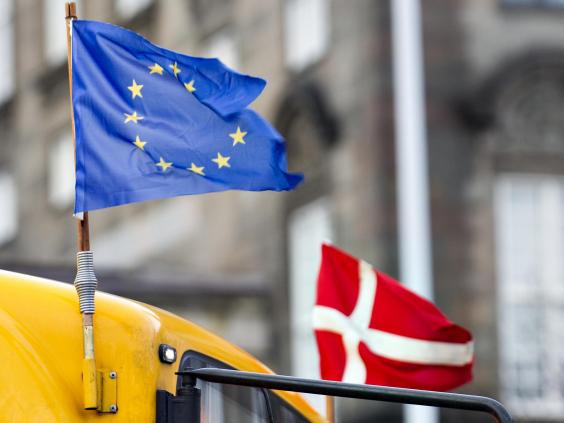
eurodenmark.jpg
“In all the work I have done within the field of happiness research. This is the point I am surest about: the best predictor of whether we are happy or not is our social relationships,” Wiking says in his book.
Wiking cites the journalist Cathy Strongman, who moved from London to Copenhagen and who wrote in The Guardian: “Work later than 5:30 and the office is a morgue. Work at the weekend and the Danes think you are mad. The idea is that families have time to play and eat together at the end of the day, every day.”

6. Food and drink

“Sweets are hyggelige. Cake is hyggeligt. Coffee or hot chocolate are hyggeligt, too. Carrot sticks, not so much,” Wiking says.
He believes that the high level of meat, confectionary, and coffee consumption in Denmark is directly linked to hygge.
“Hygge is about being kind to yourself — giving yourself a treat, and giving yourself, and each other, a break from the demands of healthy living,” he says.
Wiking's compatriots seem to agree: The average Dane eats 3 kilos of bacon a year.

5. The home

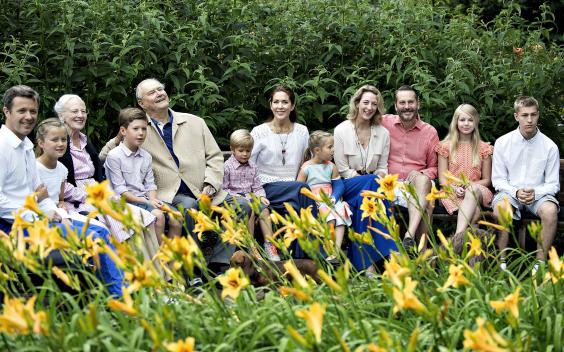
danish-royal-family-denmark-1.jpg
Pictured here: Queen Margrethe (3rd L), Prince Henrik (5th L), Crown Prince Frederik (L) and Crown Princess Mary (6th R) and their children, Prince Christian (4th L), Princess Isabella (2nd L), Prince Vincent (6th L) and Princess Josephine (5th R). Also pictured: Princess Alexandra (4th R) of Berleburg and Count Jefferson (3rd R) with their children Countess Ingrid (Reuters)
The home is “hygge headquarters,” Wiking says. They even have a word for it: hjemmehygge (home hygge). This may explain the Danish obsession with good design.
They also have the most living space per capita in Europe.

4. Christmas

Christmas, Wiking says, is the most hyggelig part of the year. “Even though it is possible to hygge all year round, only once a year is hygge the ultimate goal of an entire month,” he says.
Christmas traditions in Denmark are not wildly different from those in the UK or the US, but the difference is that “a Danish Christmas will always be planned, thought of, and evaluated in relation to the concept of hygge.”
There is even a word for it — julehygge (Christmas-hygge).

3. Lighting

From its iconic lampshades to the staggeringly widespread use of candles, Denmark is a country obsessed with lighting. The Happiness Research Institute's studies shows that 85% of people associate hygge with candles; 28% of Danes light candles every day.
Wiking quotes the American ambassador to Denmark, who says candles create “a kind of emotional happiness, an emotional cosiness.”

2. Copenhagen: The happiest city in the world

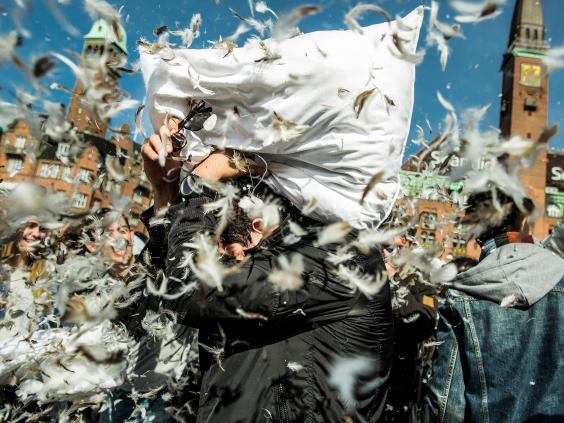
pillow-fight-denmark.jpg
People fight with pillows during World Pillow Fight Day in front of the City Hall in Copenhagen, Denmark ()
Appropriately enough, the happiest country in the world has the happiest capital city in the world. And it is full of hygglelig destinations — from restaurants selling pickled herring in the New Harbour to the iconic Tivoli Gardens, which is transformed every Christmas into a spectacular festival of light.

1. The welfare model

While hygge clearly plays a major part in Denmark's happiness, Wiking is keen to emphasise that the welfare model is what fundamentally underpins the nation's well-being — they have high taxes but receive social security, universal healthcare, and a universal pension in return.
Wiking says there is “wide support for the welfare state.”
“The support stems from an awareness of the fact that the welfare model turns our collective wealth into well-being,” he says.
Critics often point out that antidepressant consumption is very high in Denmark for a country that claims to be the happiest in the world. According to the OECD, Denmark ranks second in Europe for antidepressant consumption per capita.
Wiking told Business Insider in an interview, however, that this supposed “paradox” was nothing of the sort.
“The real story is, these countries recognise mental illness and try to treat it in some way,” Wiking told Business Insider. “Being a society that acknowledges that people suffer from mental illnesses, and that we should try and do something about them? I think that's a good thing. A lot of people miss that — they just think it's a paradox.”


7 reasons Denmark is the happiest country in the world | The Independent
.
.
.

Tuesday, 27 September 2016

conceptual art

Modern art is mostly 'conceptual':
Jay Doubleyou: art
Jay Doubleyou: art questions
Jay Doubleyou: turner prize nominee: duncan campbell
Jay Doubleyou: yinka shonibare - artist at the royal academy
Jay Doubleyou: what is art?
Jay Doubleyou: sheds

The Turner Prize is Britain's most prestigious art prize for modern art:
Turner Prize | Tate

Turner Prize 2016: Positive reviews for nominees


Josephine PrydeImage copyrightJOE HUMPHRYS/TATE PHOTOGRAPHY
Image captionJosephine Pryde's work includes New Media Express (Baby Wants to Ride)

Art critics have given broadly positive reviews to this year's Turner Prize exhibition at Tate Britain.
This year's winner will be announced in December, but all four nominated works will be on display until January.
In its four-star review, London's Evening Standard said: "The display of work by the four contenders efficiently captures art's current mood."
Mark Hudson in The Telegraph also gave the nominees four stars, but added: "Michelangelo it certainly isn't."

'Confounded and perplexed'

"There's plenty to exasperate the sceptic and give even the most receptive gallery-goer a headache," he added.
"None the less, this is one of the strongest Turner Prize shows in ages."
The Guardian's Adrian Searle said the show was "perhaps the most peculiar and baffling Turner prize show I can remember".
"I haven't enjoyed being so confounded and perplexed in a long time," he added.


Helen MartenImage copyrightJOE HUMPHRYS/TATE PHOTOGRAPHY
Image captionHelen Marten's work "creates poetic, pictorial puzzles", the Tate said

But Rachel Campbell-Johnston from The Times gave the nominated works two stars, commenting: "This year's Turner display is nothing if not idiosyncratic."
She added the meaning of some of the artworks is not immediately clear when looking at them.
"You have to start with the written explanation and then work out how their objects illustrate their ideas.
"That's why I would like Helen Marten to win, she produces the most visually intriguing pieces of the four candidates."
The Guardian also tips "the inscrutable, endlessly inventive" Marten to win, saying she "makes life feel less bare, more rich, more absorbing".
The BBC's arts editor Will Gompertz said the same, adding that her artworks are "sort of time capsule stories containing an arrangement of clues that help the viewer solve a riddle".
The Turner Prize exhibition is at Tate Britain from 27 September until 8 January 2017.

Turner Prize 2016: Positive reviews for nominees - BBC News

The Tate has just finished an exhibition on the early days of British conceptual art:
Conceptual Art in Britain 1964–1979 - Exhibition at Tate Britain | Tate

This is the most famous/infamous/notorious piece to come out of the UK:


Carl Andre's Equivalent VIII: the most boring controversial artwork ever | Jonathan Jones | Art and design | The Guardian

Here's a good definition or two:
Conceptual art | Tate
Conceptual art - Wikipedia, the free encyclopedia
Conceptual art - Simple English Wikipedia, the free encyclopedia

BBC TV is running a series on it:


BBC Four - Who's Afraid of Conceptual Art?
Who's Afraid of Conceptual Art? BBC Documentary 2016 - YouTube

With a couple of reviews:
Who’s Afraid of Conceptual Art? review – a daft idea is not art | Television & radio | The Guardian
Who’s Afraid of Conceptual Art?: an entertaining and thought-provoking look at the outer limits of art

But Yayoi Kusama has to be amongst the most beautiful:


Yayoi Kusama - Exhibition at Tate Modern | Tate
.
.
.