Small talk is an informal type of discourse that does not cover any functional topics of conversation or any transactions that need to be addressed.[1]Small talk is conversation for its own sake. The phenomenon of small talk was initially studied in 1923 by Bronisław Malinowski, who coined the term "phatic communication" to describe it.[2]
Phatic communication is popularly known as small talk: the nonreferential use of language to share feelings or establish amood of sociability rather than to communicate information or ideas. The ritualized formulas of phatic communication (such as "Uh-huh" and "Have a nice day") are generally intended to attract the attention of the listener or prolong communication. Also known as phatic speech, phatic communion, phatic language, social tokens, and chit-chat.
The term phatic communion was coined by British anthropologist Bronislaw Malinowski in his essay "The Problem of Meaning in Primitive Languages," which appeared in 1923 in The Meaning of Meaning by C.K. Ogden and I.A. Richards.
"How are you?" "How ya doin'?" "Have a nice day!" "Cold enough for you?" "This train is really crowded." "What's your sign?" "What's your major?" "Do you come here often?" "Sincerely yours" "How about those Mets?" "Some weather we're having."
Image captionTraders sell fruit and veg in pounds and ounces although they cannot weigh it that way
Not giving an inch, going the extra mile, entering the final furlong, piling on the pounds and doing the hard yards - the English language is rich with phrases derived from the units British people use to measure distances, sizes and quantities.
Known as imperial measures - because they were defined in law in the early 19th Century and spread across the British Empire - these units have a place in our collective vocabulary and history, but could they be about to make a comeback in every day commercial use following the vote to leave the EU?
Although steps towards metrication began nearly a decade before the UK joined the EU in 1973, the gradual adoption of a French measurement system has become synonymous with European integration in the eyes of many and Brexit a priceless opportunity to inch away from it.
Since June's Brexit vote, a number of companies, ranging from butchers to wine merchants, have said they would relish the chance to be able to trade in imperial units.
Simon Berry, chairman of Berry Bros & Rudd, has gone as far as to say it is his lifetime's ambition to sell champagne in pint-sized bottles - currently outlawed in the UK - and in his words to reclaim it from "rules-obsessed bureaucrats".
'Part of identity'
Campaigner Warwick Cairns says people feel this way because imperial measurements are not only easily understandable but inherently popular.
"There is something about feet and inches that feel part of our identity and culture," he says. "They make sense on a human scale, they make sense on a cultural scale. It is part of us."
Image copyrightPAImage captionAttempts to continentalise the UK's road network came to nothing
A brief history of weights and measures
AD965: King Edgar decrees only "one weight and measure shall pass through the King's dominions".
1824: The British Weights and Measures Act defines imperial units
1960: India begins the transition from imperial to metric
1965: The UK government says industry should embrace metric within 10 years
1971: Decimal currency is introduced in the UK
1973: The proposed date for adopting kilometres for road signs lapses
1985: The Weights and Measures Act recognises the parity of metric and imperial measures
1994: Regulations are introduced requiring weighing in metric
2001: Steve Thoburn and other market traders are convicted for selling goods in only imperial measures
2008: EU commissioners rule Britain can carry on using imperial measurements such as pints, pounds and miles
Mr Cairns, who represents the imperial-supporting British Weights and Measures Association and is the author of a book about the issue, insists that people should not be required to use either system, because modern technology can easily accommodate both.
"This is the chance for people to be free to use whatever measures they please," he says.
"Take my bathroom scales. If I want to weigh myself in kilograms, I can. Flick the switch the other way, and I can weigh myself in stones and pounds. There is no reason why you can't do that."
Image captionMost weighing machines are now metric, as is the equipment used to test them
Controversial attempts by the EU - aided and abetted by successive British governments - to make the UK move to a single metric system officially came to an end in 2008, when Brussels agreed to the continued use of pints (for draught beer and cider), pounds and miles, alongside metric units.
Current laws require traders to use metric measurements when weighing packaged or loose goods for sale in England, Wales and Scotland but still allow them to sell goods in imperial quantities and display prices in imperial as long as they do not "stand out more" than the metric signs alongside them.
The rules are not rigorously enforced today, after public and political furore over the prosecution of the "metric martyrs", a group of market traders convicted 15 years ago of selling goods using only imperial measures.
Image copyrightGETTY IMAGESImage captionBut pint measures never went away when it came to draught beer and cider
But they are still seen, by both sides of the argument, as a dog's breakfast ripe for reform.
Advocates of metric say it is perfectly feasible for the two systems to co-exist but does not make commercial sense.
"The current measurement muddle aids only our competitors," says Derek Pollard, the chairman of the UK Metric Association.
'Norms and rules'
With 90% of the UK's trade taking place with metric countries - the US being the stand-out exception - he says the UK would be at a big disadvantage if it reverted.
"To compete effectively, we need a single, logical and universal measurement system that everyone understands and is familiar with," Mr Pollard says.
This view is shared by the UK Weighing Federation, which speaks on behalf of companies manufacturing, installing and repairing commercial scales and associated equipment - including components, instrumentation and software.
Image copyrightAPImage captionMost of the Commonwealth, including India, uses metric measurement
Not only, it says, are most imperial measuring scales now consigned to people's lofts or on display in museums, but the equipment used to test commercial weights to guarantee their conformity with technical and safety standards - a procedure known as type approvals - is not available for any mass switch back to imperial.
"All measuring equipment is designed to record in metric," says its president, Nick Catt.
"If you want to be a manufacturing country and want to have a strong connection with Europe, then you have to follow the European norms and rules.
"Otherwise it would be chaos and it would be consumers who lose out."
'Impractical'
Having a dual system of metric and imperial would, he says, involve a "phenomenal" cost to retailers, which would inevitably be passed on to customers - an outcome at odds with the deregulatory impetus behind Brexit.
"It would just not be practical," Mr Catt says.
"You would have to teach kids in schools what pounds are.
"We are talking about an era that is gone, and we can't turn the clock back that far."
The act of Brexit, in and of itself, will not see "lb" signs springing up all over the UK.
For that to happen, Parliament would need to repeal the current regulations, dating back to the mid-1990s, obliging traders to sell their products in metric weights.
Image copyrightGETTY IMAGESImage captionBabies' birth weights are commonly announced in pounds and ounces
As far as the government is concerned, such a change is not on the horizon while it focuses on reassuring investors the UK is open for business globally after the Brexit vote.
"Businesses can already use imperial units alongside metric, or on their own for draught beer and cider, bottled milk and road traffic signs," a spokesman for the Department for Business, Energy and Industrial Strategy said.
"This is national legislation and there has been no change to the law since the referendum result."
While the issue is unlikely to be the first port of call for MPs as they seek to decouple the UK from 40 years of EU-related legislation over the coming years, there is a body of opinion within Parliament that would support such a move.
In 1998, 89 MPs signed a parliamentary motion opposing compulsory metrication and the prosecution of traders continuing to use imperial.
The motion, which also pledged its support for the "use of customary UK measures", shows imperial measures have friends in high places.
Among those to sign were Jeremy Corbyn and Philip Hammond - then humble backbenchers but now Labour leader and Chancellor of the Exchequer.
The football hooligans are at it again but this time instead of street riots and violence, they are raising hell with flags and fundraisers. With the recent news of Colin Kaepernick refusing to stand during the U.S. national anthem and Gabby Douglas not placing her hand over her heart during the anthem at the 2016 Summer Olympics, the question of whether or not politics and sports should mix has been on a lot of minds. While it is really only a debate over etiquette in the United States, the mixing of politics and sports is actually a punishable offense in Ireland. During a recent soccer game between Ireland’s Celtics and Israel’s Hapoel Be’er Sheva, fans of the Celtic team waved Palestinian flags and cheered on the Celtics against the Israelis. This obviously carried with it an overt political message of not only standing against the Hapoel Be’er Sheva in the Champions League qualifier, but also against Israel’s violent oppression of the Palestinian people. For this action, the Celtic Football Club was fined by the Union of European Football Associations (UEFA) for violating their ban against, “gestures, words, objects or any other means to transmit any message that is not fit for a sports event, particularly messages that are of a political, ideological, religious, offensive or provocative nature.” In response, a group of fans calling themselves the Green Brigade set up a crowdfunding campaign on GoFundMe to #MatchTheFineForPalestine. Together they have collected more than £130,000 to donate to Palestinian charities, including Medical Aid Palestine,which provides medical care for those injured or harmed “by conflict, occupation and displacement”, and the Lajee Centre, an effort to help Palestinian children in the Aida refugee camp start their very own soccer team to compete in the Bethlehem Youth League, which they have affectionately dubbed the Aida Celtic as a thank you. Since then, many Palestinians have filmed thankful response videos for the Celtic show of support in defiance of the UEFA, proving that sports and politics can mix in ways that are helpful for those who are oppressed by governments worldwide, “from Ferguson to Palestine,” as the saying goes, even if it pisses off a few overly-patriotic sports fans in the process. Oh, and to add the icing to the cake: the Celtics swept the floor with the Hapoel Be’er Sheva, beating the Israeli team 5-2 in the home victory. And soon, thanks to their Irish comrades, I’m sure we’ll see the Aida Celtic winning a number of symbolic victories as well on their way towards freedom.
The title of this post is the same as the title of an article by Jonah Goldberg about the Colin Kaepernick incident. (If you haven't been paying attention to the NFL lately, here's the summary: Kaepernick is a San Francisco 49er who refused, and still refuses, to stand for the U.S. national anthem.)
I had been pondering writing a similar piece myself. And then I saw his title. Darn, I thought, Goldberg has beat me to it.
Except that he didn't.
Goldberg's article is all about his narrow way of keeping politics out of sports: players should stand for the national anthem. Some people would see this as a way of inserting politics into sports.
That means that people who don't like what Kaepernick did are being forced to pay for the very property on which he did it.
But how would you keep politics out of sports in a fundamental way? It would be by not forcing people to pay for sports.
That means that people who don't like what Kaepernick did are being forced to pay for the very property on which he did it. On the other hand, it also means that people who don't like the flag-waving that goes on at NFL games are also forced to pay for the property on which that occurs.
There's a simple solution here: actually separate sports and state. That is, quit forcing taxpayers to pay for sports.
David Henderson is a research fellow with the Hoover Institution and an economics professor at the Graduate School of Business and Public Policy, Naval Postgraduate School, Monterey, California. He is editor of The Concise Encyclopedia of Economics (Liberty Fund) and blogs at econlib.org.
A Brexit bolthole? For €100 you can become an e-resident of an EU country you've never visited
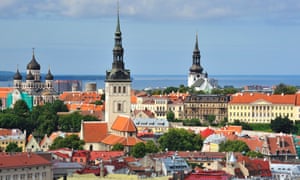
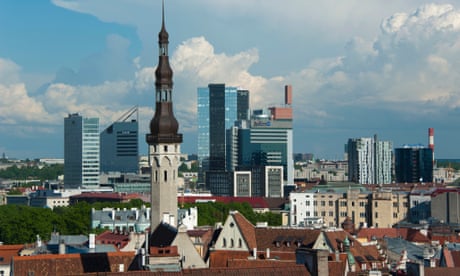
Estonia claims the Panama Papers and British vote to leave the EU have boosted its recruitment drive for digital residents Welcome to Estonia – your new home, even if only in name. Photograph: Getty Images
Thursday 15 September 2016 07.00 BSTLast modified on Thursday 15 September 201610.49 BST Comments683
Estonia offers e-residency to foreigners
There’s a short application form, a €100 (£84) fee, and with a few clicks of a button you could be a digital resident of a country you’ve never set foot in.
Estonia’s e-residency initiative – offering foreigners the chance to base their business and finances digitally in the tiny Baltic state – is proving as easy as it is popular.
With just 1.3 million citizens Estonia is a small country. Of that number only 650,000 citizens are of working age, a figure expected to plummet in the next decade due to an ageing population and emigration.
And while e-residents are not citizens, the government believes they can contribute to the economy by using Estonian banks and establishing Estonian companies. They are also keen promote the country’s reputation as a digital pioneer.
“Attracting immigrants is just not an option for us. People would rather choose Sweden or Norway,” explained Taavi Kotka, Estonia’s chief information officer and government lead on the project. “Physically, we’re not able to improve our population. So why not do it online?”
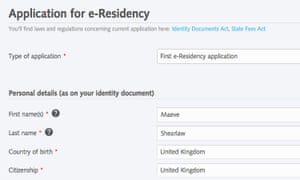
With 12,000 digital citizens enrolled there is a lot to do to meet the 10 million target, but Kotka says he would prefer to judge success on business registrations. “We have added 1,000 businesses to the 60,000 that were already here – a 2% increase, which for us is important,” he said. Becoming a resident FacebookTwitterPinterest Signing up is easy, but what’s the point? Photograph: e-estonia.com
For anyone who has ever tried to get a 24-hour replacement passport or a Russian visa, the process is almost disconcertingly easy.
You fill in a short form, scan your passport and a photo and add a few throwaway lines about why you would like to become an e-resident. The last part is not subject to much scrutiny. “It’s fine to just say you are a fan of the process,” said Kaspar Korjus, managing director of the e-residency programme.
The application is sent off to be reviewed by the Estonian police, mainly for any financial discrepancies. If you have been involved in “dirty business” or money laundering you are likely to be rejected, said Korjus, speaking from the trendy confines of the e-residency showroom in Tallinn.
All being well, three months later you will get an invite to an Estonian embassy, or a pickup point in Tallinn, for a short interview and to be issued with your ID card.
The post-Panama Papers effect? FacebookTwitterPinterest Base your business off the Baltic coast, not the Caribbean. Photograph: Dan Chung for the Guardian
The people behind the e-residency programme say they have seen an increase in interest after the Panama Papers scandal highlighted the need for greater transparency in offshore business and uncertainty after the UK referendum left companies scrambling for options to still be able to trade in euros.
If housing your business in a waterfront city thousands of miles away reminds you of anything, it could be the offshore tax arrangements of the global elite exposed in the Panama Papers leak this year.
The Estonians are keen to stress a major point of difference – that new e-residents will have their financial footprint monitored by the government digitally, not hidden in a warren of complicated legal arrangements.
Korjus believes the fallout from the scandal presents an opportunity for the programme. “Transparency is now a badge of honour and there are countries like India, Indonesia and Thailand where the most important thing as an entrepreneur is to be trusted,” he said.
Registering an Estonian business is also “useful for internet entrepreneurs in emerging markets who don’t have access to an online payment provider”, and for startups from countries such as Ukraine or Belarus, which suffer financial limitations from their governments.
And unlike the offshore arrangement exposed by the Panama leak, you are not exempt from paying taxes in your home country unless the majority of your business is done in Estonia. “If you are in the UK, your taxes should still be paid there … You don’t use our infrastructure, you use theirs. So pay for that,” said Kotka. The Brexit effect?
FacebookTwitterPinterest Kaspar Korjus shows off his ID card. Photograph: Tõnu Tunnel/e-stonia.com
Another major news event that organisers claim has given the e-residency programme a boost is the British vote to leave the European Union. Advertisement
In the uncertainty in the two weeks that followed the vote, applications for residency from the UK grew tenfold, although there are still only 616 peoplefrom Britain registered as digital citizens. .
“Most of the interest was speculative … businesses assuring their shareholders that they would still be able to pay salaries in euros,” said Korjus, who was unable to put a figure on how much money such businesses would pump into Estonia’s economy.
Korjus estimated that 60% who had registered interest in the programme had done so for business purposes. The rest were just general supporters of the idea.
E-residency is self-funded, with the costs coming from people who register. It originally cost €50 but the team doubled the price in February to fund upgrades to the application process. The Estonian government supports e-residency as a policy and remains in constant dialogue with Korjus’s team about how to improve conditions for the digital citizens. Allowing them to open bank accounts from outside the country was probably the most significant change yet, Korjus said.
But governments change and Korjus admitted there was a risk that a new administration could cut the apron strings, leaving the new recruits digitally stateless.
“I need to prove we should keep doing this,” he said, adding that he had spent the past few days talking to Estonia’s presidential hopefuls. “But the Estonian public are on board and that’s the first hurdle.”