Jay Doubleyou

teaching and learning english as a second language

Friday, 21 April 2017

why are dutch children so happy?

The latest research:
The 8 Secrets of Dutch Kids, the Happiest Kids in the World - Finding Dutchland

And here's one opinion on why:


Three Reasons Why Dutch 

Children Are the Happiest 

Children

Annie Holmquist
Annie Holmquist
Tuesday, April 18, 2017
According to the recently released World Happiness Report, many of the happiest nations are those found in the Germanic portions of the world. One of these is the Netherlands.
But the Netherlands doesn’t just contain happy adults; it contains happy children as well, as author Rina Mae Acosta explains in an interview for MarketWatch. As Acosta sees it, there are several things which Dutch parents do which promote this happiness, three of which are below:
1. They Teach Self-Control
When it comes to dietary choices, Dutch parents aren’t opposed to letting their children indulge in unhealthy foods. This is particularly evident in the fact that chocolate is a staple of the Dutch breakfast. But according to Acosta, “if children are allowed their own indulgences, it becomes less of a taboo and they learn to have more self-control.”
2. They Reject Entitlement
Unlike American children who seem to believe that they need to be waited on hand and foot, Acosta explains that Dutch children:
[A]re not children who are entitled – in fact, the children who are spoiled and entitled are often the unhappiest, I find … Middle-class Dutch children would know even if they wanted something, they have to actually work for it.
3. They Encourage Independence
Dutch parents are careful, Acosta explains, but they strive to avoid the dreaded helicopter parenting by letting children go places on their own and directing their own play:
They bike to school. They have 45 minutes of recess. They’re also expected to play outside. The first years of school, they’re encouraged to create their own play dates. The parents talk and it’s decided whose house the children are going to be at, and what time the children are picked up dropped off at their house. During that time, the children are expected to entertain themselves.
In a nutshell, Acosta describes parenting in the Netherlands as “an intuitive parenting approach that most of us already know but have forgotten.” In other words, it’s plain old common sense.
Unfortunately, the loss of common sense in American parenting may be detrimental to children long after they have matured. According to a recent study by Southern Methodist University, college females subjected to helicopter parenting are less well-adjusted psychologically. College males, on the other hand, encounter greater anxiety and depression if they are not trained to be independent individuals.
The fact is, Americans seem to have desired the best for their children so badly that they have gone to extremes to control the environment in which their child is raised. Do more parents need to reverse course and realize that to be a success, a child must first be taught to stand on his own two feet?

Three Reasons Why Dutch Children Are the Happiest Children - Foundation for Economic Education - Working for a free and prosperous world
.
.
.
Posted by Jeremy Woodward at 04:41 No comments:
Email ThisBlogThis!Share to XShare to FacebookShare to Pinterest
Labels: learning, society

translating - with neural networks

Google Translate is getting better - although you should know how to use it:
Google Translate

There are all sorts of developments happening, taking translation to a whole new dimension:
Research Blog: A Neural Network for Machine Translation, at Production Scale

And from the New Scientist:


DAILY NEWS
 
4 April 2017

Google uses neural networks to translate without transcribing


girl whispering into ear of a boy


I hear you

Floresco Images/Getty

Matt Reynolds

Google’s latest take on machine translation could make it easier for people to communicate with those speaking a different language, by translating speech directly into text in a language they understand.
Machine translation of speech normally works by first converting it into text, then translating that into text in another language. But any error in speech recognition will lead to an error in transcription and a mistake in the translation.
Researchers at Google Brain, the tech giant’s deep learning research arm, have turned to neural networks to cut out the middle step. By skipping transcription, the approach could potentially allow for more accurate and quicker translations.
The team trained its system on hundreds of hours of Spanish audio with corresponding English text. In each case, it used several layers of neural networks – computer systems loosely modelled on the human brain – to match sections of the spoken Spanish with the written translation. To do this, it analysed the waveform of the Spanish audio to learn which parts seemed to correspond with which chunks of written English. When it was then asked to translate, each neural layer used this knowledge to manipulate the audio waveform until it was turned into the corresponding section of written English.

Corresponding patterns

“It learns to find patterns of correspondence between the waveforms in the source language and the written text,” says Dzmitry Bahdanau at the University of Montreal in Canada, who wasn’t involved with the work.
After a learning period, Google’s system produced a better-quality English translation of Spanish speech than one that transcribed the speech into written Spanish first. It was evaluated using the BLEU score, which is designed to judge machine translations based on how close they are to that by a professional human.
The system could be particularly useful for translating speech in languages that are spoken by very few people, says Sharon Goldwater at the University of Edinburgh in the UK.
International disaster relief teams, for instance, could use it to quickly put together a translation system to communicate with people they are trying to assist. When an earthquake hit Haiti in 2010, says Goldwater, there was no translation software available for Haitian Creole.
Goldwater’s team is using a similar method to translate speech from Arapaho, a language spoken by only 1000 or so people in the Native American tribe of the same name, and Ainu, a language spoken by a handful of people in Japan.

Rare languages

The system could also be used to translate languages that are rarely written down, since it doesn’t require a written version of the source language to produce successful translations.
Until it is tested on a much larger dataset, it’s hard to tell how the new approach really compares with more conventional translation systems, says Goldwater. But she thinks it could set the standard for future machine translation.
Some services already use machine translation to let people who speak different languages have conversations in real time. Skype introduced a live speech-to-text translation feature in 2014 and now supports nine languages, including Mandarin and Arabic as well as the most common European languages. But like other existing translation methods, Skype’s transcribes speech into text before translating that text into a different language.
And text translation service Google Translate already uses neural networks on its most popular language pairs, which lets it analyse entire sentences at once to figure out the best written translation. Intriguingly, this system appears to use an “interlingua” – a common representation of sentences that have the same meaning in different languages – to translate from one language to another, meaning it could translate between a language pair it hasn’t explicitly been trained on. The Google Brain researchers suggest the new speech-to-text approach may also be able to produce a system that can translate multiple languages.
But while machine translation keeps improving, it’s difficult to tell how neural networks are coming to their solutions, says Bahdanau. “It’s very hard to understand what’s happening inside.”
Journal reference: arXiv, DOI: arxiv.org/abs/1703.08581


More on these topics:
  • algorithms
  • computing
  • language


Google uses neural networks to translate without transcribing | New Scientist
.
.
.
Posted by Jeremy Woodward at 02:45 No comments:
Email ThisBlogThis!Share to XShare to FacebookShare to Pinterest
Labels: internet, translation

Friday, 7 April 2017

internet noise

Here's an interesting little tool to play with if you don't like your information being collected on-line:

THERE’S NOWHERE TO HIDE ON THE INTERNET

By Thomas Beller

   April 4, 2017

The coder Dan Schultz released a search randomizer called Internet Noise, which offers a way of veiling one’s real interests online.


The coder Dan Schultz released a search randomizer called Internet Noise, which offers a way of veiling one’s real interests online.


Sometime before dawn on March 29th, not too many hours after Congress approved legislation that allows Internet-service providers to sell your browsing history to whoever wants to buy it, a coder named Dan Schultz released a search randomizer called Internet Noise, which offers a way of veiling one’s real interests online. I heard about it that night, went straight to the charmingly bare-bones page, and clicked the “Make some noise” button. A new browser tab opened and began to refresh every few seconds with search results based on random pairings of words. “Fact cereal,” “fire mind,” and “raft flanker” were the first ones; “final hotel,” “component nation,” and “giraffe cloister” soon followed. I stared at this whimsical procession for a while and then went to bed. The browser refreshed with random word combinations while I slept—an accident of timing that may have influenced how I think about Internet Noise. Upon waking, I reviewed my browser history. All the random word pairings had the strange associative logic of a dream, as though I had been made privy to the Internet’s unconscious.

I kept the browser tab open throughout the day. Now and then I would check in, and I found each visit hypnotizing. It was interesting to note what vanished immediately from my mind and what lingered: a PDF about the aquifers of West Central Florida; a man reading a Susan Minot story out loud in the privacy of his own room (a mere eighty views on YouTube, but his dark room and dramatic whisper are now lodged in my imagination); a painting from the seventeenth century, “Bearded Man with a Beret.” At one point I checked in to discover an article titled “Anna Nicole Smith: Cleavage in Bankruptcy.” I had enough time to grasp that the article was about an intricacy of bankruptcy law that involves something called cleavage and had nothing directly to do with Anna Nicole Smith, before the browser refreshed to something else.

There’s Nowhere to Hide on the Internet - The New Yorker

And here's the website:

Internet Noise

On March 28th, 2017 congress passed a law that makes it legal for your Internet Service Providers (ISP) to track and sell your personal activity online. This means that things you search for, buy, read, and say can be collected by corporations and used against you.
Click this button, and your browser will start passively loading random sites in browser tabs. Leave it running to fill their databases with noise. Just quit your browser when you're done.


This is an early stage and still evolving project. Please offer feedback via twitter and if something goes wrong let me know.


IMPORTANT: this button will make some noise as a form of digital protest. IT DOES NOT MAKE YOU SAFE.
Advertisers don't give you what you want. They manipulate you into wanting what they have.
If you are genuinely interested in thwarting the tracking efforts of your ISP and advertisers you should:
  1. (15 seconds) Add HTTPS Everywhere to ensure your web activities are encrypted as often as possible.
  2. (15 seconds) Add Privacy Badger to block spies and hidden trackers from sites you visit.
  3. (60 seconds) Donate to the EFF.
  4. (10 minutes) Learn about Tor.
  5. (20 minutes) Consider using a VPN


Internet Noise

For another ad-blocking service, try:
https://vpnandgo.com/best-ad-blocker/
.

.
.
.
Posted by Jeremy Woodward at 08:25 2 comments:
Email ThisBlogThis!Share to XShare to FacebookShare to Pinterest
Labels: internet, technology, text

Monday, 3 April 2017

famous photographers

Here are two completely different lists for who are the 'most famous photographers of all time':


Top 15 Famous Photographers around the world and their photos


Top 10 Most Famous Photographers of All Time
.
.
.
Posted by Jeremy Woodward at 07:43 No comments:
Email ThisBlogThis!Share to XShare to FacebookShare to Pinterest
Labels: art

Friday, 31 March 2017

brexit and school performance

Brexit has been much in the news this week. Here's a story around Brexit and education in the UK
- with the video here:


School performance link to Brexit vote, says Ofsted boss

By Katherine SellgrenBBC News education reporter
  • 1 December 2016
  •  
  • From the sectionEducation & Family
  •  
  •  comments
    These are external links and will open in a new window
  • Share this with Facebook
  •  
  • Share this with Twitter
  •  
  • Share this with Messenger
  •  
  • Share this with Email
  •  
  • Share


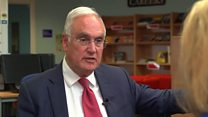
Media captionSir Michael Wilshaw says creating an educated workforce in the north will feed into the wider economy

The failure to improve schools in some parts of England has contributed to the feeling of being ignored revealed in the Brexit vote, the chief inspector of schools, Sir Michael Wilshaw has said.
The Ofsted boss said while standards were rising overall, the number of poorly performing schools in the north and the East Midlands would continue to fuel the sense of a divided nation.
He said the situation was very serious.
The government said 89% of schools were good or outstanding.
In an interview with the BBC in Manchester, Sir Michael said the economic future of the north of England relied on addressing the poor performance of some schools.
He said the European Union referendum result had revealed a wider malaise, with communities feeling their needs were being ignored.
Although some northern city centre areas voted strongly to stay in the EU, large parts of Greater Manchester and some Merseyside towns voted in great numbers to leave.


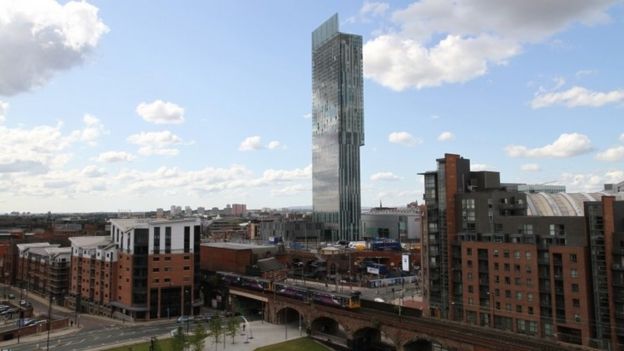
Manchester skyline
Image captionSir Michael says schools in northern cities such as Manchester need to improve

"The situation is very, very serious. If you look at Manchester, the city we're in, nearly one in three schools [is] not good. In Liverpool, half are good. If you look at satellite towns, things are worse.
"It's feeding into a sense that the people of Liverpool, Manchester and the North are not being treated fairly - that their children have less of a chance of educational success than people south of the Wash.
"And that's feeding into a wider malaise that I sense with the Brexit vote, that actually this wasn't just about leaving Europe, it's about 'our needs being neglected, our children are not getting as good a deal as elsewhere'.
"Parents want to see their children doing well; they want to see them going off to university; they want to see them getting a good job.
"Well, they have less of a chance of that in this city, in Liverpool and elsewhere and that feeds into this sense of discontent in the North and in the Midlands."
  • Join the conversation - find us on Facebook
His report said there was considerable evidence that schools in isolated and deprived areas where educational standards are low are losing out in the recruitment stakes.
It added that heads in north-west England are reporting an "auction" for teachers - particularly in Greater Manchester for hard to recruit subjects.
But there are also shortfalls in secondary subjects in south-east England.
Sir Michael said addressing education must be a government priority.

'More teachers'

The Ofsted annual report, published on Thursday morning, highlights that overall standards are rising, with 1.8m more pupils in good or outstanding maintained schools in 2016 than in 2010.
During this period, the curriculum and assessment regime had become more rigorous and children from poor backgrounds were gaining ground on their peers in national primary tests.
But the report also said to become truly world class, England needed to have:
  • High standards in education in every part the country
  • More teachers and leaders in in the right areas
  • Technical education that is on a par with academic education
It also highlighted the poor quality of education in the more geographically and economically isolated parts of the country, including coastal areas.
School Standards Minister Nick Gibb said good and outstanding schools now made up 89% of all schools inspected in England but acknowledged there was more to do.
"That's precisely why we have set out plans to make more good school places available, to more parents, in more parts of the country - including scrapping the ban on new grammar school places, and harnessing the resources and expertise of universities, independent and faith schools," he added.
Malcolm Trobe, interim general secretary of the Association of School and College Leaders, said the reasons for educational underperformance in some areas were complex.
He said: "Industrial decline, generational unemployment and high levels of deprivation have had a devastating impact on many parts of the country, creating extremely challenging social conditions.
"Schools in these areas often find it difficult to recruit staff and are hit particularly badly by the on-going nationwide teacher recruitment crisis."
Sir Michael retires as head of Ofsted at the end of the year. He will be succeeded by Amanda Spielman, who currently chairs exams regulator Ofqual.
Pisa tests: UK lags behind in global school rankings


School performance link to Brexit vote, says Ofsted boss - BBC News
.
.
.
Posted by Jeremy Woodward at 02:55 No comments:
Email ThisBlogThis!Share to XShare to FacebookShare to Pinterest
Labels: british, education, news, video

Monday, 27 March 2017

try something out on 'bbc taster'

As well as the iWonder
Jay Doubleyou: i wonder from the bbc

and 4 minutes on Radio 4
Jay Doubleyou: radio 4 in 4 minutes

and just one minute on the World Service
Jay Doubleyou: 60 second ideas from the bbc

we also have another service from the BBC:


Try, rate, share our new ideas

More made by you

  • Your Ma

    What was your Mum up to at your age?
    3 months left

    3.5/5
  • Project Hope

    Join 3 critically endangered young animals in the jungle
    3 months left

    4/5
    • 1

      Invisible Italy 360°

      4 stars
    • 2

      Easter Rising: Voice of a Rebel VR

      4 stars
    • 3

      Project Hope

      4 stars
  •  Follow Us

    @BBCTaster

  • Could You Shop Well For Less?

    Quiz with tips for saving you money
    2 months left

    2.5/5
  • Cheer up your inbox! Sign-up for BBC Mail for your slice of surprise and delight.

    Sign up here
  • Cook-Along Kitchen Experience

    A cookery show that puts you in control
    4 months left

    3/5
  • What's Taster?

  • How Incredible Are You?

    Put your body to the test
    5 months left

    2.5/5
  • Philharmonic Venue Explorer

    Explore the music
    1 month left

    3/5
  • Last chance to rate these ideas!

    • Invisible Italy 360°

      A new way to see history
      6 days left

      4/5
       6 DAYS LEFT TO RATE!
    • Planet Earth II 360: Grasslands

      Surround yourself with predators
      10 days left

      3.5/5
       10 DAYS LEFT TO RATE!
    • Planet Earth II 360: Cities

      A foxy night on the town
      10 days left

      3.5/5
       10 DAYS LEFT TO RATE!
  • We Wait VR

    A Virtual Reality story about one family's journey from Syria to Europe
    5 months left

    3.5/5
  • RemArc

    Reminiscence Archive for people with dementia and carers
    9 months left

    4/5
  • Easter Rising: Voice of a Rebel VR

    An artistic VR journey into the memory of an ordinary man who was swept up in an extraordinary event
    5 months left

    4/5
  • Rome’s Invisible City VR

    Explore Rome's Hidden Treasures in Stunning 3D Virtual Reality
    6 months left

    3/5
  • Turning Forest

    A virtual reality fairy-tale
    5 months left

    3/5
  • Why Am I Tired?

    Quiz to help diagnose your drowsiness
    1 month left

    2/5

See previous ideas on Taster

  • Casualty: First Day

    Can you handle the pressure?
    10 days left

    3/5
     10 DAYS LEFT TO RATE!
  • Story of Now

    Idris Elba asks how did we get to now?
    4/5
  • Click 360: C.E.R.N.

    Deep science
    3.5/5
View all pilots


Taster is where you can Try, Rate and Share new ideas from the BBC and its partners. All content on this site is designed for people over 16, and may contain adult themes.
We really want your feedback to help us steer future research and development. Taster will be updated regularly as ideas come and go. For more see About Taster and the Terms of Use.

Carnage

  • Video

    Could the world turn vegan by 2067?


    BBC IPLAYER


  • Meat-eating vs veganism: The facts


    BBC


  • Try these tasty vegan dishes


    BBC FOOD

  • Iplayer

    Simon Amstell's mockumentary Carnage


    BBC IPLAYER


BBC Taster
.
.
.
Posted by Jeremy Woodward at 07:35 No comments:
Email ThisBlogThis!Share to XShare to FacebookShare to Pinterest
Labels: audio, internet, learning, text
Newer Posts Older Posts Home
View mobile version
Subscribe to: Posts (Atom)

Copyrighted content

Should you find any material (text or images) which you consider copyrighted please contact this blog and this will be removed.

About Me

Jeremy Woodward
jw.beeproject@gmail.com
View my complete profile

Search This Blog

Blog Archive

  • ▼  2026 (34)
    • ▼  May (1)
      • working with dyslexic students in the esl classroom
    • ►  April (3)
    • ►  March (10)
    • ►  February (10)
    • ►  January (10)
  • ►  2025 (105)
    • ►  December (5)
    • ►  November (5)
    • ►  October (10)
    • ►  September (10)
    • ►  August (10)
    • ►  July (10)
    • ►  June (10)
    • ►  May (5)
    • ►  April (10)
    • ►  March (10)
    • ►  February (10)
    • ►  January (10)
  • ►  2024 (100)
    • ►  December (10)
    • ►  November (5)
    • ►  October (5)
    • ►  September (10)
    • ►  August (10)
    • ►  July (5)
    • ►  June (5)
    • ►  May (10)
    • ►  April (10)
    • ►  March (10)
    • ►  February (10)
    • ►  January (10)
  • ►  2023 (120)
    • ►  December (10)
    • ►  November (10)
    • ►  October (10)
    • ►  September (10)
    • ►  August (10)
    • ►  July (10)
    • ►  June (10)
    • ►  May (10)
    • ►  April (10)
    • ►  March (10)
    • ►  February (10)
    • ►  January (10)
  • ►  2022 (120)
    • ►  December (10)
    • ►  November (10)
    • ►  October (10)
    • ►  September (10)
    • ►  August (10)
    • ►  July (10)
    • ►  June (10)
    • ►  May (10)
    • ►  April (10)
    • ►  March (10)
    • ►  February (10)
    • ►  January (10)
  • ►  2021 (99)
    • ►  December (2)
    • ►  November (3)
    • ►  October (4)
    • ►  September (8)
    • ►  August (10)
    • ►  July (11)
    • ►  June (10)
    • ►  May (11)
    • ►  April (10)
    • ►  March (10)
    • ►  February (10)
    • ►  January (10)
  • ►  2020 (96)
    • ►  December (10)
    • ►  November (10)
    • ►  October (10)
    • ►  September (15)
    • ►  August (31)
    • ►  July (2)
    • ►  June (4)
    • ►  May (2)
    • ►  April (5)
    • ►  March (3)
    • ►  February (2)
    • ►  January (2)
  • ►  2019 (102)
    • ►  December (10)
    • ►  November (3)
    • ►  October (6)
    • ►  September (17)
    • ►  August (23)
    • ►  July (11)
    • ►  June (10)
    • ►  May (3)
    • ►  April (1)
    • ►  March (8)
    • ►  February (4)
    • ►  January (6)
  • ►  2018 (46)
    • ►  December (5)
    • ►  November (1)
    • ►  October (2)
    • ►  September (2)
    • ►  August (9)
    • ►  July (6)
    • ►  June (1)
    • ►  May (4)
    • ►  April (6)
    • ►  March (6)
    • ►  February (1)
    • ►  January (3)
  • ►  2017 (63)
    • ►  December (5)
    • ►  November (5)
    • ►  October (4)
    • ►  September (4)
    • ►  August (8)
    • ►  July (5)
    • ►  June (4)
    • ►  May (7)
    • ►  April (4)
    • ►  March (8)
    • ►  February (4)
    • ►  January (5)
  • ►  2016 (81)
    • ►  December (4)
    • ►  November (9)
    • ►  October (9)
    • ►  September (6)
    • ►  August (7)
    • ►  July (8)
    • ►  June (8)
    • ►  May (9)
    • ►  April (5)
    • ►  March (6)
    • ►  February (6)
    • ►  January (4)
  • ►  2015 (117)
    • ►  December (8)
    • ►  November (8)
    • ►  October (10)
    • ►  September (10)
    • ►  August (10)
    • ►  July (12)
    • ►  June (11)
    • ►  May (10)
    • ►  April (10)
    • ►  March (8)
    • ►  February (10)
    • ►  January (10)
  • ►  2014 (365)
    • ►  December (31)
    • ►  November (30)
    • ►  October (31)
    • ►  September (30)
    • ►  August (31)
    • ►  July (31)
    • ►  June (30)
    • ►  May (31)
    • ►  April (30)
    • ►  March (32)
    • ►  February (28)
    • ►  January (30)
  • ►  2013 (92)
    • ►  December (2)
    • ►  November (2)
    • ►  October (14)
    • ►  September (8)
    • ►  August (15)
    • ►  July (1)
    • ►  June (23)
    • ►  May (6)
    • ►  April (3)
    • ►  March (8)
    • ►  February (10)
  • ►  2012 (84)
    • ►  December (2)
    • ►  November (3)
    • ►  October (2)
    • ►  September (2)
    • ►  August (14)
    • ►  July (2)
    • ►  June (7)
    • ►  May (4)
    • ►  March (1)
    • ►  February (43)
    • ►  January (4)
  • ►  2011 (4)
    • ►  November (4)

Labels

  • academic
  • american
  • art
  • audio
  • authentic
  • beatles
  • blogs
  • british
  • business
  • competition
  • crime
  • culture
  • design
  • dictionaries
  • economics
  • education
  • elt industry
  • environment
  • exams
  • food
  • functional language
  • games
  • geography
  • grammar
  • health
  • history
  • humour
  • identity
  • idiom
  • internet
  • landscape history
  • language
  • learning
  • lesson planning
  • lifestyle
  • listening skills
  • literature
  • media
  • memory
  • message
  • money
  • movies
  • music
  • myth and legend
  • news
  • poetry
  • politics
  • pronunciation
  • psychology
  • reading skills
  • register
  • science
  • society
  • speaking skills
  • sport
  • stars and planets
  • stories
  • survival
  • sustainability
  • teaching
  • technology
  • technology - how to
  • technology-in-the-classroom-seminar
  • testing
  • text
  • theory
  • translation
  • travel
  • trees
  • video
  • visuals
  • vocabulary
  • websites to practice your english
  • words in the news
  • writing skills

favourite links

  • antimoon
  • bbc learning english
  • breaking news english
  • british council - teaching english
  • elllo
  • english harmony
  • randal's esl-lab
  • real english
  • simple english wikipedia

other good links

  • bbc bitesize
  • bbc iwonder
  • bbc learning zone
  • bbc schools
  • british council - learn english
  • british council - learn english kids
  • dave's esl cafe
  • doing english with julian
  • esl bits listening
  • gif up - gif generator
  • globe exeter wiki
  • internet movie data base
  • keepvid
  • larry ferlazzo blog
  • lesson stream
  • luke's english podcast
  • lyrics training
  • michelle henry esl resources
  • musical english lessons
  • nik's daily english activities
  • once a week film fest
  • scott thornbury
  • storycorps
  • tag crowd
  • voice of america learning english
  • woodlands junior - literacy resources
  • woodlands junior - resources
  • wordle
Picture Window theme. Powered by Blogger.